
Goa Gajah Temple, often called the Elephant Cave Temple, is one of Bali’s most intriguing archaeological and religious sites. Located in Bedulu Village, Gianyar Regency, just a short drive from Ubud, the site combines an ancient rock-cut cave, Hindu religious remains, Buddhist archaeological features, sacred bathing pools, stone carvings, and a lush tropical setting.

Unlike many of Bali’s famous temples, Goa Gajah is not simply a temple complex built for modern visitors. It is a living Hindu sacred site and protected cultural heritage area that preserves evidence of Bali’s religious history over many centuries.

The site is particularly interesting because its archaeological remains reflect both Hindu and Buddhist traditions. The northern section contains Shaivite Hindu features, including a Ganesha statue and a linga arrangement, while the southern Tukad Pangkung area contains Buddhist remains, including stupas and a Dhyani Buddha figure. Indonesian cultural heritage authorities describe Goa Gajah as a nationally ranked cultural heritage site.

For travelers staying in Ubud, Goa Gajah is an excellent choice if you want to explore Bali beyond its beaches and see a destination where archaeology, religion, architecture, and living Balinese culture intersect.

Ubud Tour Bali – Private & Custom Day Tour Experience

Experience the true essence of Bali through a thoughtfully designed Ubud tour Bali that adapts to your interests, pace, and curiosity. As part of our premium Bali tour package, this exclusive and customizable journey invites you to explore Ubud not as a rushed sightseeing stop, but as a living cultural landscape where art, spirituality, nature, […]

Duration

1 day

Group Size

Unlimited

Ubud VW tour | Volkswagen Safari Classic Car Tours

Discover a one of a kind Ubud vw tour that blends classic automotive charm with the cultural heart of Ubud. Imagine cruising the picturesque countryside in a vintage Volkswagen Beetle or Kombi, windows down, wind in your hair. This is not just a ride, it is a story on wheels. Each turn in the road […]

Duration

1 day

Group Size

Unlimited
What Is Goa Gajah Temple?

Goa Gajah is an archaeological site and sacred Hindu complex in Bedulu, Gianyar, approximately a short drive from central Ubud.

The name Goa Gajah literally means “Elephant Cave,” although the origin and interpretation of the name are more complicated than simply saying that the cave contains an elephant.

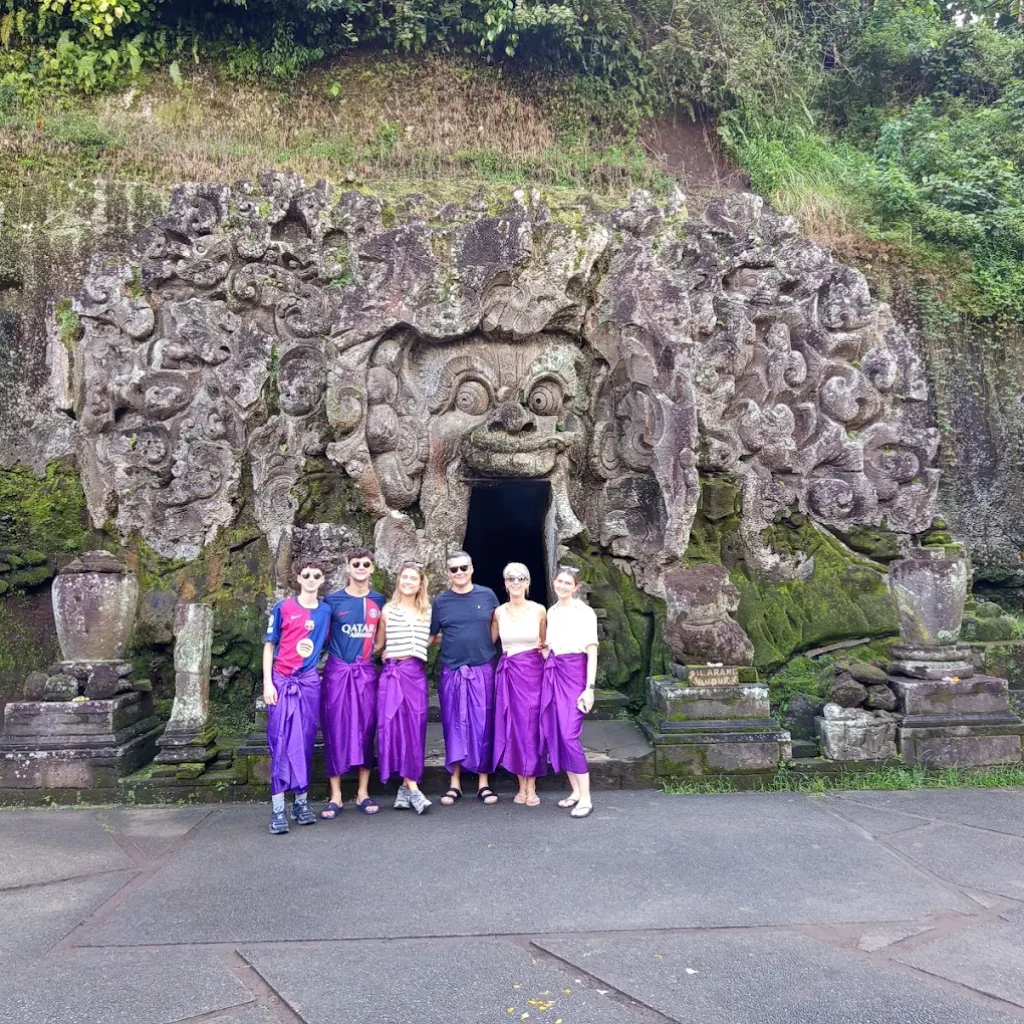
The most recognizable feature is the cave entrance, which is carved into a rock face and surrounded by elaborate reliefs. The entrance appears almost like the open mouth of a mythical creature, with ornamental foliage, animals, and a large carved face.

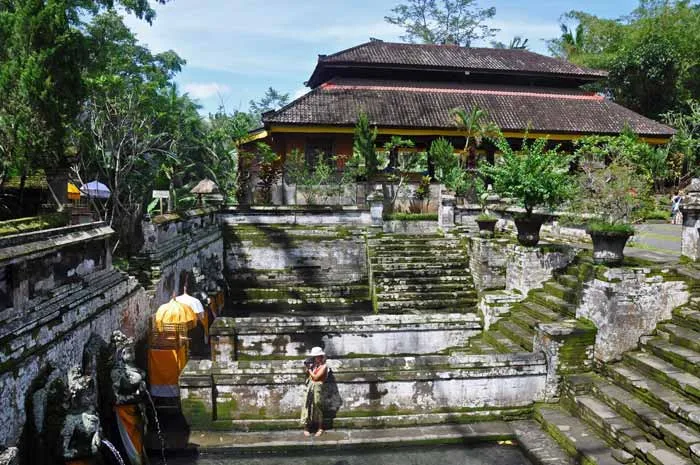
Inside the cave are small niches and religious remains, including a Ganesha statue and a linga arrangement associated with Shaivite Hinduism. Outside the cave, visitors can see the remains of an ancient bathing complex with carved fountain figures.

The wider archaeological landscape extends beyond the cave itself. The site includes remains around the Tukad Pangkung valley, where Buddhist archaeological features have also been documented.

This is why calling Goa Gajah simply an “elephant cave temple” does not fully describe what makes the site significant.

Where Is Goa Gajah Temple Located?

Goa gajah temple location

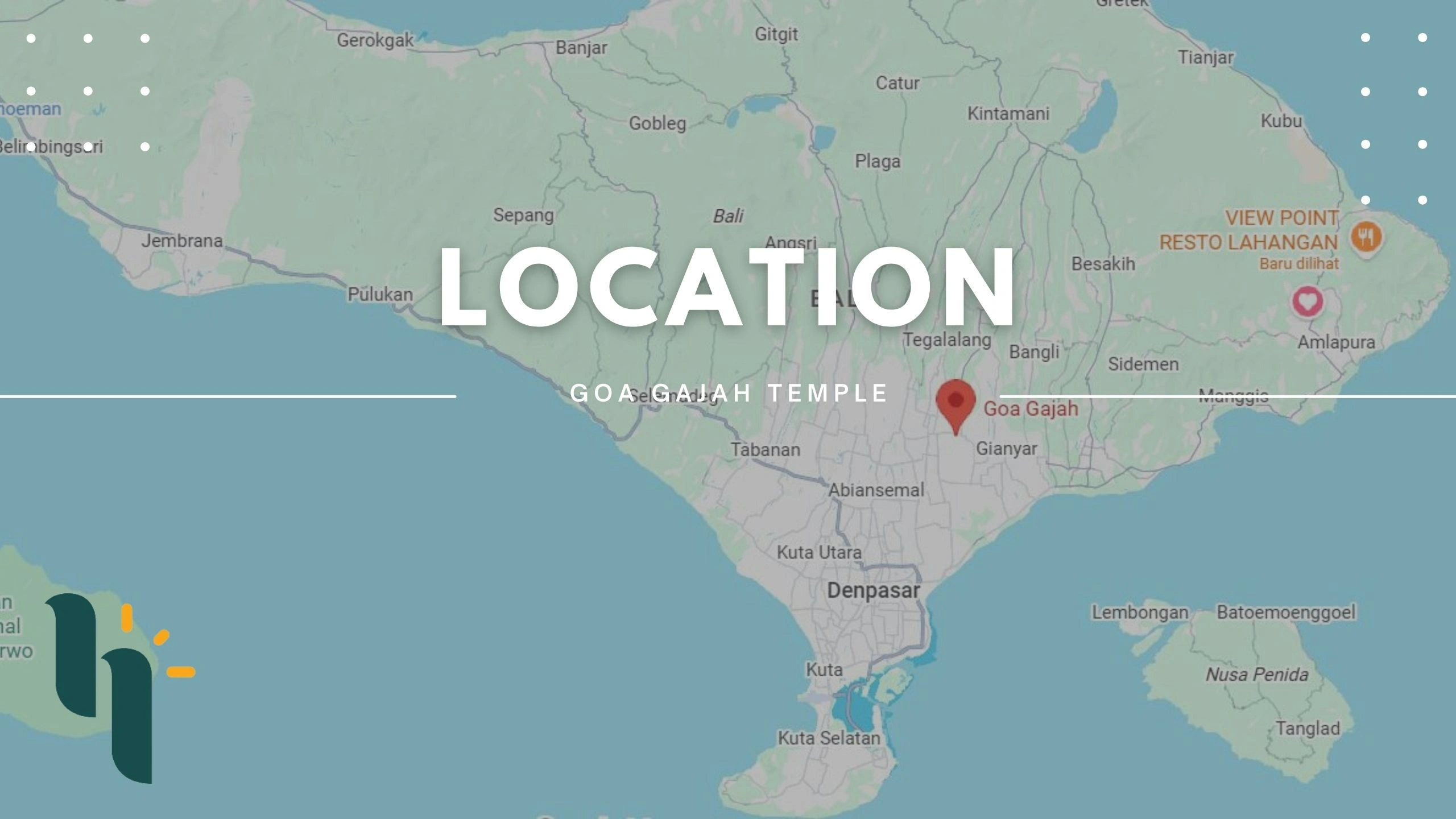
Goa Gajah is located in Bedulu Village, Blahbatuh District, Gianyar Regency, Bali, Indonesia.

Its location makes it particularly convenient for travelers staying in Ubud.

The official Indonesian cultural heritage database places the site at approximately 8.523766° S, 115.286839° E and identifies Pura Goa Gajah as a nationally ranked cultural heritage site.

Goa Gajah is surrounded by the cultural landscape of central Bali, where ancient temples, archaeological remains, traditional villages, rice fields, and rivers form part of a much larger heritage environment.

If you are planning several cultural attractions around the area, an Ubud travel guide can help you organize Goa Gajah with nearby temples, archaeological sites, markets, and other attractions based on location.

How to Get to Goa Gajah from Ubud

Goa Gajah is one of the easier archaeological sites to visit from Ubud.

From central Ubud, you can travel by:

  • private car
  • taxi
  • ride-hailing service where available
  • scooter
  • organized tour

Goa Gajah is also a natural stop for travelers planning an Ubud temple tour, particularly if they want to combine ancient archaeological sites with active Hindu temples around the Ubud area.

A typical cultural route could combine:

Ubud → Goa Gajah → nearby archaeological sites → traditional village → rice terraces or another cultural attraction

Travelers who prefer a more organized itinerary can also choose an Ubud tour package that combines Goa Gajah with other cultural and natural attractions around Gianyar.

Goa Gajah Temple History

How Old Is Goa Gajah?

goa gajah elephant cave temple

The history of Goa Gajah Temple cannot be reduced to a single construction date.

Indonesia Travel describes Goa Gajah as a site dating to around the 11th century, while Indonesia’s cultural heritage database documents evidence suggesting that different parts of the complex belong to different periods. Archaeological studies have identified both Hindu and Buddhist remains, including Buddhist elements that have been compared with ninth-century Buddhist sculpture traditions and Hindu remains associated with the 11th century.

A government conservation study describes Goa Gajah as a heritage site from the period of the ancient Balinese kingdoms, broadly spanning the 9th to 13th centuries.

This broader chronology is important because Goa Gajah appears to have developed and been used over a long period rather than being constructed as one simple monument at one particular moment.

The Rediscovery of Goa Gajah

Goa Gajah became known to modern archaeological researchers during the Dutch colonial period.

A report by Bali’s Cultural Heritage Preservation authority states that L.C. Heyting reported archaeological discoveries at Goa Gajah in 1923, including a Ganesha statue, Trilingga and Hariti. Further investigation followed, including research by W.F. Stutterheim. Archaeological excavation and research continued during the 20th century, leading to the identification of the ancient bathing complex and other remains.

This modern rediscovery is only one part of the site’s history, however. Goa Gajah had already been embedded within Bali’s religious landscape long before archaeological researchers began documenting it.

Why Is Goa Gajah Historically Important?

Goa Gajah is important because it preserves evidence of ancient Hindu and Buddhist traditions existing within the same broader cultural landscape.

The cultural heritage database identifies two major archaeological zones.

The northern area contains features associated with Shaivite Hinduism, while the southern area around Tukad Pangkung contains Buddhist remains. These include a Dhyani Buddha figure, carved stupa remains and other Buddhist archaeological elements.

This makes Goa Gajah valuable not only as a tourist destination but also as evidence of the religious and cultural history of ancient Bali.

A government cultural heritage publication describes the site as a sacred place connected with Hindu worship today while preserving Buddhist and Hindu archaeological remains from earlier periods.

Is Goa Gajah a Hindu or Buddhist Temple?

The answer requires some context.

Today, Goa Gajah functions as a Hindu sacred site.

However, the archaeological complex contains significant evidence of both Hindu and Buddhist traditions.

The northern complex contains Shaivite features such as:

  • Ganesha
  • Trilingga
  • Hindu religious structures
  • sacred bathing features

The southern Tukad Pangkung area contains Buddhist remains, including:

  • Dhyani Buddha imagery
  • carved stupas
  • a three-branched stupa relief
  • an ancient meditation-related structure

The coexistence of these archaeological remains is one of the reasons Goa Gajah is so significant in the history of Bali.

Therefore, describing Goa Gajah simply as either a Hindu temple or a Buddhist temple misses an important part of its archaeological story.

Why Is Goa Gajah Called the Elephant Cave?

The English name Elephant Cave is a translation of “Goa Gajah.”

However, the origin of the name is not completely straightforward.

One historical connection is the old place-name Lwa Gajah, which appears in the 14th-century Nagarakertagama. The Bali Cultural Heritage Preservation publication notes that Lwa Gajah has been associated with the area and with the nearby Petanu River.

The cultural heritage database also discusses historical names such as Lwa Gajah and Er Gajah and notes that their interpretation and relationship with the present-day site require historical context.

Therefore, it is better to explain the name as a historical question rather than claiming that the site was simply named after an elephant statue.

What Can You See at Goa Gajah?

A visit to Goa Gajah Temple Bali includes considerably more than the famous cave entrance.

1. The Rock-Cut Cave

The cave itself is the central attraction.

The entrance is carved directly into a rock face and decorated with elaborate reliefs. Inside, the cave contains niches and religious objects associated with its historical use.

The archaeological documentation describes the cave as being carved into a hard volcanic rock formation, with the entrance surrounded by decorative carvings. Inside are numerous niches, including areas containing a Ganesha figure and Trilingga.

2. The Famous Cave Entrance

The carved entrance is perhaps the most recognizable feature of Goa Gajah.

The large face and surrounding decorative reliefs give the entrance a dramatic appearance.

Look closely and you can identify decorative vegetation and animal motifs among the stone carvings.

3. Ganesha Statue

A statue of Ganesha is one of the important Hindu archaeological features found inside the cave.

Ganesha is traditionally associated with wisdom, learning and the removal of obstacles.

4. Trilingga

The cave also contains a Trilingga, an important Shaivite Hindu symbol.

Its presence provides evidence of the site’s religious significance and helps explain why the cave is considered part of a Hindu sacred landscape.

5. Ancient Bathing Pools

Outside the cave is an ancient petirtaan, or bathing complex.

The complex includes pools and carved fountain figures. Archaeological research documented six fountain statues associated with the bathing area.

These water features are an important part of understanding how sacred water was incorporated into ancient Balinese religious spaces.

6. Buddhist Archaeological Remains

Travelers who explore beyond the main cave can also encounter archaeological evidence connected with Buddhism.

The southern Tukad Pangkung area contains remains including stupa carvings and a Dhyani Buddha figure.

This is one of the strongest reasons to allow enough time to explore the wider site rather than visiting only the cave entrance.

Goa Gajah Temple Architecture

Goa Gajah Temple Architecture

The architecture of Goa Gajah differs from the towering pagoda-like or multi-roofed structures that many visitors associate with Bali.

The site’s most distinctive architectural feature is the rock-cut cave itself.

Instead of constructing a conventional temple building, ancient craftsmen carved a sacred space directly into the rock.

The cave entrance combines natural stone with elaborate sculptural decoration. The surrounding archaeological remains demonstrate how the cave formed part of a much larger religious complex.

The cultural heritage documentation identifies separate northern and southern archaeological zones, with Hindu and Buddhist characteristics respectively.

For travelers interested in Balinese temple architecture, Goa Gajah provides an unusual example because its most important sacred space is integrated directly into the landscape.

Goa Gajah Temple Entrance Fee

How Much Is the Goa Gajah Entrance Fee?

Entrance prices can change, and different sources may publish different rates.

Indonesia Travel’s current Bali temple guide lists the following Goa Gajah admission rates:

  • Foreign adults: Rp50,000
  • Foreign children: Rp25,000
  • Indonesian adults: Rp30,000
  • Indonesian children: Rp15,000

The same source describes Goa Gajah as a morning-to-afternoon attraction.

Because tourism fees can be revised, visitors should verify the current ticket price at the official entrance before budgeting around an older online figure.

What Does the Entrance Fee Include?

The entrance fee provides access to the visitor areas of the archaeological complex.

Additional expenses may apply for transportation, parking, guides, food, or other services outside the basic admission.

Goa Gajah Temple Opening Hours

What Time Does Goa Gajah Open?

Indonesia Travel currently lists Goa Gajah as open daily from 08:00 to 17:00 WITA.

Other travel information can sometimes show different schedules, so it is wise to verify the current opening hours before making a special trip.

Religious ceremonies or conservation activities can also affect access to particular areas.

What Is the Best Time to Visit Goa Gajah?

Morning is generally the best time to visit Goa Gajah.

A morning visit can provide:

  • cooler temperatures
  • softer natural light
  • a more comfortable walking experience
  • better conditions for photography
  • more time to explore nearby attractions afterward

If you are visiting Bali during the hotter part of the day, arriving earlier can make the experience significantly more comfortable.

How Long Do You Need at Goa Gajah?

Plan for approximately 1 to 2 hours for a meaningful visit.

A quick visit focused only on the cave and entrance can be shorter.

However, allowing more time gives you the opportunity to:

  • explore the cave
  • examine the entrance carvings
  • visit the bathing pools
  • understand the archaeological remains
  • explore the surrounding landscape
  • observe the religious atmosphere
  • take photographs where permitted

If you are particularly interested in archaeology or Balinese history, you may want to spend longer.

What Should You Wear to Goa Gajah?

Goa Gajah is a sacred Hindu site, so visitors should dress respectfully.

A practical outfit includes:

  • shoulders reasonably covered
  • clothing covering the knees where appropriate
  • comfortable walking shoes
  • a sarong when required
  • a sash when required

Sarongs are commonly provided or available at Balinese temple attractions, but carrying your own lightweight sarong can be convenient if you plan to visit multiple temples in one day.

The most important point is to remember that Goa Gajah is not only an archaeological attraction. It remains a place of religious activity.

Goa Gajah Temple Etiquette

Visitors should treat the site with the same respect they would show at any active Balinese temple.

Dress respectfully

Follow local clothing requirements and wear a sarong and sash where required.

Respect ceremonies

If a religious ceremony is taking place, remain outside restricted areas.

Do not touch religious objects

Ancient statues and sacred objects should not be touched unless specifically permitted.

Do not step on offerings

Balinese Hindu offerings may be placed throughout temple areas. Avoid stepping on or moving them.

Ask before photographing people

This is particularly important during prayers and ceremonies.

Follow staff instructions

Access to particular areas can change depending on religious activity or conservation needs.

These practices are especially important at Goa Gajah because the site combines tourism, archaeology and active religious life.

Can Tourists Visit Goa Gajah?

Yes, Goa Gajah is open to tourists as a cultural and archaeological attraction.

However, tourist access does not mean every part of the sacred complex is unrestricted.

Some areas may be reserved for religious activities, ceremonies or conservation.

The best way to experience Goa Gajah is to think of yourself as a visitor to a living heritage site, rather than simply entering an ancient monument.

Can You Take Photos at Goa Gajah?

Photography is generally possible in visitor-accessible areas, especially around the cave entrance, gardens and archaeological features.

However:

  • do not use flash if prohibited
  • do not enter restricted areas for photographs
  • avoid interfering with ceremonies
  • ask permission before photographing worshippers
  • do not climb archaeological structures
  • follow current signs and staff instructions

The cave entrance is the most popular photography location, but the bathing pools and surrounding greenery can also provide interesting perspectives.

Is Goa Gajah Worth Visiting?

Yes, especially for travelers interested in Bali’s history, archaeology, architecture and religious traditions.

Goa Gajah is worth visiting because it offers something different from Bali’s better-known beach and resort attractions.

Within a relatively compact site, visitors can encounter:

  • an ancient rock-cut cave
  • elaborate stone carvings
  • Hindu religious remains
  • Buddhist archaeological features
  • ancient bathing pools
  • tropical scenery
  • a living Hindu religious environment

Its proximity to Ubud makes the decision even easier.

If you are already exploring Ubud’s cultural attractions, Goa Gajah can be added without requiring an entire day dedicated to transportation.

Things to Do Near Goa Gajah

One of the advantages of visiting Goa Gajah is its location within a culturally rich part of Gianyar.

Depending on your itinerary, you can combine the site with other attractions around Ubud and Bedulu.

Pura Samuan Tiga

Pura Samuan Tiga is an important temple in the Bedulu area and can provide additional context for the religious history of the region.

Yeh Pulu

Yeh Pulu is another archaeological site near Ubud, known for its long rock reliefs depicting human figures and scenes from daily life.

Ubud Palace

If you are returning toward central Ubud, Ubud Palace is a natural addition to a cultural sightseeing itinerary.

Ubud Market

Ubud Market can be combined with the palace and other attractions in the town center.

Tirta Empul

Tirta Empul, near Tampaksiring, is another important Hindu water temple and can be included in a wider Ubud cultural itinerary.

The key is to group attractions geographically rather than trying to visit every destination in Bali in one day.

Goa Gajah and the Cultural Landscape of Bali

One of the most interesting aspects of Goa Gajah is that the site should not be viewed in isolation.

It forms part of a much larger cultural landscape around Gianyar and Ubud, where ancient temples, archaeological sites, rivers, agricultural land and religious traditions developed together.

The site’s proximity to the Petanu River is also historically relevant. The Bali Cultural Heritage Preservation authority discusses the historical reference to Lwa Gajah and its relationship with the river landscape around the site.

UNESCO documentation concerning Bali’s cultural landscape also references the monumental site of Goa Gajah in Bedulu as part of the broader cultural landscape of Bali.

This broader context makes the site more meaningful for visitors who want to understand how religion, agriculture, water management and settlement patterns shaped Bali over centuries.

Goa Gajah as a Cultural Heritage Site

Goa Gajah is not simply a popular tourist attraction.

Indonesia’s official cultural heritage database lists Pura Goa Gajah (Zona I) as a national-level cultural heritage site, with designation SK No. 131/M/1998 dated June 16, 1998.

Its heritage value comes from several dimensions:

Archaeological value

The site preserves ancient cave architecture, sculptures, inscriptions and archaeological structures.

Religious value

The site remains associated with Hindu worship.

Historical value

Its archaeological evidence helps researchers understand ancient Bali and the interaction of Hindu and Buddhist traditions.

Artistic value

The stone carvings and sculptures provide examples of ancient Balinese artistic traditions.

Educational value

Goa Gajah allows visitors to see archaeological evidence rather than learning about Bali’s history only through museums or written descriptions.

The conservation literature also emphasizes the site’s archaeological, historical, aesthetic and scientific importance and notes the need for continued preservation.

Conclusion

Goa Gajah Temple is worth visiting if you want to understand a different side of Bali.

Its importance is not based solely on the famous cave entrance. The site preserves a complex combination of archaeology, Hindu worship, Buddhist heritage, ancient water architecture, stone sculpture and traditional Balinese culture.

For travelers staying in Ubud, the location is particularly convenient. A visit can easily fit into a broader Ubud cultural itinerary alongside other temples, archaeological sites and traditional attractions.

The most rewarding approach is to allow yourself enough time to look beyond the entrance photograph. Study the carvings, understand the religious symbols, explore the bathing complex and consider the site’s relationship with the surrounding landscape.

Most importantly, remember that Goa Gajah is a living sacred site as well as a protected archaeological heritage area.

That combination is what makes the Goa Gajah Temple in Bali genuinely distinctive and one of the more fascinating cultural sites to explore near Ubud.