

If you are looking for a cultural attraction in the heart of Ubud, Saraswati Temple Ubud, officially known as Pura Taman Kemuda Saraswati, is one of the most accessible temples to visit. The temple is best known for its lotus-filled water garden, traditional Balinese architecture, detailed stone carvings, and its dedication to Dewi Saraswati, the Hindu goddess associated with knowledge, learning, literature, music, and the arts.
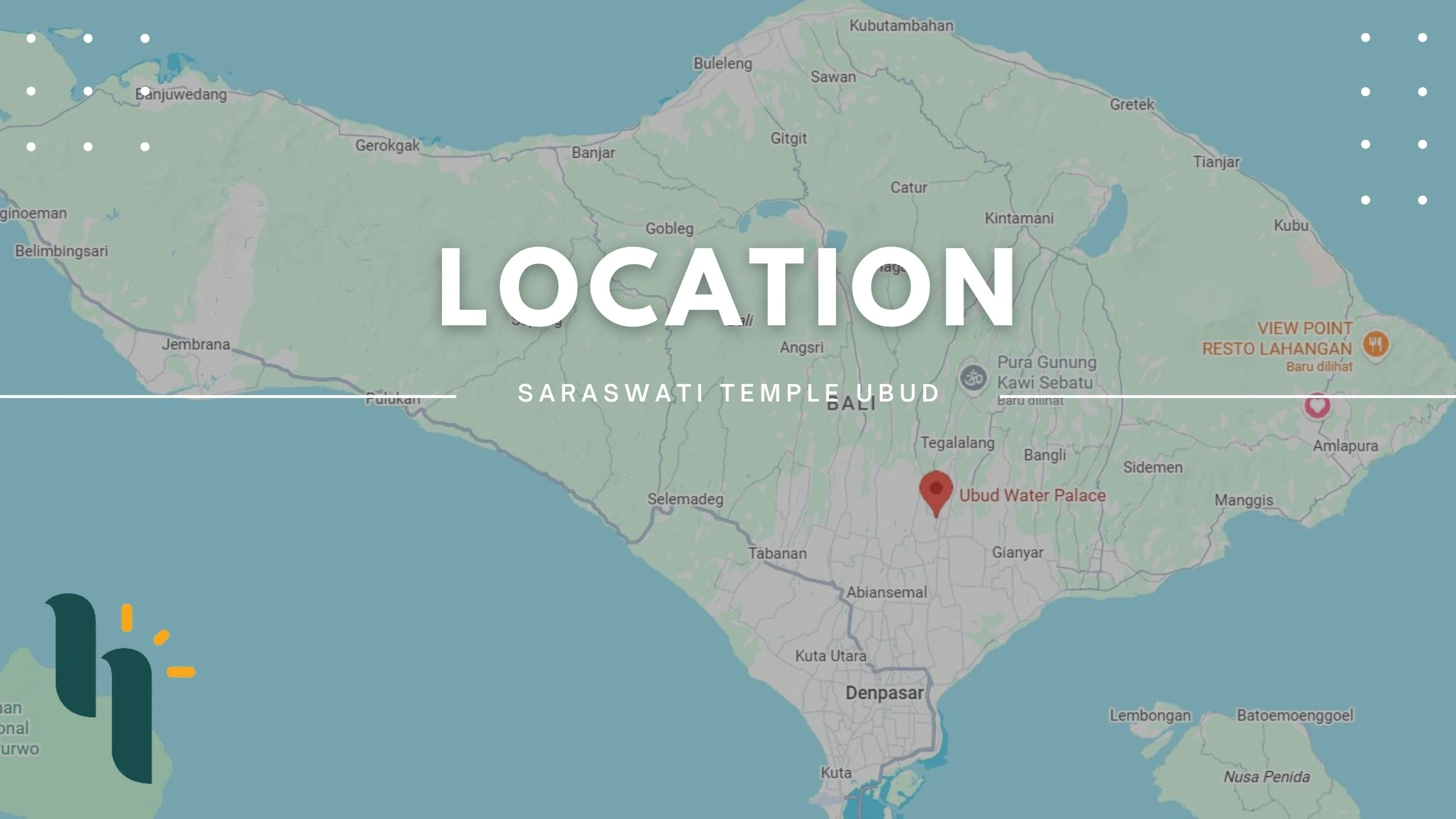
Located on Jalan Kajeng in central Ubud, Gianyar, Bali, the temple is within easy walking distance of Ubud Palace, Ubud Market, and several museums and cultural attractions.
But Saraswati Temple is more than a beautiful photo spot. It remains a Hindu place of worship, which means visitors should treat the site as a living religious space rather than simply a tourist attraction.
Ubud VW tour | Volkswagen Safari Classic Car Tours
Discover a one of a kind Ubud vw tour that blends classic automotive charm with the cultural heart of Ubud. Imagine cruising the picturesque countryside in a vintage Volkswagen Beetle or Kombi, windows down, wind in your hair. This is not just a ride, it is a story on wheels. Each turn in the road […]
Duration
1 day
Group Size
Unlimited

Ubud Tour Bali – Private & Custom Day Tour Experience
Experience the true essence of Bali through a thoughtfully designed Ubud tour Bali that adapts to your interests, pace, and curiosity. As part of our premium Bali tour package, this exclusive and customizable journey invites you to explore Ubud not as a rushed sightseeing stop, but as a living cultural landscape where art, spirituality, nature, […]
Duration
1 day
Group Size
Unlimited
What Is Saraswati Temple in Ubud?
Pura Taman Saraswati, also commonly called Saraswati Temple Bali or Ubud Saraswati Temple, is a Balinese Hindu temple dedicated to Dewi Saraswati.
The temple is particularly recognizable because of the large lotus pond at its front. A pathway crosses the water garden and leads toward the temple’s ornate entrance, creating one of the most distinctive architectural views in central Ubud.
The temple is associated with the artistic heritage of Ubud and was designed by I Gusti Nyoman Lempad, one of Bali’s most influential traditional artists, sculptors and architects. Historical references place the construction of the temple in the early 1950s, with construction beginning in 1951 and completion in 1952.
This connection to Lempad is particularly relevant because Ubud developed into an important center of Balinese art, with local rulers and artists playing a major role in the area’s artistic development.
Saraswati Temple Location
Where Is Saraswati Temple Located?
Pura Taman Saraswati is located on Jalan Kajeng in central Ubud, Gianyar Regency, Bali.
It sits close to Jalan Raya Ubud, making it one of the most convenient temples to visit in the Ubud town centre.
The location is particularly useful for travelers because several major attractions are nearby.
Is Saraswati Temple near Ubud Palace?
Yes.
Saraswati Temple is very close to Ubud Palace, also known as Puri Saren Agung. Both are located in central Ubud and can easily be combined during a walking tour.
Ubud Palace itself is an important part of the town’s royal and cultural history and is also known for traditional Balinese dance performances.
This makes the area around Ubud Palace and Saraswati Temple one of the most convenient parts of Ubud for experiencing Balinese culture.
How to Get to Saraswati Temple
From Ubud Palace
From Ubud Palace, walk toward Jalan Kajeng and follow the signs toward Pura Taman Saraswati.
Because the temple is in the center of town, walking is generally more practical than taking a car for this short journey.
From Ubud Market
Saraswati Temple is also close to Ubud Market, making it easy to combine shopping and sightseeing.
From Other Parts of Bali
If you are staying outside Ubud, travel time depends heavily on traffic.
From southern Bali, including areas such as Kuta, Seminyak, Canggu or Nusa Dua, a private car or driver is generally more practical than trying to visit the temple as a quick standalone stop.
Travelers who prefer to combine Saraswati Temple with several attractions in one day may also consider an Ubud tour package that includes transportation and a flexible sightseeing itinerary
Saraswati Temple Parking
Because Saraswati Temple is located in central Ubud, parking immediately beside the temple can be limited.
If you are driving, it is often more practical to use an appropriate parking area farther away and continue on foot.
This is another reason why visiting Saraswati Temple as part of a walking route through central Ubud can be more comfortable.
Why Is Saraswati Temple Important?
The religious significance of Saraswati Temple comes from its dedication to Dewi Saraswati.
In Hindu tradition, Saraswati is associated with knowledge, learning, wisdom, language, literature, music and the arts. In Bali, her worship is particularly connected with the cultural value placed on knowledge and artistic expression.
The temple therefore represents more than architecture. It forms part of Bali’s living Hindu religious tradition.
For visitors, this distinction matters. You are not simply entering an old monument. You are visiting a place that can still be used for prayers, ceremonies and religious activities.
The temple’s connection to Ubud’s artistic identity also makes it especially relevant when exploring the town’s broader cultural landscape.
Who Is Saraswati in Hinduism?
Saraswati is a Hindu goddess associated with knowledge, wisdom, learning, language, literature, music and the arts.
She is often depicted holding or associated with symbols such as books and musical instruments, particularly the veena.
In Bali, the worship of Dewi Saraswati is particularly important to the cultural and religious calendar. Hari Saraswati, the day dedicated to Saraswati, is observed according to the Balinese calendar and is associated with respect for knowledge and learning.
This religious connection explains why Pura Taman Saraswati is not merely named after Saraswati. The temple was established as a sacred place dedicated to her worship.
What Is Saraswati Temple Famous For?
Saraswati Temple is famous for several things:
1. The Lotus Pond
The most recognizable feature is the large lotus pond in front of the temple.
Pink lotus flowers float across the water, while the temple’s traditional architecture forms the backdrop. The combination of water, flowers, stone carvings and red-brick structures is what makes the temple particularly photogenic.
2. Traditional Balinese Architecture
The temple contains elaborate stone carvings, traditional gates, guardian figures and other architectural elements characteristic of Balinese Hindu temples.
3. I Gusti Nyoman Lempad
The temple is associated with I Gusti Nyoman Lempad, a renowned Balinese sculptor, architect and artist who contributed extensively to Ubud’s architectural and artistic heritage.
4. Its Location in Central Ubud
Unlike temples located far outside town, Saraswati Temple is right in the Ubud town centre. This makes it easy to combine with Ubud Palace, Ubud Market and other cultural attractions.
5. Cultural Performances
The area around the temple has also been used for traditional Balinese dance performances. However, performance schedules and ticket prices can change, so visitors should check the current schedule rather than relying on an old timetable.
Saraswati Temple History
The history of Pura Taman Saraswati Ubud is closely connected to Ubud’s royal and artistic development.
The temple was commissioned under the Ubud royal family and designed by I Gusti Nyoman Lempad. Construction began in 1951 and was completed in 1952.
Lempad was much more than a sculptor. He was an architect and artist whose work helped shape the visual character of Ubud. His association with the Ubud royal family placed him at the center of a period when the town’s traditional architecture and artistic culture were developing together.
That history helps explain why Saraswati Temple feels particularly appropriate within the wider Ubud cultural landscape.
Ubud is known for its connection to Balinese painting, sculpture, dance, literature and religious traditions. Saraswati Temple brings many of those elements together in one compact location.
How Much Is the Entrance Fee to Saraswati Temple?
This is one area where visitors should be careful because published information is currently inconsistent.
Several recent travel sources continue to report that general access to the public-facing area of Pura Taman Saraswati is free, while other recent sources list paid admission prices. Indonesia Travel, for example, currently lists Pura Taman Saraswati among Bali’s free attractions and gives daytime hours of 07:00–17:00 WITA.
DetikBali and other Indonesian travel sources have also reported free general admission, with separate charges for certain dance performances.
However, Traveloka currently publishes different entrance-fee information, including Rp25,000 for domestic adults and Rp50,000 for foreign adults.
Therefore, I would not recommend publishing a fixed Saraswati Temple ticket price as an absolute fact without confirming it directly with the site.
For travelers planning their budget, the safest approach is:
- General access may be free depending on the current visitor arrangement.
- Cultural performances are normally ticketed separately.
- Donations or other local charges may apply.
- Religious ceremonies can change normal visitor access.
- Check the current conditions before entering.
This approach is more reliable than presenting an outdated price as the official Saraswati Temple entrance fee.
Saraswati Temple Ubud Opening Hours
What Time Does Saraswati Temple Ubud Open?
Published opening hours are not completely consistent.
Indonesia Travel currently lists 07:00–17:00 WITA, while other recent travel sources have published different daytime schedules, including 09:30–17:30 WITA.
For practical planning, morning through late afternoon is the safest period for a normal sightseeing visit, but confirm the current hours before traveling.
When Does Saraswati Temple Close?
The commonly published closing time is around 17:00 WITA, although some sources report later hours or different schedules.
Religious ceremonies and special events can also affect access.
Can You Visit Saraswati Temple at Night?
The temple area is associated with evening cultural performances, but this should not be confused with normal daytime temple sightseeing.
If you want to see a Balinese dance performance, check the current schedule and ticket requirements separately.
Performance schedules have changed over time. For example, older published information lists Kecak performances on specific evenings, while newer sources describe other dance schedules.
Therefore, check the current performance schedule rather than assuming a particular dance happens every night.
How Long Do You Need at Saraswati Temple Ubud?
For a normal visit, 30 to 60 minutes is usually enough.
A short visit can include:
- Walking along the lotus pond.
- Viewing the temple entrance and architecture.
- Taking photographs from permitted areas.
- Reading about the temple’s history.
- Observing the surroundings respectfully.
Allow more time if you plan to attend a cultural performance or combine the temple with nearby attractions.
Because Saraswati Temple is in central Ubud, it works particularly well as part of a walking itinerary rather than as a standalone half-day destination.
Is Saraswati Temple Ubud Worth Visiting?
Yes, especially if you are already exploring central Ubud.
Saraswati Temple is worth visiting because it combines several experiences in a very small area:
- traditional Balinese architecture
- a beautiful lotus pond
- Ubud’s artistic heritage
- Hindu religious culture
- a central location
- easy access from Ubud Palace
- opportunities for photography
It may not require several hours, but that is actually one of its advantages.
If your itinerary includes Ubud Palace, Ubud Market, Jalan Raya Ubud and nearby museums, adding Saraswati Temple requires very little additional travel.
For first-time visitors to Ubud, it is one of the easier places to experience the town’s cultural character without spending an entire day traveling outside central Bali.
Can Tourists Visit Saraswati Temple?
Yes, tourists can visit the publicly accessible parts of Saraswati Temple.
However, tourists should remember that Pura Taman Saraswati is an active Hindu temple.
Visitors should:
- dress modestly
- follow instructions from temple staff
- avoid restricted areas
- avoid stepping over offerings
- avoid touching religious objects
- keep noise to a minimum
- ask permission before photographing ceremonies or people
- avoid interrupting worshippers
- follow temporary restrictions during ceremonies
The purpose is not simply to follow tourist etiquette. These practices show respect for a place that remains part of Bali’s living religious tradition.
What Should I Wear to Saraswati Temple?
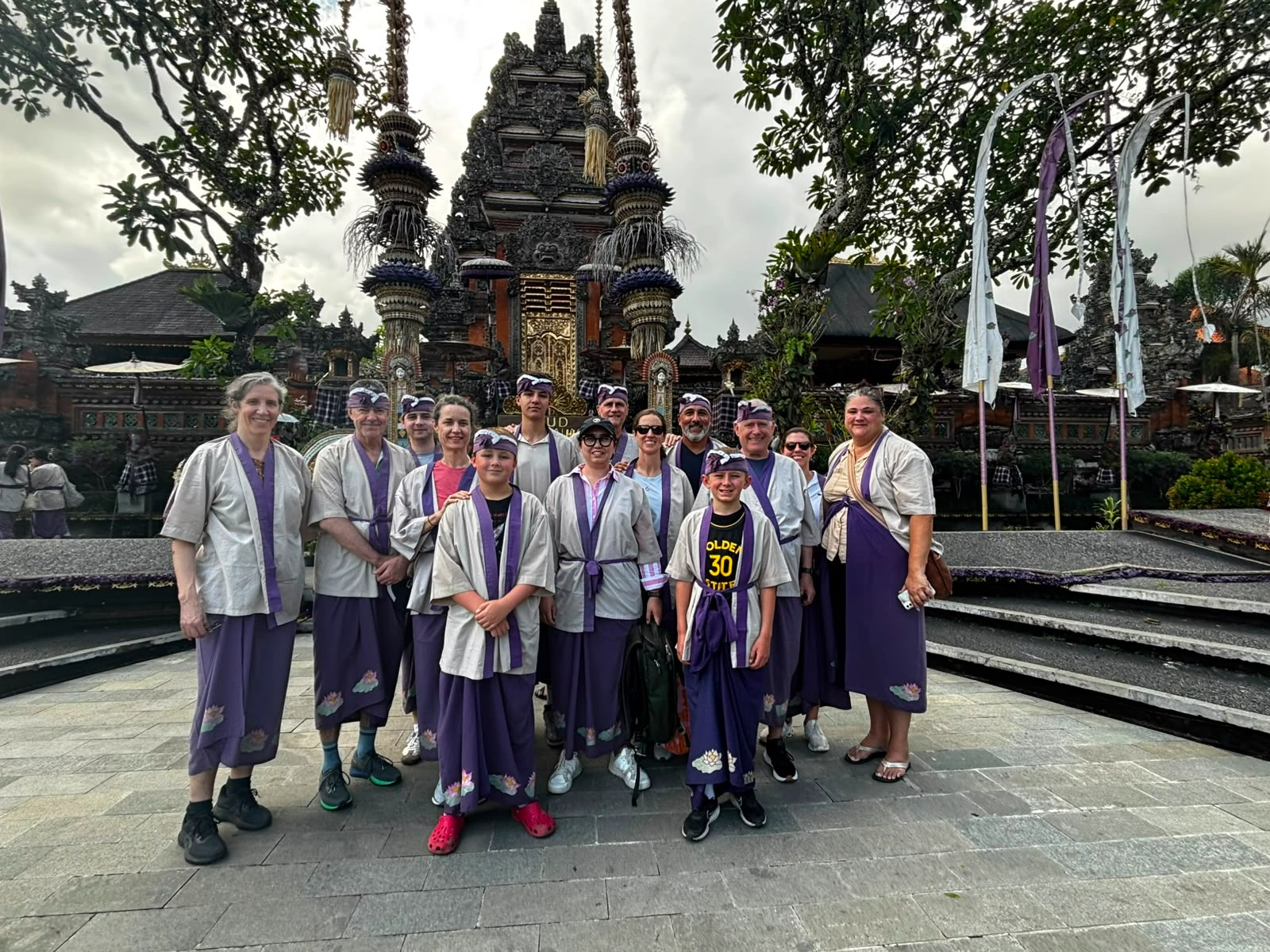
Wear modest clothing that covers the shoulders and knees where practical.
A sarong and sash may be required when entering temple areas. Requirements can differ depending on which part of the complex you are visiting and whether a ceremony is taking place.
A practical outfit would be:
- T-shirt or shirt covering the shoulders
- long trousers or a long skirt
- sarong if required
- sash if required
- comfortable walking shoes
If you are planning to visit several temples in Bali on the same day, carrying a lightweight sarong and sash is a useful option.
Other Temples Near Saraswati Temple
For travelers interested in exploring Ubud temples, Saraswati Temple is a convenient starting point because several other religious sites can be reached from central Ubud.
Pura Desa Ubud
Located in the central Ubud area, Pura Desa Ubud is one of the important temples associated with the town.
Pura Dalem Ubud
This temple is another religious landmark in the central Ubud area and provides a different perspective on Balinese Hindu temple architecture.
Pura Dalem Agung Padangtegal
Located farther south near the Sacred Monkey Forest area, this temple can be combined with a visit to the Monkey Forest.
Goa Gajah
Goa Gajah, or the Elephant Cave, is outside the central town and requires transportation. It is an important archaeological and religious site near Ubud.
The advantage of combining these places is that visitors can see how different temples and sacred spaces fit into the broader cultural landscape around Ubud.
What to Do Near Saraswati Temple Ubud
If you are planning a wider itinerary, a detailed Ubud travel guide can help you organize nearby temples, cultural attractions, restaurants, and walking routes.
Consider adding:
- Ubud Palace
- Ubud Market
- Puri Lukisan Museum
- Jalan Raya Ubud
- Jalan Kajeng
- Campuhan Ridge Walk
- other temples in central Ubud
- traditional Balinese dance performances
The area around Saraswati Temple is particularly suitable for travelers who want to explore Ubud on foot.
Best Time to Visit Saraswati Temple
What Is the Best Time to Visit Saraswati Temple?
For most visitors, morning or late afternoon is the best time to visit.
Morning
Morning is ideal if you want:
- fewer people
- softer light
- a quieter atmosphere
- cooler temperatures
- easier photography
Late Afternoon
Late afternoon can be attractive if you want:
- warmer photography light
- a more relaxed atmosphere
- to continue exploring central Ubud afterward
During Lotus Bloom
The lotus pond is the temple’s most recognizable visual feature, but the exact appearance of the flowers can vary depending on season, weather and maintenance.
If photography is your priority, allow yourself some flexibility rather than expecting every flower to be fully open at a particular hour.
Can You Take Photos at Saraswati Temple?
Photography is generally possible in publicly accessible areas, particularly around the lotus pond and exterior architecture.
However, photography rules should always follow the current instructions at the temple.
Be especially careful when:
- ceremonies are taking place
- people are praying
- religious offerings are being prepared
- entering restricted areas
- photographing priests or worshippers
A beautiful photograph is not more important than someone’s religious practice.
Saraswati Temple and Ubud's Cultural Identity
One reason Saraswati Temple Bali feels different from many conventional tourist attractions is its relationship with Ubud’s cultural identity.
Ubud has long been associated with Balinese art, including painting, sculpture, dance and traditional architecture. Government and academic publications describing Ubud’s development also emphasize the role of local artists, royal patronage and organizations such as Pita Maha in the growth of the town’s artistic reputation.
I Gusti Nyoman Lempad is an important figure in that history.
His involvement in Saraswati Temple connects the building to a broader tradition of Ubud architecture and artistic craftsmanship rather than making it simply another tourist attraction.
That is one reason the temple is worth seeing even if you have already visited other Balinese temples.
Visiting Saraswati Temple Respectfully
Remember that Pura Taman Saraswati is a Hindu temple first and a tourist attraction second.
A respectful visit means:
Dress appropriately
Cover yourself modestly and use a sarong and sash where required.
Respect ceremonies
If a ceremony is taking place, stay outside restricted areas and follow instructions.
Do not step over offerings
Canang sari and other offerings are an important part of Balinese religious life. Do not step on or move them for photographs.
Ask before photographing people
Especially when photographing priests, worshippers or ceremonies.
Keep the temple clean
Do not leave rubbish behind.
Follow temporary restrictions
Access can change during religious ceremonies and special days.
These simple actions help ensure that tourism remains compatible with the religious life of the temple.
Conclusion:
For travelers exploring central Ubud, Pura Taman Saraswati is an easy recommendation.
It does not require a full day. Instead, its value comes from the combination of Balinese Hindu culture, traditional architecture, lotus gardens, artistic heritage and a highly convenient location.
A practical Ubud sightseeing route could combine Saraswati Temple, Ubud Palace, Ubud Market and nearby cultural attractions in one walking-focused itinerary.
Most importantly, approach the temple as a living place of worship. Take time to appreciate the architecture and lotus pond, but remember that the religious significance of Ubud Saraswati Temple is what gives the site its deeper character.
If you are interested in understanding the cultural side of Bali rather than simply checking off tourist attractions, Pura Taman Saraswati deserves a place on your Ubud itinerary.

1 Comment