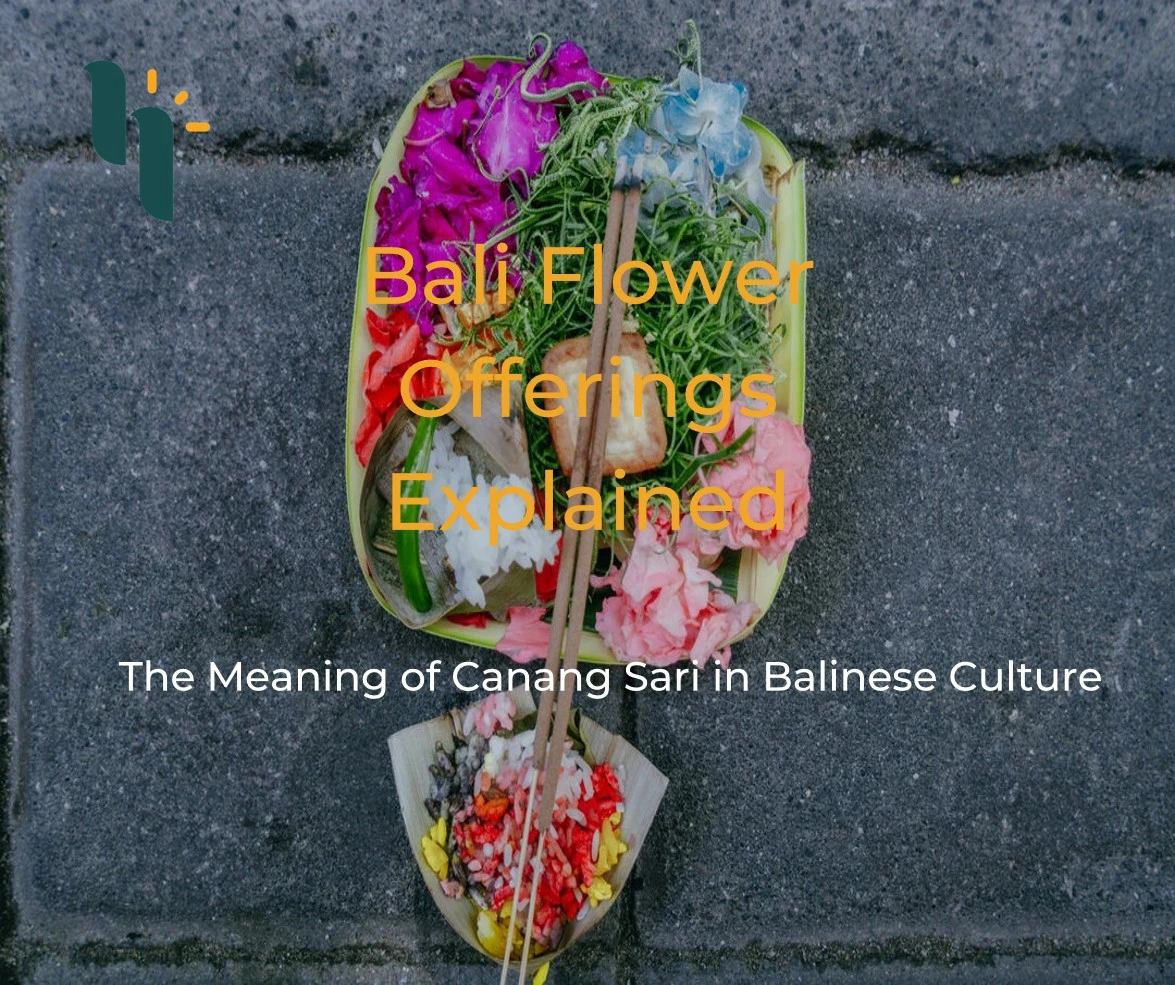

If you’re visiting Bali for the first time, you’ll quickly notice small woven baskets filled with colorful flowers, rice, and incense placed almost everywhere. They appear on sidewalks, at the entrances of homes and shops, inside temples, beside statues, and even on motorcycles and cars. Many travelers admire their beauty but rarely understand their true purpose.
These Bali flower offerings, known locally as Canang Sari, are far more than decorative arrangements. They represent one of the most important daily spiritual practices in Balinese Hinduism, expressing gratitude, maintaining harmony, and strengthening the relationship between humans, nature, and the divine.
For visitors from Australia and around the world, understanding the meaning of Canang Sari offers a deeper appreciation of Bali beyond its beaches and luxury resorts. It also helps travelers avoid common cultural mistakes and experience the island with greater respect.
This guide explores the history, philosophy, symbolism, and traditions behind Bali flower offerings while explaining why they remain an essential part of everyday life for millions of Balinese people.
What Are Bali Flower Offerings?
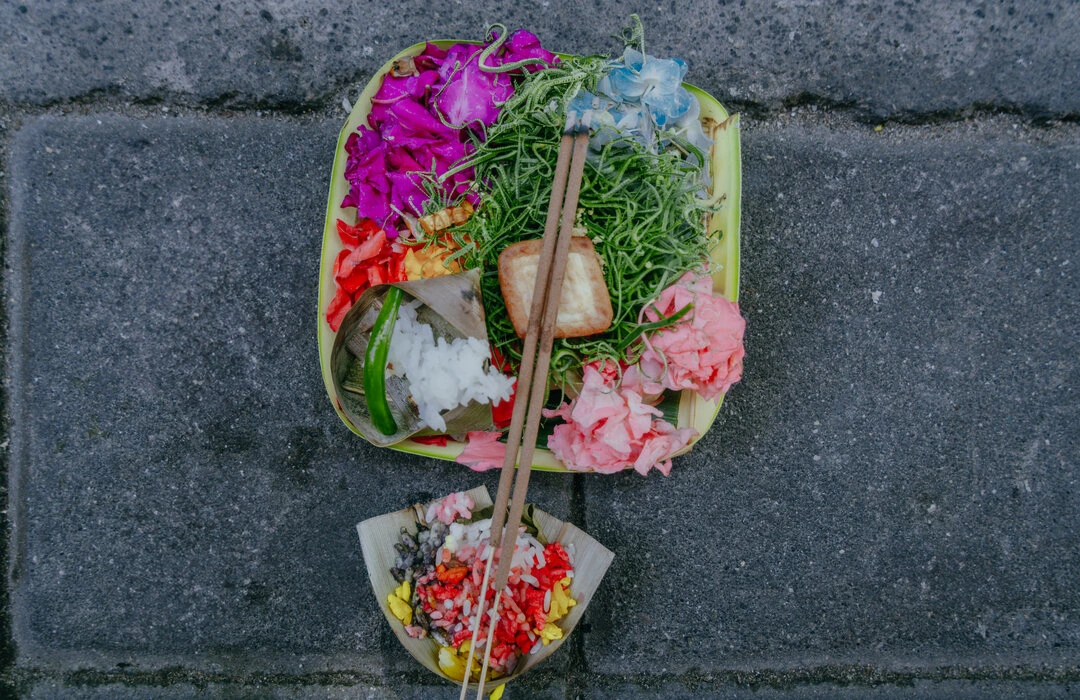
Bali flower offerings are handmade offerings prepared daily by Balinese Hindu families as an expression of gratitude and devotion. The most common type is Canang Sari, a small palm-leaf basket containing flowers, rice, betel leaves, and burning incense.
Unlike religious rituals performed only on special occasions, Canang Sari is created every single day, often before sunrise. Families prepare dozens of offerings for different locations around their homes, businesses, temples, vehicles, and workplaces.
Every offering serves a purpose. Rather than asking for wealth or success, Canang Sari symbolizes appreciation for life, balance, and the blessings received from the divine.
The practice reflects one of Bali’s deepest philosophical beliefs: harmony must be maintained continuously, not only during ceremonies.
Why Do You See Offerings Everywhere in Bali?
One of the biggest surprises for visitors is discovering offerings in unexpected places.
You may notice them:
- At the entrance of hotels
- Outside cafés
- On sidewalks
- Inside family compounds
- At temple gates
- In rice fields
- On scooters
- In taxis
- At airport shops
- Near beaches
- Beside statues
- In local markets
Many tourists wonder why offerings are placed directly on the ground where people walk.
The answer lies in Balinese spiritual philosophy.
Different locations are believed to have different spiritual purposes. Some offerings are dedicated to the gods, while others are intended to maintain harmony with natural and unseen forces. Rather than representing superstition, these daily rituals symbolize balance between every aspect of life.
For local people, making offerings is not considered a religious obligation alone. It is a daily reminder to live with gratitude, humility, and respect.
The History of Canang Sari
The tradition of making flower offerings has existed in Bali for centuries and developed alongside the growth of Balinese Hinduism.
While Hinduism originally arrived in Indonesia from India more than a thousand years ago, Balinese communities gradually adapted religious teachings to local customs and beliefs. Over generations, these influences evolved into the unique form of Balinese Hinduism practiced today.
Canang Sari became one of the simplest yet most meaningful expressions of daily worship.
Unlike elaborate ceremonial offerings prepared during major festivals, Canang Sari was designed to be accessible to every household regardless of social status. Rich or poor, every family can prepare a simple offering using natural materials found in their surroundings.
This tradition has continued across generations, with knowledge passed from grandparents to parents and then to children. Even today, many young Balinese learn how to weave coconut leaves and arrange flowers long before reaching adulthood.
Despite rapid tourism growth and modernization, Canang Sari remains an inseparable part of everyday life across the island.
The Meaning of Canang Sari
The phrase Canang Sari has a profound symbolic meaning.
- Canang refers to the small woven tray traditionally crafted from young coconut leaves.
- Sari means “essence” or “the best part.”
Together, they represent offering the finest part of oneself to the Creator.
Rather than being measured by monetary value, the sincerity behind the offering is considered the most important element.
Every Canang Sari reminds the person preparing it to begin the day with gratitude, mindfulness, and positive intentions.
Tri Hita Karana: The Philosophy Behind Every Offering
To truly understand Bali flower offerings, it is important to understand Tri Hita Karana, one of the core philosophies of Balinese life.
Tri Hita Karana can be translated as “the three causes of well-being and happiness.”
It teaches that harmony in life depends on maintaining balance in three relationships:
Harmony with God
Daily offerings express gratitude and devotion to the divine.
Harmony with Other People
Acts of kindness, respect, and cooperation strengthen relationships within families and communities.
Harmony with Nature
Balinese people believe humans should respect forests, rivers, mountains, animals, and the environment because all forms of life are interconnected.
Canang Sari reflects these three relationships simultaneously, making it much more than a religious object.
It becomes a daily practice of living in balance.
Why Tri Hita Karana Is Recognized Around the World
The philosophy behind Canang Sari extends beyond religious practice. It reflects Tri Hita Karana, the Balinese principle of maintaining harmony between people, nature, and the divine. This philosophy has gained international recognition through the Cultural Landscape of Bali Province: the Subak System as a Manifestation of the Tri Hita Karana Philosophy, which was inscribed as a UNESCO World Heritage Site in 2012.
Although the UNESCO designation focuses on Bali’s traditional Subak irrigation system, it also highlights how spiritual beliefs, community cooperation, and environmental stewardship are deeply connected in Balinese life. The same philosophy can be seen every morning when families prepare Canang Sari, demonstrating that gratitude and harmony are practiced not only during major ceremonies but as part of everyday life.
Who Is Sang Hyang Widhi Wasa?
Balinese Hinduism recognizes Sang Hyang Widhi Wasa as the Supreme Divine Being.
Although visitors often see many gods represented in temples, these deities symbolize different manifestations or aspects of one supreme divine reality.
When Balinese families prepare Canang Sari, they are ultimately expressing gratitude to Sang Hyang Widhi Wasa while honoring the interconnectedness of all life.
This spiritual perspective helps explain why gratitude is central to Balinese culture.
Rather than focusing only on requests or personal desires, many prayers begin by acknowledging blessings that have already been received.
A Morning in Bali: A Living Tradition
One of the most memorable cultural experiences for visitors happens early in the morning.
As the sun rises, many Balinese women begin preparing fresh Canang Sari using flowers collected that morning and baskets woven from young coconut leaves.
The scent of incense fills the air while prayers are quietly offered at family shrines, business entrances, and temples.
Children often watch or help their parents and grandparents, learning each step of the tradition through observation and practice rather than formal lessons.
This daily ritual reflects how Balinese culture is preserved not through museums or textbooks, but through everyday life.
For travelers who pause to observe respectfully, these simple moments often become some of the most meaningful memories of their journey in Bali.
The Symbolism Behind Every Flower Color
At first glance, the flowers inside a Canang Sari may seem like a beautiful arrangement chosen for their fragrance or appearance. In reality, every flower is carefully selected and placed according to Balinese Hindu philosophy.
Each color represents a different direction and a manifestation of the divine, creating a symbolic balance within the offering
| Flower Color | Direction | Symbolic Meaning |
| White | East | Purity, sincerity, and spiritual enlightenment |
| Red | South | Courage, energy, and protection |
| Yellow | West | Prosperity, gratitude, and blessings |
| Blue or Green | North | Peace, wisdom, and harmony |
Depending on local tradition, blue flowers are uncommon, so green leaves or naturally available flowers may represent the northern direction.
When combined in a single offering, these colors symbolize the balance of the universe and remind the person making the offering that life should remain in harmony with both the physical and spiritual worlds.
This symbolism is one reason why flowers are never placed randomly inside a Canang Sari.
What Is Inside a Canang Sari?
Although Canang Sari appears simple, every component has its own meaning.
A traditional Canang Sari commonly includes:
A Palm-Leaf Basket
The small woven tray is handcrafted from young coconut leaves (janur). It represents the foundation of the offering and reflects the creativity and craftsmanship that have been passed down through generations.
Fresh Flowers
Flowers symbolize beauty, gratitude, and devotion. Different colors represent different aspects of harmony and spiritual balance.
Rice
Rice represents prosperity, life, and gratitude for the blessings that sustain every family.
Betel Leaf and Lime
These traditional ingredients symbolize sincerity and purity. While not every modern offering includes them, they remain important in many communities.
Incense
After the offering is placed, incense is lit. The rising smoke symbolizes prayers being carried toward the divine while also creating a peaceful atmosphere for reflection.
Every element works together as a reminder that gratitude should be expressed through both intention and action.
Why Is Incense So Important?
Visitors often notice the gentle scent of incense throughout Bali, especially in the early morning.
Incense is not simply used for fragrance.
In Balinese Hindu tradition, burning incense represents:
- Purifying the surrounding environment.
- Creating a peaceful space for prayer.
- Symbolizing the connection between the physical and spiritual worlds.
- Carrying prayers upward through the rising smoke.
Many locals take a quiet moment to pause, pray, and reflect while the incense burns, making the ritual as much about mindfulness as devotion.
Daily Offerings vs. Ceremonial Offerings
One common misconception is that every Balinese offering is the same.
In reality, there are many different types of offerings, each serving a unique purpose.
| Daily Canang Sari | Ceremonial Offerings |
| Small and simple | Large and elaborate |
| Prepared every morning | Prepared for religious festivals |
| Found outside homes, shops, and temples | Used during temple anniversaries, Galungan, Kuningan, weddings, and other ceremonies |
| Focus on daily gratitude | Celebrate important spiritual events |
| Usually made by individual families | Often prepared collectively by the community |
Ceremonial offerings can take hours or even days to prepare. They may include fruit towers, cakes, rice arrangements, flowers, woven decorations, and intricate ornaments made from coconut leaves.
Seeing these larger offerings during a temple festival is one of the most impressive cultural experiences visitors can witness in Bali.
Different Types of Balinese Offerings
While Canang Sari is the most familiar offering to visitors, it is only one part of a much broader tradition.
Other offerings include:
Banten Pejati
Prepared for important prayers and religious ceremonies.
Gebogan
Tall arrangements of tropical fruits carried on the heads of women during temple festivals. They symbolize gratitude for nature’s abundance.
Segehan
Simple offerings placed directly on the ground to maintain balance with the surrounding environment.
Banten Saiban
Small offerings presented before meals as an expression of gratitude for food.
Understanding these different offerings helps visitors appreciate that Balinese spirituality is woven into every aspect of daily life rather than being limited to temple ceremonies.
Why Are Offerings Placed on the Ground?
This is one of the questions visitors ask most frequently.
Seeing beautiful flower arrangements placed on sidewalks or in front of shops can seem unusual, leading some travelers to assume they have been dropped accidentally.
They have not.
Some offerings are intentionally placed at ground level to acknowledge and maintain harmony with all aspects of the natural and spiritual world.
This practice reflects the Balinese belief that balance is essential. Just as prayers are offered upward toward the divine, respect is also shown toward the unseen forces believed to exist within the surrounding environment.
For this reason, offerings may be found:
- At entrances.
- At crossroads.
- On pathways.
- Near trees.
- Beside statues.
- Around businesses.
- At intersections.
- In rice fields.
Each location has cultural and spiritual significance.
Did You Know?
Every morning before sunrise, millions of Bali flower offerings are placed across the island by Balinese Hindu families. While they may appear simple, these offerings represent centuries of spiritual tradition that continues to shape everyday life in Bali.
Here are a few fascinating facts:
Bali is home to more than 20,000 temples, ranging from small family shrines to major temple complexes.
The philosophy behind Canang Sari is closely connected to Tri Hita Karana, a concept internationally recognized through the UNESCO-listed Cultural Landscape of Bali Province.
Most traditional offerings are still handcrafted using biodegradable materials such as young coconut leaves, fresh flowers, rice, and natural fibers.
During major festivals like Galungan and Kuningan, families prepare significantly larger and more elaborate offerings than those used for daily worship.
Many Balinese households begin preparing offerings before sunrise, making this one of the island’s longest-standing daily traditions.
Common Mistakes Tourists Make Around Offerings
Most Balinese understand that visitors may not be familiar with local traditions. Accidental mistakes are usually met with patience and understanding.
However, learning a few simple guidelines can help you show respect.
Stepping on an Offering
The most common mistake is accidentally walking over a Canang Sari.
If you notice one in your path, simply walk around it whenever possible.
Moving an Offering
Avoid picking up or relocating an offering unless a local specifically asks for your assistance.
Interrupting a Prayer
If someone is praying beside an offering, wait quietly until they have finished before passing or taking photographs.
Sitting on Temple Structures
Temple walls, shrines, and sacred platforms should never be treated as benches for resting or taking photos.
Flying Drones During Ceremonies
Many ceremonies are deeply spiritual occasions. Always ask permission before using a drone or other equipment near religious events.
Can Tourists Participate?
Yes, but participation should always be respectful and guided by local people.
Many cultural experiences and community workshops allow visitors to learn how Canang Sari is made.
These experiences often include:
- Learning to weave coconut leaves.
- Understanding flower symbolism.
- Preparing an offering under local guidance.
- Visiting a traditional family compound.
- Discussing Balinese philosophy with community members.
Rather than simply observing, these activities provide a deeper understanding of the values behind the tradition.
How Can Visitors Show Respect?
Respecting Balinese culture does not require extensive knowledge of Hindu philosophy. Small actions can make a meaningful difference.
- Walk around offerings whenever possible.
- Dress modestly when visiting temples.
- Follow instructions from temple staff or local guides.
- Ask permission before photographing ceremonies or individuals.
- Speak quietly during religious events.
- Never climb on shrines or sacred structures.
- Keep temple grounds clean.
- Support locally owned cultural experiences and artisans.
These simple gestures demonstrate appreciation for the traditions that make Bali unique.
Why This Tradition Continues Today
Despite rapid tourism growth, urban development, and modern lifestyles, Canang Sari remains an essential part of everyday life across Bali.
For many Balinese families, preparing offerings is not seen as an obligation but as an opportunity to pause, reflect, and begin the day with gratitude.
Children continue learning from parents and grandparents, ensuring that this living tradition is passed on to future generations.
In a fast-moving world, the daily practice of making Bali flower offerings serves as a quiet reminder that happiness is built through balance, respect, and appreciation for both people and nature.
How Canang Sari Varies Across Bali
Although the philosophy behind Bali flower offerings remains consistent throughout the island, the appearance of Canang Sari can vary from one region to another. These subtle differences reflect local traditions, family customs, and the availability of natural materials.
In Ubud and Gianyar, where many communities are deeply connected to artistic traditions, offerings are often more intricate. The woven coconut leaf decorations may feature detailed patterns that showcase remarkable craftsmanship.
In Karangasem, local families frequently incorporate flowers and leaves that grow naturally in the eastern part of the island. The overall design may appear simpler, yet it carries the same spiritual significance.
In the mountainous villages of Bangli, where agriculture plays a central role in daily life, offerings often include fresh produce harvested from nearby fields. Seasonal ingredients may also influence their appearance.
Across coastal communities in southern Bali, the rapid pace of tourism has encouraged some families to purchase ready-made Canang Sari from local markets. However, many households continue to prepare their own offerings every morning as an important family tradition.
These regional variations demonstrate that Balinese culture is not static. While customs evolve over time, the values of gratitude, harmony, and devotion remain unchanged.
Tourism and the Preservation of Balinese Traditions
Tourism has transformed Bali into one of the world’s most visited island destinations. Millions of international visitors arrive each year to experience its beaches, temples, rice terraces, and unique culture.
This growth has created both opportunities and challenges.
On one hand, tourism provides employment for local communities and encourages cultural performances, traditional crafts, and temple restoration projects. Many visitors develop a genuine appreciation for Balinese culture after learning about practices such as Canang Sari.
On the other hand, increasing visitor numbers can sometimes lead to misunderstandings.
Some travelers unknowingly:
- Step on offerings while taking photographs.
- Interrupt ceremonies without realizing they are sacred.
- Treat temples as photo locations rather than places of worship.
- Move offerings to create a better picture.
These actions are rarely intentional, but they highlight the importance of cultural education.
By understanding the meaning of Bali flower offerings before arriving, visitors become more respectful guests and contribute positively to preserving Bali’s living traditions.
Are Bali Flower Offerings Environmentally Friendly?
One aspect that many visitors overlook is the environmental nature of traditional Canang Sari.
Historically, almost every component came directly from nature:
- Young coconut leaves
- Fresh flowers
- Rice
- Natural fibers
- Leaves
- Bamboo
These materials naturally decompose and return to the environment.
However, modern lifestyles have introduced some changes. In certain areas, plastic decorations or synthetic ribbons occasionally appear in ceremonial offerings because they are inexpensive and durable.
Many Balinese communities are now encouraging a return to biodegradable materials to reduce environmental impact while preserving cultural authenticity.
Supporting local artisans who continue using traditional materials also helps sustain both cultural heritage and environmental responsibility.
Where Can You Experience This Tradition Respectfully?
One of the best ways to understand Canang Sari is by observing daily life rather than searching for staged performances.
Some of the most rewarding places include:
Traditional Villages
Small villages often provide opportunities to witness authentic morning routines and community life.
Family Compounds
When invited by a local family or accompanied by a knowledgeable guide, visitors can observe how offerings are prepared before prayers.
Local Markets
Early morning markets are where many families purchase fresh flowers, coconut leaves, and ceremonial materials.
Temples
Temples remain the heart of Balinese spiritual life. Visitors are welcome at many temple complexes, provided they follow local etiquette and dress appropriately.
Cultural Workshops
Several community-based experiences allow visitors to learn how to weave a simple Canang Sari while gaining insight into its philosophy and symbolism.
Experience Balinese Culture Beyond the Tourist Attractions
While famous beaches and waterfalls attract millions of visitors, Bali’s greatest treasure is its living culture.
Taking time to understand traditions such as Canang Sari transforms an ordinary holiday into a meaningful cultural journey.
If you would like to experience Bali beyond the typical tourist route, joining a guided cultural tour can help you gain deeper insight into local traditions, temple etiquette, and the stories behind the island’s most sacred places.
Our Ubud Cultural Tour and Ubud Temple Tour are designed to introduce visitors to authentic Balinese heritage while encouraging respectful and sustainable travel. Rather than simply visiting landmarks, you’ll discover the philosophy, history, and traditions that continue to shape everyday life across Bali.
Frequently Asked Questions
1. What are Bali flower offerings?
They are daily offerings prepared by Balinese Hindus to express gratitude and maintain harmony with the divine, other people, and nature.
2. What is Canang Sari?
Canang Sari is the most common type of Balinese daily offering made from a woven coconut leaf basket filled with flowers, rice, and incense.
3. Why do Balinese make offerings every day?
The daily ritual reflects gratitude, mindfulness, and the importance of maintaining balance in life.
4. Can tourists touch Canang Sari?
It is best not to touch or move an offering unless invited to do so by a local.
5. What happens if I accidentally step on one?
Accidents happen. If it occurs, simply continue respectfully and be more aware in the future.
6. Are the offerings only found in temples?
No. They are commonly placed at homes, businesses, family shrines, vehicles, shops, and many public spaces.
7. Can visitors learn how to make Canang Sari?
Yes. Many community workshops and cultural experiences welcome visitors who wish to learn.
8. Why is incense included?
The rising smoke symbolizes prayers and helps create a peaceful atmosphere during worship.
9. Are all offerings the same?
No. Bali has many different types of offerings used for daily worship and special ceremonies.
10. What should visitors remember most?
Always treat Bali flower offerings with respect, observe local customs, and appreciate that they are an important expression of Balinese culture rather than a tourist attraction.
Final Thoughts
At first glance, Bali flower offerings may appear to be simple baskets of flowers placed along the streets. Yet behind every Canang Sari lies a centuries-old tradition rooted in gratitude, balance, and spiritual devotion.
For the Balinese people, these offerings are not merely rituals they are daily reminders to live in harmony with God, with others, and with nature. This philosophy, reflected in Tri Hita Karana, continues to shape everyday life across the island and remains one of the reasons Bali is known not only for its natural beauty but also for its rich cultural heritage.
For visitors, taking a moment to understand the meaning behind Canang Sari transforms the travel experience. Instead of simply observing beautiful traditions, you begin to appreciate the values that sustain Balinese communities and preserve their identity across generations.
Whether you are exploring a quiet village, visiting an ancient temple, or walking through the streets of Ubud, recognizing the significance of these small offerings will help you experience Bali with greater respect and deeper cultural understanding.