


Introduction to Goa Lawah Temple
Bali is home to countless temples, each with its own history, spiritual significance, and distinctive architectural character. Some stand on dramatic coastal cliffs, others sit among lush rice terraces, and a few are hidden within tropical forests. However, Goa Lawah Temple Bali offers something particularly unusual: a sacred Hindu temple built directly in front of a natural cave inhabited by thousands of bats. Located along the southeastern coastline of the island, this remarkable destination combines Balinese religious traditions, local legends, and fascinating wildlife in one place.
Known locally as Pura Goa Lawah, the temple is commonly called the Bat Cave Temple because of the large colony of bats living inside its sacred cave. The name comes from two Balinese words: goa, meaning cave, and lawah, meaning bat. Unlike ordinary tourist attractions, this temple remains an active place of worship where local Hindu communities visit to pray, make offerings, and participate in religious ceremonies. The continuous sound of bats inside the cave creates an atmosphere that feels quite different from other temples around Bali.
For travelers exploring East Bali, Goa Lawah is an interesting destination to include in a cultural sightseeing itinerary. Its location makes it convenient to combine with attractions such as Taman Ujung Water Palace, Tirta Gangga, Candidasa, and other destinations in Karangasem. Whether you are interested in Balinese Hindu culture, traditional architecture, or simply discovering unusual places, this temple offers a worthwhile experience. Before planning your visit, it helps to understand its history, entrance fee, location, and the cultural traditions that make it one of Bali’s distinctive sacred landmarks.
Where Is Goa Lawah Temple Located?
Goa Lawah Temple Location in Klungkung
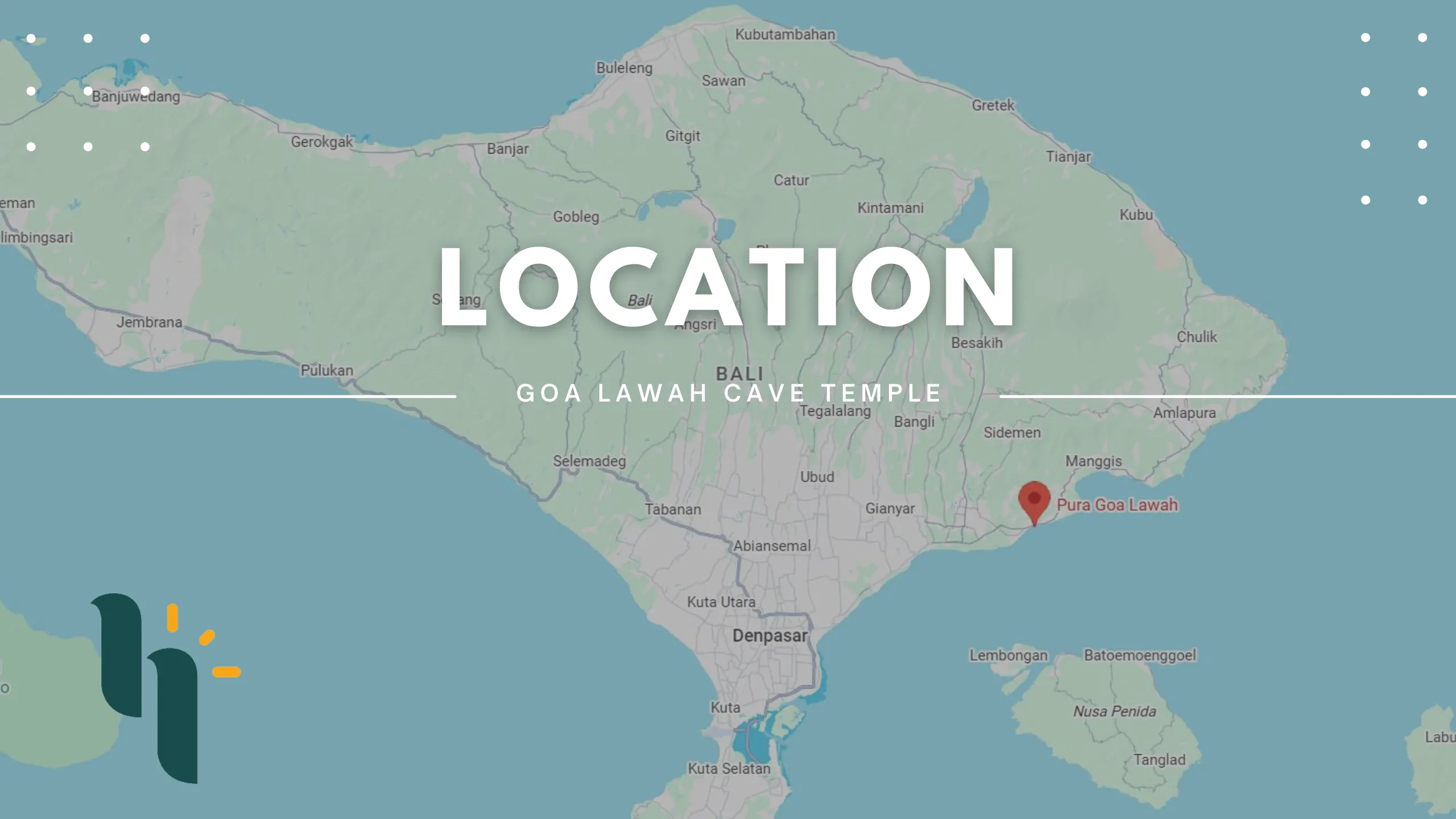
Goa Lawah Temple is located in Pesinggahan Village, Dawan District, Klungkung Regency, Bali, Indonesia. It sits beside Jalan Raya Goa Lawah, an important coastal road connecting the Klungkung area with destinations farther east, including Padangbai and Candidasa. Because the temple is positioned directly beside the main road, visitors can reach it without following a long mountain route or walking through remote countryside.
The temple’s coastal setting is another reason it attracts travelers. Across the road, visitors can find a stretch of dark volcanic sand and views toward the Indian Ocean. On clear days, the surrounding coastline creates an attractive backdrop for photography, especially when traditional temple structures are viewed against the natural landscape. The combination of religious architecture, a natural cave, and coastal scenery makes Goa Lawah different from many other temples in Bali.
Its position in Klungkung also gives the temple historical importance. Klungkung was once one of Bali’s influential royal centers, and the region preserves several important examples of Balinese culture and heritage. Travelers interested in the island’s history can combine a visit to Goa Lawah with Kerta Gosa, the historic royal courthouse in Semarapura, or continue toward the traditional villages and coastal attractions of East Bali.
How to Get to Goa Lawah Temple
Getting to Goa Lawah Temple is relatively straightforward because it is located along the main southeastern coastal road. You can reach the destination by private bali tour, motorcycle, or taxi from several popular tourist areas. The journey offers an opportunity to see another side of Bali, passing traditional villages, local markets, rice fields, and coastal landscapes along the way.
Here are approximate driving distances and travel times from several popular destinations:
Starting Location | Approximate Distance | Estimated Driving Time |
Ubud | 35–40 km | 1–1.5 hours |
Sanur | 35 km | 50–70 minutes |
Seminyak | 50–55 km | 1.5–2 hours |
Canggu | 55–60 km | 1.5–2 hours |
Kuta | 45–50 km | 1.25–1.75 hours |
Candidasa | 15–20 km | 20–30 minutes |
Padangbai | 10–12 km | 15–20 minutes |
Distances and travel times are estimates and can change depending on traffic, road conditions, and your starting point.
If you are staying in Ubud, hiring a private driver is a convenient option, particularly if you plan to visit several attractions during the same day. You can arrange hotel pickup, visit Goa Lawah, and continue toward other destinations without worrying about finding transportation between locations. Motorcycle rental is another possibility for experienced riders who are comfortable navigating Bali’s traffic and local roads.
Travelers who want to explore several cultural and natural attractions can also consider an East Bali tour. This type of trip can include Goa Lawah Temple alongside other destinations, allowing you to experience more of the eastern part of the island in a single journey.
The History of Pura Goa Lawah Temple
The Origins of the Temple
The history of Pura Goa Lawah is closely connected to the development of Hindu religious traditions in Bali. The temple is traditionally associated with Mpu Kuturan, an influential Hindu priest who played an important role in shaping Balinese religious and cultural practices. Historical and tourism references commonly attribute the temple’s establishment to the 11th century, making it one of the island’s long-established sacred sites.
Mpu Kuturan is remembered for his contributions to the organization of Balinese Hindu worship, temple traditions, and community religious structures. His influence can still be seen in several important temples throughout Bali. Although the exact details of Goa Lawah’s earliest construction are difficult to establish from surviving historical records, its traditional association with this important religious figure gives the site considerable cultural significance.
Over many generations, the temple developed into an important place of worship for Balinese Hindus. Its position beside the sea and its unusual cave setting became closely connected with local religious beliefs. Rather than being constructed simply as an architectural attraction, the temple reflects the relationship between nature, spirituality, and the traditional Balinese understanding of the universe.
Today, the temple continues to welcome worshippers who come to make offerings and perform religious activities. Visitors can observe traditional ceremonies when they coincide with their trip, although they should always remember that Goa Lawah is first and foremost a sacred religious destination.
Religious Importance in Balinese Hinduism
Goa Lawah Temple holds an important position in Balinese Hindu religious traditions. It is commonly associated with Bali’s sacred directional temples, which are believed to protect the island and maintain spiritual balance. Some references include it among the Sad Kahyangan, a group of highly revered temples associated with the spiritual protection of Bali.
The temple’s location near the sea is especially meaningful within Balinese Hindu beliefs. Water plays an essential role in purification rituals, while the ocean is connected with spiritual cleansing and the relationship between the human world and the unseen world. For this reason, Goa Lawah is associated with religious activities involving purification and ceremonies connected with death and ancestral traditions.
One of the temple’s important roles is its connection with particular stages of Balinese Hindu funeral and purification practices. Religious ceremonies in Bali are often complex and may involve several temples, offerings, family members, and community participation. Goa Lawah can form part of these spiritual journeys, demonstrating that its importance extends far beyond its unusual bat population.
When visiting, you may notice small offerings made from woven palm leaves, flowers, and other traditional materials. These offerings are part of everyday Hindu religious life in Bali. Observing them provides an opportunity to appreciate how spirituality remains integrated into the island’s daily routines.
Why Is Goa Lawah Temple Called the Bat Cave Temple?
The Bats Living Inside the Sacred Cave
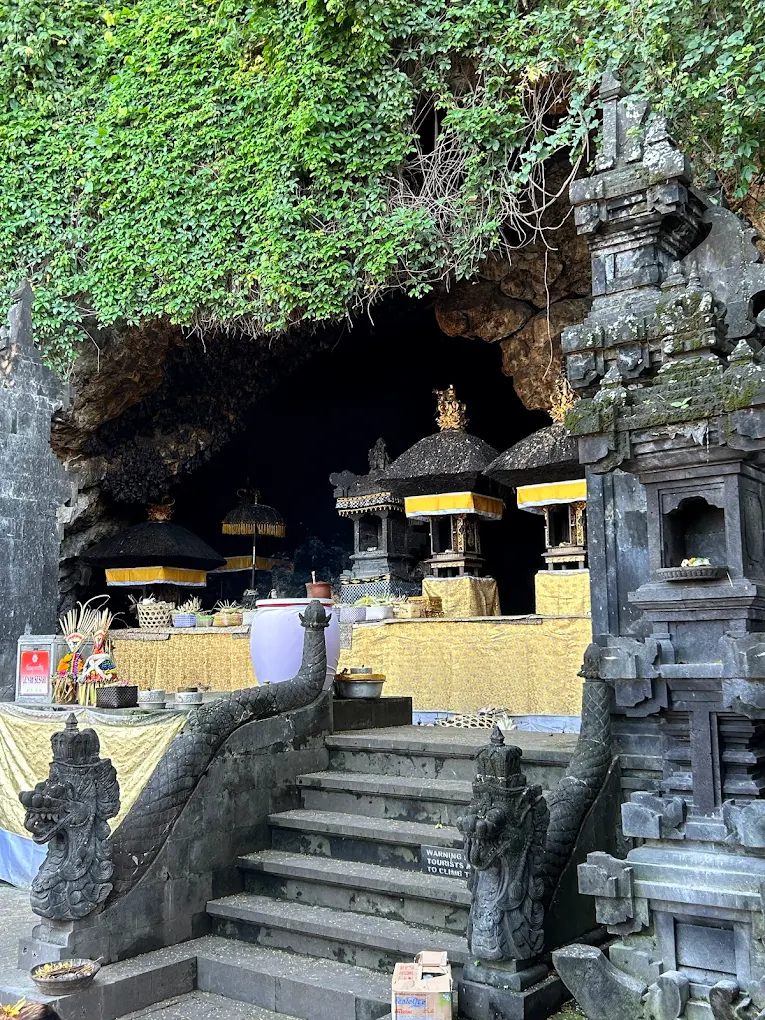
The most recognizable feature of Goa Lawah Temple is undoubtedly its natural cave, which is home to a large colony of bats. Unlike many caves that require visitors to walk underground, the cave at Goa Lawah is positioned directly behind the temple’s main sacred structures. Its entrance is visible from the temple courtyard, allowing visitors to observe the bats without entering their natural habitat.
Thousands of bats can be seen hanging from the cave ceiling and walls, particularly during daylight hours when they gather to rest. Their constant movement and distinctive sounds create a fascinating atmosphere. Visitors who approach the cave entrance may also notice a strong natural smell caused by the accumulation of bat droppings over time.
The bats are not simply animals living near a religious attraction. They form an important part of the temple’s identity and are traditionally regarded as sacred creatures associated with the protection of the site. Their presence has become closely connected with local stories and spiritual beliefs passed down through generations.
For wildlife enthusiasts, the cave offers an unusual opportunity to observe a large bat colony within a functioning religious environment. However, the animals should always be treated with respect. Visitors are not permitted to enter the sacred cave or disturb the bats, and touching or attempting to feed them is inappropriate.
The Legend of the Cave Connection to Besakih Temple
One of the most fascinating stories surrounding Goa Lawah Temple concerns a legendary underground passage believed to connect the bat cave with Besakih Temple on the slopes of Mount Agung.
According to local tradition, the cave extends deep beneath the island, creating a mysterious connection between two important religious sites. Some versions of the story describe the passage as a route used by a prince who escaped his enemies by hiding inside the cave. Other traditions associate the cave with sacred spiritual energy and supernatural protection.
Another important figure in local mythology is Naga Basuki, a sacred serpent believed to maintain balance in the universe. In Balinese Hindu cosmology, naga figures are associated with water, protection, and the balance between different forces of nature. Images and decorative motifs representing mythical serpents can be found in the temple’s architectural details.
The supposed underground connection between Goa Lawah and Besakih remains a religious legend rather than a verified geological passage. Nevertheless, the story adds another layer of cultural meaning to the temple. For visitors, understanding these traditions helps explain why the site is considered much more than an ordinary cave inhabited by bats.
What to See at Goa Lawah Temple Bali
Traditional Balinese Temple Architecture
Although the bat cave is the main attraction, the temple’s traditional architecture is equally interesting. As you enter the complex, you will notice characteristic Balinese temple elements, including stone gateways, carved decorations, shrines, and courtyards arranged according to traditional religious principles.
One of the most recognizable architectural features is the split gateway, commonly known as Candi Bentar. These gateways are frequently found at the entrances of Balinese temples and symbolize the transition between different sacred spaces. Their symmetrical design and detailed stonework make them attractive subjects for photography.
Inside the temple compound, several shrines and pavilions are used for religious activities. Some structures feature traditional tiered roofs made from natural materials, while stone carvings display decorative patterns and mythological figures. Pay attention to the naga motifs and other religious symbols, which reflect the spiritual stories associated with the temple.
The temple is also surrounded by traditional walls and large trees that provide shade from the tropical sun. These natural elements create a peaceful environment, although the atmosphere can become busier during religious ceremonies and public holidays.
Take your time walking through the areas accessible to visitors. Rather than rushing directly toward the cave, observe the architectural details and the way different structures are arranged throughout the complex.
The Sacred Bat Cave
The cave itself is the main reason many travelers include Goa Lawah in their East Bali itinerary. Standing in front of its entrance, you can see clusters of bats resting on the ceiling and walls. The dark interior contrasts with the bright surroundings of the temple courtyard, creating a memorable visual experience.
Unlike commercial wildlife attractions, there are no artificial displays or staged encounters. The bats live naturally inside the cave, and visitors observe them from the permitted areas around the temple. Depending on the time of day, you may see the animals resting quietly or moving around inside their roost.
One interesting experience is visiting toward the end of the afternoon. As daylight begins to fade, bats may become more active and start leaving the cave to search for food. Watching them emerge against the evening sky can be an impressive sight, although their activity and timing depend on weather and natural conditions.
Remember that the cave is sacred and should not be treated as an adventure cave or an accessible wildlife enclosure. Visitors should remain outside, avoid using flash photography toward the animals, and follow instructions from temple staff.
The Coastal Scenery and Black Sand Beach
Another attraction near the temple is the coastal landscape directly across the road. The beach features dark volcanic sand, which creates a striking contrast with the blue ocean and green vegetation along the shoreline.
The beach is not generally the main reason travelers visit Goa Lawah, but it provides an additional opportunity to appreciate the natural surroundings. You can take photographs of the coastline, observe the local fishing activity, or simply enjoy the ocean atmosphere after exploring the temple.
The southeastern coastline of Bali has a different character from the island’s more developed southern beaches. Instead of large beach clubs and busy tourist facilities, this area offers a more traditional coastal atmosphere. Fishing communities, local boats, and small roadside businesses remain part of the surrounding landscape.
For travelers interested in photography, the combination of temple architecture and coastal scenery makes this destination particularly appealing. However, always be careful when crossing the main road, as vehicles regularly travel along this route.
Goa Lawah Temple Entrance Fee and Opening Hours
Before visiting Pura Goa Lawah, it is useful to understand the expected entrance costs and operating schedule. The temple welcomes international visitors as well as local worshippers, but tourist access is generally organized around daytime visiting hours.
According to recent visitor information available in November 2026, the general tourist visiting schedule is approximately 8:00 AM to 6:00 PM. Entrance fees reported by current travel references are around IDR 25,000 for an international adult, although prices may differ depending on visitor categories and additional services.
Here is a practical reference table:
Visitor Information | Approximate Details |
International adult entrance fee | IDR 25,000–30,000 |
International child entrance fee | IDR 15,000–25,000 |
Opening hours | Approximately 8:00 AM–6:00 PM |
Visiting days | Generally daily |
Recommended visit duration | 30–45 minutes |
Location | Pesinggahan, Klungkung, Bali |
Dress requirements | Sarong and sash |
These prices are indicative rather than guaranteed official rates. Some travel references report different ticket prices, and sarong rental arrangements may affect the total amount. It is advisable to bring cash in Indonesian rupiah and confirm the latest charges at the entrance before visiting.
The entrance fee supports the maintenance and management of the temple grounds. Visitors should also understand that the opening hours for tourists do not necessarily determine when local worshippers can access the religious complex. Ceremonies and special religious activities may affect visitor access, so checking conditions before traveling is a sensible precaution.
Best Time to Visit Goa Lawah Temple
Choosing the right time to visit can make your experience more enjoyable. Generally, the morning is a good option if you want to explore the temple in comfortable temperatures and avoid some of the afternoon visitor traffic. The atmosphere can also feel more peaceful before the main tourist routes become busy.
For travelers particularly interested in the bats, late afternoon is another appealing time. The animals may begin becoming active as daylight fades, and you might see some leaving the cave around dusk. However, the exact timing depends on natural conditions, and the temple’s visitor hours may limit how long you can remain inside.
The dry season, generally from April through October, can offer favorable conditions for exploring East Bali. However, Goa Lawah can be visited throughout the year. During the rainy season, it is worth checking the weather forecast because heavy rain can make outdoor sightseeing less comfortable.
Another factor to consider is the Balinese religious calendar. Temple anniversaries, known as Odalan, and other ceremonies can attract large numbers of local worshippers. Experiencing a ceremony can be culturally meaningful, but visitors should be prepared for restricted access to certain areas and should never interfere with religious activities.
Temple Etiquette and What to Wear
Goa Lawah is an active Hindu place of worship, so visitors should follow the same cultural etiquette expected at other sacred temples in Bali. Even if you are visiting mainly to see the bats or photograph the architecture, remember that local residents come here for prayer and religious ceremonies. Respecting their traditions helps preserve the peaceful atmosphere of the temple and makes your visit more meaningful.
The most important requirement is wearing appropriate clothing. Visitors should cover their shoulders and knees and wear a traditional sarong with a sash around the waist. If you do not bring your own, sarongs and sashes are generally available near the entrance, although arrangements should be confirmed with the staff.
There are several other important guidelines to remember:
- Dress respectfully: Wear clothing that covers your shoulders and knees, and use a sarong and sash as required.
- Respect worshippers: Avoid walking in front of people who are praying or interrupting religious ceremonies.
- Stay outside restricted areas: Do not enter the sacred bat cave or climb onto shrines and religious structures.
- Avoid flash photography: Flash can disturb the bats and distract people performing religious activities.
- Keep the temple clean: Do not leave rubbish, food packaging, or other waste inside the complex.
- Follow local instructions: Some sections may be temporarily restricted during ceremonies or religious events.
Women who are menstruating may be subject to traditional restrictions on entering Balinese Hindu temple grounds. These customs vary in how they are communicated and applied, so visitors should follow the temple’s guidance.
By following these simple rules, you can enjoy the temple while showing appreciation for Balinese culture and religious traditions.
Places to Visit Near Goa Lawah Temple
One advantage of visiting Goa Lawah is its convenient location between Klungkung and the eastern coastal destinations of Bali. Instead of making a separate journey just to see the temple, you can combine it with several other attractions to create a more complete sightseeing experience.
Here are some interesting destinations to consider.
1. Tirta Gangga Water Palace
Tirta Gangga is one of the most recognizable attractions in East Bali. This former royal water palace is famous for its beautiful ponds, decorative fountains, stone sculptures, and stepping stones surrounded by clear water and colorful koi fish.
The complex was developed under the Karangasem royal family and reflects a combination of traditional Balinese architecture and other architectural influences. Visitors can walk across the stepping stones, explore the landscaped gardens, and photograph the impressive water features.
Tirta Gangga is particularly popular among travelers who enjoy photography and cultural attractions. It is also a natural addition to an East Bali sightseeing itinerary that includes Goa Lawah Temple.
2. Taman Ujung Water Palace
Another impressive historical attraction is Taman Ujung Water Palace, also known as Taman Soekasada Ujung. Located in Karangasem, this former royal water palace is surrounded by large ponds, landscaped gardens, and traditional architectural structures.
The complex was developed during the reign of the Karangasem royal family and features a distinctive architectural combination of Balinese, European, and Chinese influences. Its elegant bridges, open courtyards, and expansive water gardens make it one of the most photogenic historical sites in eastern Bali.
Compared with Goa Lawah, Taman Ujung offers a much larger landscape to explore. Visitors can spend time walking through the gardens, photographing the palace buildings, and enjoying views of the surrounding countryside.
3. Kerta Gosa
If you are interested in Balinese history, Kerta Gosa is another destination worth visiting. Located in Semarapura, Klungkung, this historic complex was once associated with the royal administration and judicial system of the Klungkung Kingdom.
Its most distinctive feature is the traditional pavilion with painted ceiling panels illustrating stories from Balinese Hindu mythology and traditional moral teachings. These paintings are particularly interesting because they demonstrate how art was used to communicate religious and cultural values.
A visit to Kerta Gosa complements Goa Lawah nicely because both attractions offer different perspectives on the historical and cultural heritage of Klungkung.
4. Candidasa
Candidasa is a coastal town in eastern Bali known for its relaxed atmosphere, ocean views, and access to nearby beaches and traditional villages. It is a popular destination for travelers who prefer a quieter coastal environment compared with the busy resort areas in southern Bali.
You can enjoy a meal at a local restaurant, relax by the sea, or use Candidasa as a base for exploring nearby attractions. The town also provides convenient access to other East Bali destinations, including Tenganan Village and several coastal snorkeling locations.
For visitors coming from Goa Lawah, Candidasa is a practical stop along the eastern coastal route.
5. Tenganan Village
Tenganan Pegringsingan is one of Bali’s traditional Bali Aga villages, known for preserving distinctive cultural practices and traditional architecture. The village is particularly famous for its Gringsing double-ikat textiles, which are produced using a specialized weaving technique.
Walking through Tenganan gives visitors a chance to see traditional village layouts, family compounds, local craftsmanship, and cultural traditions that have been maintained over generations.
If you enjoy learning about Balinese heritage beyond the usual tourist attractions, Tenganan is an interesting destination to add to your journey.
Is Goa Lawah Temple Worth Visiting?
Yes, Goa Lawah Temple is worth visiting, especially if you are exploring Klungkung or planning a trip through East Bali. Although the temple is not as large as Besakih or as visually dramatic as Uluwatu, it offers a distinctive experience that combines religious heritage, natural surroundings, and local mythology.
One of the main reasons to visit is the opportunity to see the bat cave. Not every Balinese temple is built around a natural cave containing thousands of bats, and this unusual feature makes Goa Lawah memorable. You can observe the animals from the temple courtyard while learning about their connection to local beliefs.
The temple is also relatively easy to access. Its position along the main coastal road makes it a convenient sightseeing stop when traveling between southern Bali, Klungkung, and Karangasem. You do not need to spend an entire day exploring the complex, as most visitors can see the main attractions within approximately 30 to 45 minutes.
However, it is important to set realistic expectations. Goa Lawah is not a large archaeological site with extensive grounds, nor is it a cave adventure where visitors can explore underground passages. Its value comes from its religious importance, traditional architecture, and unusual natural setting.
For travelers who want to understand more about Balinese culture, this temple is a worthwhile addition to their itinerary. Combining it with Tirta Gangga, Taman Ujung, or Kerta Gosa can make the journey even more rewarding.
Conclusion
Goa Lawah Temple is one of the most distinctive cultural attractions in East Bali. Known as the Bat Cave Temple, it stands out because of its unusual setting around a natural cave inhabited by thousands of bats. However, its importance goes far beyond its wildlife. The temple has a long religious history, strong connections with Balinese Hindu traditions, and a special place in the island’s sacred landscape.
For visitors, exploring Pura Goa Lawah provides an opportunity to appreciate traditional architecture, observe local religious practices, and learn about fascinating stories surrounding the sacred cave. Its convenient location in Pesinggahan, Klungkung, also makes it easy to combine with other attractions such as Tirta Gangga, Taman Ujung Water Palace, and Candidasa.
Whether you are interested in history, spirituality, architecture, or unusual natural attractions, Goa Lawah deserves consideration when planning your Bali holiday. Take your time, respect the temple’s traditions, and enjoy discovering one of the island’s most fascinating sacred places.
Frequently Asked Questions About Goa Lawah Temple
1. Where is Goa Lawah Temple located in Bali?
Goa Lawah Temple is located in Pesinggahan Village, Dawan District, Klungkung Regency, on the southeastern coast of Bali. It sits along Jalan Raya Goa Lawah, the main coastal road connecting Klungkung with Padangbai and Candidasa. Its convenient location makes it a popular stop for travelers exploring East Bali.
2. Why is Goa Lawah Temple called the Bat Cave Temple?
The temple is called the Bat Cave Temple because it is built directly in front of a natural cave inhabited by a large colony of bats. The name Goa Lawah comes from two Balinese words: goa, meaning cave, and lawah, meaning bat. The bats are traditionally regarded as sacred creatures associated with the temple.
3. How much is the Goa Lawah Temple entrance fee?
Recent travel references report an entrance fee of approximately IDR 25,000 to IDR 30,000 for international adults. Children’s tickets and additional sarong rental charges may differ. Prices can change, so visitors should confirm the current entrance fee at the ticket counter before entering.
4. Can visitors enter the bat cave at Goa Lawah Temple?
No. Visitors are generally not permitted to enter the sacred cave. You can observe the bats from the designated areas around the cave entrance inside the temple complex. This restriction helps protect the animals and preserves the religious significance of the site.
5. What is the best time to visit Goa Lawah Temple?
Morning is a good time to visit if you prefer cooler weather and a quieter atmosphere. However, late afternoon is particularly interesting for visitors who want to observe bat activity as the animals may begin leaving the cave around dusk. Always check the temple’s visitor hours before planning a late-afternoon visit.