


Visiting a coffee plantation in Ubud is one of the easiest ways to experience Bali agrotourism firsthand. Rather than sprawling industrial estates, a typical Ubud coffee farm is a lush, family-run spice and coffee garden tucked into the jungle valleys of Gianyar. On a standard visit, a local guide walks you past rows of Arabica and Robusta trees, cocoa pods, and vanilla vines before demonstrating traditional wood-fire roasting and hand grinding. Afterward, you sit on an open-air terrace overlooking the canopy to sample a free coffee tasting flight of Balinese coffees, cocoas, and herbal infusions. Because dozens of farms line the roads north of town ranging from quiet educational gardens to full-scale photo parks with giant swings choosing the right stop comes down to whether you want an authentic tasting, dramatic valley views, or adventure add-ons.
Quick Guide: Visiting an Ubud Coffee Plantation
- Entrance Fee: Free at most traditional coffee farms; IDR 70,000 at swing-and-attraction parks like Alas Harum Bali.
- Tasting Cost: Complimentary 8-to-14-cup coffee and herbal tea flight at most farms (IDR 65,000–100,000 at select venues like Bali Pulina).
- Kopi Luwak Price: IDR 50,000–100,000 per cup (excluded from free trays).
- Time Needed: 30–45 minutes for a garden walk and tasting; 1.5–3 hours if adding swings or lunch.
- Best Time to Visit: 8:30 AM – 10:00 AM for cooler air and zero tour-bus crowds.
Best Coffee Plantations in Ubud Compared
Plantation | Area / Proximity | 2026 Entrance & Tasting Fee | Best For |
Segara Windhu | Manukaya / Tampaksiring (10 min from Tirta Empul) | Free entry + free 14-cup tasting | Authentic, educational tour without crowds |
Bali Pulina | Tegallalang (North of rice terraces) | Free grounds entry; IDR 65,000–100,000 tasting packages | Iconic jungle valley deck & agrotourism pioneer |
Alas Harum Bali | Tegallalang (Overlooking rice terraces) | IDR 70,000 basic entry (swings & day club extra) | Ubud coffee plantation with Bali swing & photo spots |
Cantik Agriculture | Tampaksiring (Along Jl. Raya Kintamani) | Free entry + free 14-cup tasting | Quick, scenic pitstop on a temple circuit |
Satria Agrowisata | Lodtunduh (South of Ubud center) | Free entry + free tasting flight | Closest traditional farm to central Ubud |
Segara Windhu Coffee Plantation (Best All-Rounder & Educational Tour)
Located in Manukaya along the main route between Tirta Empul and Kintamani, Segara Windhu delivers the classic traditional Balinese coffee plantation experience without high-pressure sales tactics. Guides walk you through shade-grown Arabica, Robusta, cacao, and medicinal spices before seating you on a peaceful jungle-facing terrace with a complimentary 14-cup sampler tray. If you want to try Kopi Luwak, it is priced transparently at IDR 50,000 for regular beans or IDR 80,000 for rarer peaberry (“male”) beans.
Bali Pulina (Best Jungle Valley Views)
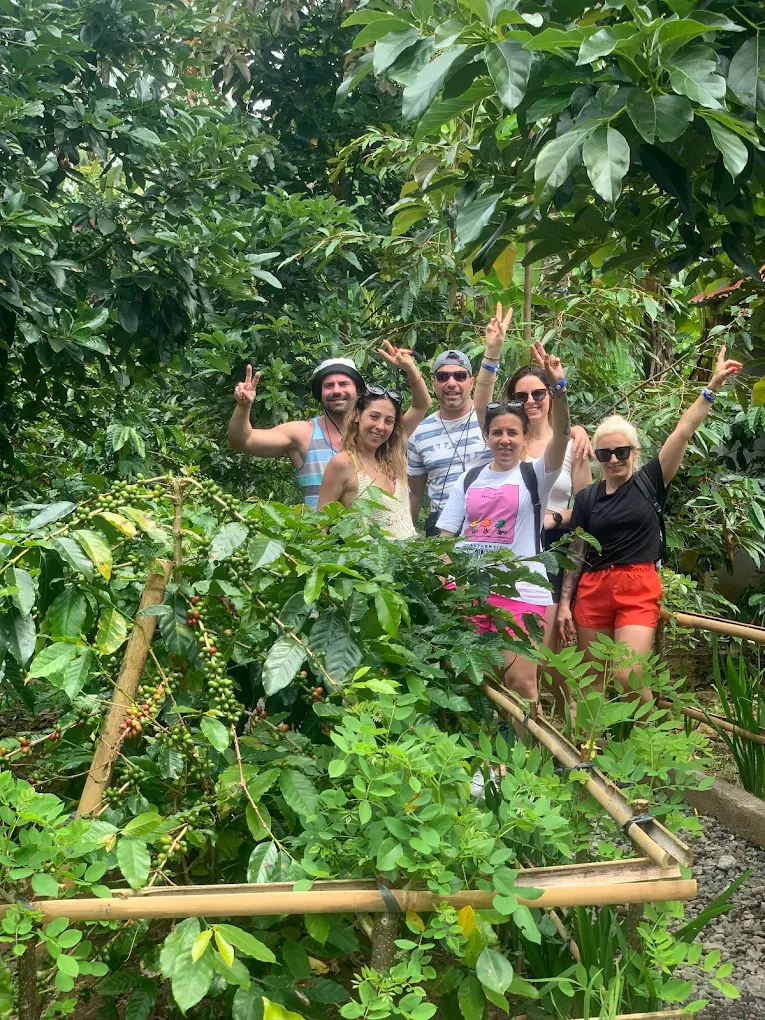
Set in the hills of Tegallalang, Bali Pulina is one of Ubud’s original agrotourism pioneers and boasts an elevated wooden deck cantilevered directly over a dense rainforest ravine. While walking onto the property is free, standard tasting packages run IDR 65,000 for a multi-cup sampler tray or IDR 100,000 for a guided tour paired with their signature Kopi Luwak experience. Arrive before 10:00 AM to enjoy the misty canopy views before midday tour groups arrive.
Alas Harum Bali (Best for Ubud Coffee Plantation with Bali Swing)
If your priority is combining a Tegallalang rice terrace and coffee tour with adrenaline rides and photo spots, Alas Harum Bali is built for it. Unlike smaller roadside farms, it operates as a full-scale agrotourism park with an IDR 70,000 basic admission ticket (separate from the adjacent Cretya Ubud day club). Inside, you can tour the coffee processing area, sample Kopi Luwak, and pay per ride for extreme jungle swings (starting around IDR 198,000), sky bikes, and glass-floor walkways overlooking the terraces.
Cantik Agriculture & OKA Agriculture (Best Near Tirta Empul)
Positioned right on Jalan Raya Kintamani in Tampaksiring, Cantik Agriculture and nearby OKA Agriculture make effortless 30-to-45-minute pitstops when driving between Tegallalang and Tirta Empul Temple. Both offer free admission, a brief walk past vanilla vines and spice plants, and a generous complimentary tasting flight featuring local favorites like mangosteen tea, lemongrass tea, and coconut coffee. Keep in mind that many of the flavored coffees on these free trays use aromatic flavorings rather than pure single-origin brews.
Satria Agrowisata & Kumulilir (Best Near Ubud Center & Rice Terraces)
Travelers staying in downtown Ubud who do not want a 30-minute drive north can head 10 minutes south to Satria Agrowisata in Lodtunduh, a compact garden offering free tastings of unique blends like avocado coffee and hibiscus tea alongside classic Bali Arabica. Conversely, if you are already exploring the coffee plantations near Tegallalang, Kumulilir sits just minutes from the rice terraces and pairs complimentary coffee and herbal tea flights with sweeping valley viewpoints and a riverside swing.
Kopi Luwak in Ubud: How It’s Made, Pricing & Ethical Sourcing
What Is Civet Coffee (Kopi Luwak)?
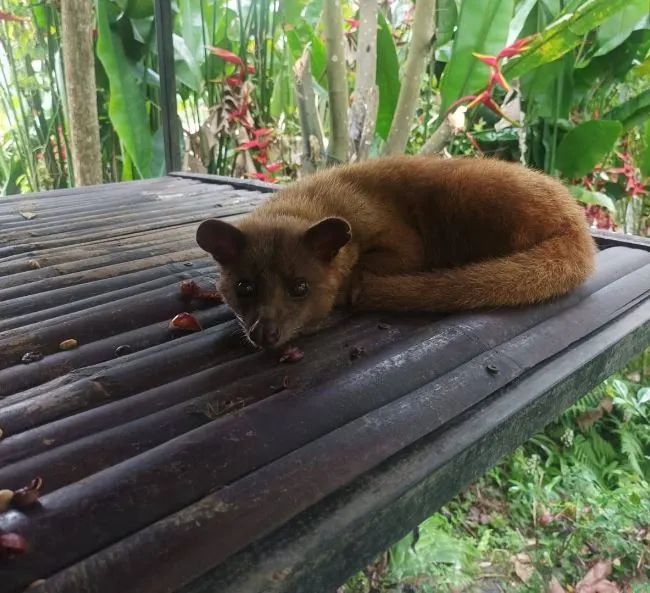
Kopi Luwak widely known as civet coffee is made from coffee cherries eaten and partially digested by the Asian palm civet (Paradoxurus hermaphroditus), a small nocturnal mammal native to Southeast Asia. As the cherries pass through the civet’s digestive tract, natural stomach enzymes break down proteins in the coffee beans, reducing bitterness and creating a noticeably smoother, low-acid cup. Farmers collect the excreted bean clusters, wash them thoroughly, sun-dry them, remove the outer parchment layer, and roast them over a wood fire before grinding and brewing.
Wild Civet vs. Caged Civet: How to Choose Ethically
While Luwak coffee in Ubud is heavily promoted to visitors, sourcing practices vary sharply from one civet coffee plantation in Bali to the next. Wild civets naturally roam forest canopies at night and selectively eat only the ripest, sweetest coffee cherries. In contrast, many roadside tourist farms keep civets in small wire cages in bright daylight for photo opportunities and feed them a restricted diet of coffee cherries a practice that compromises animal welfare and produces inferior beans.
Before ordering a Kopi Luwak tasting, follow three simple checks:
- Inspect the enclosures: If you see civets housed in cramped, bare cages on display for tourists, skip the Luwak coffee at that venue.
- Ask about wild-sourced certification: Ethical producers collect droppings from wild-roaming civets in highland forests around Kintamani or Pupuan rather than farming them in cages.
- Default to single-origin Arabica: If sourcing transparency is unclear, order a cup of pure organic Bali Arabica grown in the Kintamani highlands instead it delivers clean, bright flavor notes with zero ethical trade-offs.
How Much Does Luwak Coffee Cost in Ubud?
Because genuine collection and cleaning are labor-intensive, Kopi Luwak is always excluded from complimentary tasting trays. At most Ubud plantations, a freshly brewed cup costs IDR 50,000 to 100,000 (roughly 3–6 USD), with rarer peaberry (“male”) beans sitting at the higher end of that range. If you buy packaged beans in the farm shop, expect to pay around IDR 300,000 to 500,000 per 100 grams.
Practical Tips for Visiting a Coffee Farm in Ubud
Opening Hours & Best Time of Day to Visit
Standard Ubud coffee plantation opening hours run from 8:00 AM to 6:00 PM daily, while larger attraction parks like Alas Harum Bali stay open until 7:00 PM. Aim to arrive between 8:30 AM and 10:00 AM. Early morning brings cooler highland air, soft mist over the jungle valleys, and unhurried one-on-one time with your guide before full-day tour buses arrive between 11:30 AM and 2:30 PM.
How to Combine a Coffee Farm with Nearby Ubud Landmarks
Most Gianyar coffee plantations line the two main north–south roads connecting central Ubud to the northern highlands, making them easy to pair with major temples and rice terraces without backtracking:
- The Tegallalang & Sebatu Loop: Start at sunrise at Tegallalang Rice Terrace -> stop 5–10 minutes north at a coffee plantation near Tegallalang (such as Bali Pulina or Alas Harum) -> continue north to the quiet jungle water temple of Gunung Kawi Sebatu.
- The Holy Spring & Volcano Route: Visit Tirta Empul Temple in the morning -> stop right down the road at a coffee farm near Tirta Empul (such as Segara Windhu or Cantik Agriculture in Tampaksiring) -> continue north toward Mount Batur viewpoints in Kintamani.
Getting There (Private Driver vs. Scooter vs. Guided Tour)
- Private Car & Driver (Best for Comfort & Custom Routes): Hiring a private driver in Ubud costs roughly IDR 600,000 to 800,000 for a full 8-to-10-hour day. Drivers know which Tampaksiring coffee plantations offer genuinely free tastings and can seamlessly link a farm stop with temples and waterfalls.
- Scooter Rental (Best for Solo & Budget Travelers): Most plantations sit 15 to 30 minutes north of central Ubud along straightforward paved roads (Jalan Raya Tegallalang or Jalan Raya Tampaksiring). Drive cautiously on steep gravel entryways and watch for midday traffic bottlenecks near Tegallalang.
- Guided Combo Tours (Best for Hassle-Free Planning): Booking an Ubud full-day tour with coffee farm admission bundles hotel pickup, Tegallalang Rice Terrace, Tirta Empul, and a plantation tasting into one fixed-price itinerary.
What Happens on a Traditional Ubud Coffee Tour?
Even if you have never visited a working farm before, a guided coffee farm tour in Ubud follows an easy, welcoming rhythm that takes roughly 30 to 45 minutes from start to finish. Most plantations assign a dedicated English-speaking host to walk you through three distinct stages: an educational stroll through the spice and coffee garden, a live demonstration of hand-roasting and grinding, and a sit-down tasting session overlooking a forested valley.
Exploring the Spice and Coffee Garden
Your visit begins along shaded, stone-lined garden paths where your guide points out the tropical crops thriving in Bali’s volcanic soil. Rather than growing coffee in monoculture rows, traditional Balinese farms practice polyculture planting coffee trees beneath taller fruit and spice trees that provide natural shade and enrich the soil.
Along the walk, you will see and smell:
- Coffee Varieties: Both high-elevation organic Bali Arabica (prized for its bright, floral acidity) and hardier Robusta coffee beans (known for higher caffeine and bold, earthy body), often with green and ripe red cherries hanging on the same branch.
- Cacao & Vanilla: Ridged cocoa pods growing straight out of cacao tree trunks your guide may crack one open so you can taste the sweet, tangy white pulp surrounding raw cacao beans alongside climbing vanilla vines wrapped around support trees.
- Culinary & Medicinal Spices: Clumps of fresh lemongrass, red ginger, turmeric, galangal, cinnamon bark, and mangosteen trees, all of which are harvested on-site to flavor the teas and coffees served at the end of the tour.
Traditional Wood-Fire Coffee Roasting & Grinding
Next, your guide leads you into an open-air thatched hut to demonstrate how harvested cherries become brew-ready grounds without modern machinery. After the beans are hulled and sun-dried on woven bamboo trays, they move to traditional wood-fire coffee roasting in a shallow clay wok (wajan) balanced over burning coconut husks or coffee wood. A roaster stirs the beans continuously with a wooden paddle for 30 to 45 minutes until they crack, darken, and release their oils.
Once cooled, the beans are transferred to a heavy wooden mortar and pestle (lesung) for grinding by hand. Guides regularly invite visitors to step in, pick up the wooden pestle, and try pounding the warm roasted beans themselves before sifting the grounds through a fine mesh screen.
The Complimentary Balinese Coffee and Herbal Tea Tasting Flight
The tour concludes at an open-air bamboo pavilion perched over a jungle ravine or rice terrace, where your host brings out a wooden paddle holding 8 to 14 small sample cups. This free coffee and herbal tea tasting flight lets you compare classic single-origin brews with sweet, spiced Balinese infusions:
- Spiced & Flavored Coffees: Earthy red ginger coffee, ginseng coffee, vanilla coffee, coconut coffee, and pure Bali cocoa alongside a benchmark cup of black Bali Arabica or Robusta.
- Herbal & Fruit Teas: Ruby-colored mangosteen tea (brewed from antioxidant-rich dried fruit rinds), citrusy lemongrass tea, saffron tea, and rosella hibiscus infusion.
Staff explain each cup on the tray and then step back so you can relax and take photos at your own pace. While the exit path leads through an on-site farm shop selling vacuum-sealed beans, pure cocoa powder, and spiced drink mixes, browsing is completely optional and staff do not pressure visitors to buy.
Frequently Asked Questions About Coffee Plantations in Ubud
Do you have to pay an entrance fee for coffee plantations in Ubud?
Most traditional coffee plantations in Ubud such as Segara Windhu, Cantik Agriculture, and Satria Agrowisata do not charge an entrance fee and include a complimentary guided walk and tasting flight. Entertainment-focused venues with swings, glass walkways, and terraced pools, like Alas Harum Bali, charge a basic admission fee starting around IDR 50,000 to 65,000.
What is included in a free Balinese coffee and tea tasting?
A complimentary Balinese tasting flight typically includes 8 to 14 small sample cups of locally grown coffees, cocoas, and herbal teas. Common varieties include pure Bali Arabica, Robusta, red ginger coffee, ginseng coffee, vanilla coffee, pure Bali cocoa, lemongrass tea, mangosteen tea, and saffron tea.
How much does coffee tasting cost at an Ubud coffee plantation?
Standard coffee and herbal tea tasting flights are free at most Ubud agrotourism farms. If you choose to order a cup of Kopi Luwak (civet coffee), which is excluded from the free tray, expect to pay between IDR 50,000 and 100,000 per cup depending on the plantation.
Is Luwak coffee in Ubud ethical and wild-sourced?
Sourcing practices vary across Ubud plantations. Some roadside farms keep Asian palm civets in small cages for tourist display, while ethical producers harvest beans strictly from wild-roaming civets in surrounding forests. Ask your guide about wild-sourced certification before ordering, or skip Kopi Luwak in favor of single-origin organic Bali Arabica.
Which coffee plantation in Ubud has the best jungle view?
Bali Pulina and Kumulilir offer the most dramatic elevated wooden decks overlooking dense jungle ravines and lush valleys near Tegallalang. If you want jungle and rice terrace views paired with photo swings and infinity pools, Alas Harum Bali is the top choice.
How long does a coffee plantation tour in Ubud take?
A standard guided coffee farm walk, traditional wood-fire roasting demonstration, and tasting session takes 30 to 45 minutes. If you visit an agrotourism park with Bali swings, sky bikes, or dining facilities, plan for 1.5 to 2 hours.

