

Discover Gitgit Waterfall in North Bali
Bali is famous for its beautiful beaches, ancient temples, traditional villages, and spectacular natural landscapes. However, beyond the popular attractions of southern Bali, the northern part of the island offers a completely different atmosphere. Here, travelers can discover cooler mountain air, green valleys, traditional agricultural villages, and impressive waterfalls surrounded by tropical forests.
For travelers planning to explore the island’s northern countryside, Gitgit Waterfall is an excellent destination to include in a sightseeing itinerary. Its location along the main mountain road connecting Bedugul and Singaraja makes it a convenient nature stop when traveling between central Bali and the northern coastline. Unlike some waterfalls that require long and challenging jungle treks, the main Gitgit waterfall can be reached through a relatively straightforward walking path from the roadside entrance.
The attraction is particularly appealing to visitors who want to experience Bali’s natural beauty without spending an entire day hiking through difficult terrain. As you approach the waterfall, the sound of flowing water becomes increasingly noticeable, while the surrounding vegetation creates a refreshing atmosphere. The combination of tropical greenery, rocky cliffs, and cascading water provides a peaceful escape from busy tourist areas.
Whether you are visiting Bali for the first time or returning to discover destinations beyond the usual tourist routes, Gitgit Waterfall offers an enjoyable opportunity to appreciate the natural character of North Bali.
The Natural Beauty of Gitgit Waterfall
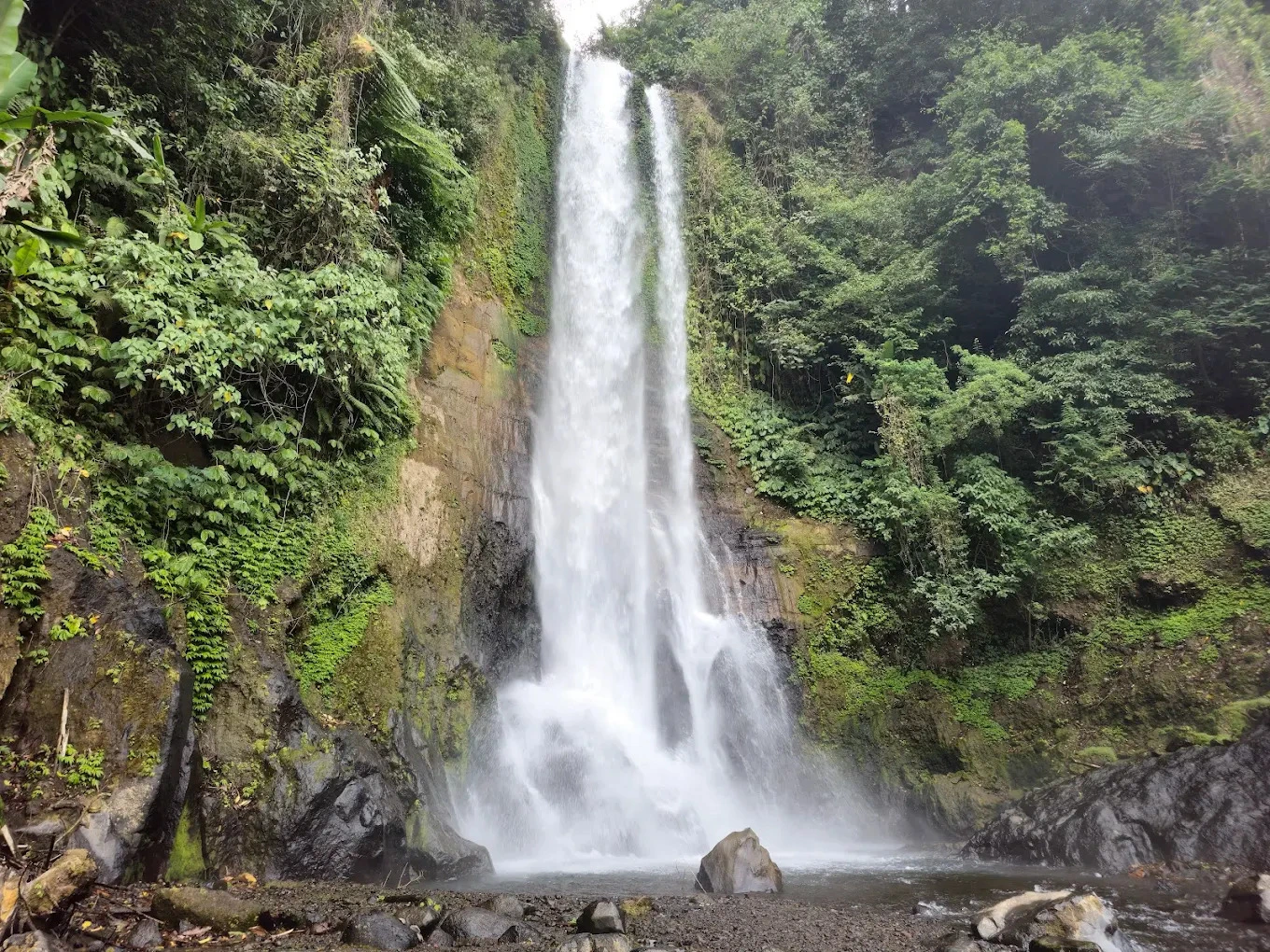
The main attraction is its impressive single-stream waterfall, which drops approximately 35 meters from a rocky cliff into a natural pool below. Surrounded by dense tropical vegetation, the waterfall creates a dramatic landscape that looks particularly beautiful when sunlight filters through the trees and reflects off the falling water.
The environment around the waterfall is also part of the experience. The hills surrounding Gitgit Village are known for their plantations and lush countryside, including coffee, clove, and other tropical plants. During the walk toward the waterfall, visitors can enjoy the combination of fresh mountain air, natural scenery, and the sound of flowing streams.
One of the most enjoyable moments is reaching the waterfall itself. The cool mist created by the falling water provides a refreshing sensation, especially after walking down the trail. Visitors can spend time taking photographs, enjoying the surrounding scenery, or relaxing near the designated viewing areas.
Gitgit Waterfall is therefore more than simply a place to take pictures. It is an opportunity to experience a quieter side of Bali, where the natural landscape remains an important part of everyday village life.
Where Is Gitgit Waterfall Located?

Gitgit Waterfall is located in Gitgit Village, Sukasada District, Buleleng Regency, Bali, Indonesia. The waterfall is situated in the northern highlands, approximately 11 kilometers south of Singaraja, the main town of North Bali.
Its geographical position makes it an accessible attraction for travelers exploring the Bedugul and Singaraja mountain corridor. Visitors traveling from central Bali toward Lovina or Singaraja can easily include this waterfall as a stop along their journey.
The surrounding area is characterized by green hills, tropical plantations, traditional village settlements, and winding mountain roads. Compared with the busy coastal destinations of Kuta, Seminyak, and Canggu, Gitgit offers a more peaceful environment where visitors can enjoy Bali’s countryside.
The official visitor information from Buleleng’s tourism administration also identifies Gitgit Village in Sukasada as the location of this attraction. You can find additional destination information through the
What Makes Gitgit Waterfall Special?
There are many waterfalls across Bali, especially in Buleleng Regency, but Gitgit Waterfall remains one of the region’s recognizable natural attractions. Its appeal comes from a combination of accessibility, natural scenery, and its convenient location along the main mountain route.
The waterfall is particularly suitable for travelers who want to enjoy a natural attraction without committing to a demanding trekking adventure. Although the walking path includes downhill sections and stairs, the main route is generally manageable for visitors with average mobility.
Another interesting feature is the surrounding landscape. Gitgit is located in a relatively cool highland environment, where tropical vegetation grows abundantly around the waterfall. The contrast between the green forest, dark volcanic rocks, and flowing water creates a distinctive natural setting.
Visitors can also appreciate the traditional character of the surrounding village. Local agricultural activities, small roadside shops, and plantation scenery provide a glimpse of everyday life in northern Bali.
Photography enthusiasts will find several opportunities to capture the waterfall from different angles. Wide-angle photographs can show the entire cascade and surrounding cliffs, while closer photographs highlight the texture of the falling water and wet rocks.
Gitgit is also a practical stop for people traveling between destinations. Instead of spending an entire day visiting a single waterfall, you can combine it with other attractions in Bedugul, Wanagiri, Munduk, or Lovina.
Gitgit Waterfall Entrance Fee
One of the most common questions travelers ask before visiting is how much they should prepare for the Gitgit Waterfall entrance fee.
As of the latest published monitoring information from the Buleleng Regency government on April 21, 2026, the entrance fees at the main Gitgit Waterfall attraction were reported as follows:
Visitor category | Entrance fee |
International visitors | IDR 45,000 |
Domestic visitors | IDR 15,000 |
These prices were reported by the Buleleng Civil Service Police Unit following its monitoring of Gitgit and Dukuh tourist attractions. The official Gitgit Waterfall management website also publishes the same international and domestic ticket prices.
Ticket Prices for International and Domestic Visitors
It is important to understand that entrance fees may differ between attractions in the Gitgit area. The main Gitgit Waterfall and Gitgit Dukuh Waterfall are separate visitor destinations, and they have different ticket arrangements.
For comparison, the same government monitoring report listed the following prices for Dukuh Waterfall:
Attraction | Adult ticket | Child ticket |
Main Gitgit Waterfall, international | IDR 45,000 | Confirm locally |
Main Gitgit Waterfall, domestic | IDR 15,000 | Confirm locally |
Gitgit Dukuh Waterfall | IDR 20,000 | IDR 10,000 |
These are published reference prices, not a guarantee that the rates will remain unchanged. Visitors should confirm the current tariff at the official ticket counter before entering.
Parking charges may also apply. The management website lists approximately IDR 5,000 for cars and IDR 2,000 for motorcycles.
A useful tip is to bring some Indonesian rupiah in cash. Small tourist attractions in rural Bali may not always have convenient electronic payment facilities, and having cash makes it easier to pay entrance fees, parking charges, and small purchases.
Also, make sure you understand exactly which waterfall your ticket covers. If you intend to visit both the main Gitgit Waterfall and Dukuh Waterfall, ask the local ticket staff whether separate entrance payments are required.
Gitgit Waterfall Opening Hours
Planning your arrival time can make a significant difference to your experience. Gitgit Waterfall is generally listed as operating between 8:00 AM and 5:00 PM, although opening schedules can change because of local conditions, ceremonies, maintenance, or weather.
The official management website lists visiting hours from 8:00 AM to 5:30 PM. Google Maps and other visitor information sources commonly display an 8:00 AM to 5:00 PM schedule.
For a more comfortable visit, consider arriving in the morning. The temperature is usually cooler, the surrounding forest feels particularly refreshing, and you may have a better opportunity to enjoy the waterfall before larger groups arrive.
Late afternoon can also be attractive for photography, but you should allow sufficient time to complete the walk and return to the parking area before closing.
Visitors should avoid arriving close to closing time because the walking trail can become more difficult to navigate when natural light begins to fade. Wet steps and slippery rocks are additional reasons to finish your visit early.
If you are traveling with a private driver, discuss your preferred schedule before starting the journey so that the waterfall visit fits comfortably into your North Bali itinerary.
How to Get to Gitgit Waterfall
Getting to Gitgit Waterfall is relatively straightforward because the attraction is located beside the main road connecting Bedugul and Singaraja.
Travelers can reach the destination using a private car, motorcycle, or organized sightseeing tour. For international visitors who are unfamiliar with Bali’s mountain roads, arranging transportation with an experienced local driver can make the journey more convenient.
The road leading toward Gitgit passes through several scenic highland areas. Depending on your starting location, you may also have opportunities to visit temples, lakes, traditional villages, and other waterfalls along the way.
Traveling from Ubud, Denpasar, and Lovina
Your travel time will depend on your departure point, traffic conditions, and the number of stops you make along the route.
Here are approximate driving estimates:
Starting location | Estimated travel time |
Singaraja | 20–30 minutes |
Lovina | 30–45 minutes |
Bedugul | 30–40 minutes |
Ubud | 2–2.5 hours |
Denpasar | 2–2.5 hours |
Seminyak | 2.5–3 hours |
Kuta | 2.5–3 hours |
These are general planning estimates rather than guaranteed journey times. Traffic, road conditions, weather, and holiday periods can affect the actual duration.
From Ubud: Travelers can follow the route toward Bedugul before continuing along Jalan Raya Bedugul Singaraja. This is a scenic journey through Bali’s central highlands, making it suitable for a full-day North Bali excursion.
From Denpasar: Visitors can travel toward Bedugul through the central highland region and continue north to Gitgit. This route is particularly attractive for people who want to combine several destinations in one trip.
From Lovina: Gitgit is relatively close to the northern coastline. Visitors staying in Lovina can arrange a half-day sightseeing trip to the waterfall and explore other nearby attractions.
From Singaraja: The waterfall is a convenient countryside destination south of the city. A short drive makes it possible to visit without planning an extensive excursion.
If you are visiting from southern Bali, consider combining Gitgit with other North Bali attractions instead of making the long return journey for only one waterfall.
Walking Trail and Accessibility
Reaching the main waterfall involves a walk from the roadside entrance through a green natural environment. The trail generally includes paved sections, stairs, and downhill paths leading toward the waterfall.
Compared with more demanding trekking destinations in Buleleng, such as Sekumpul Waterfall, the main Gitgit route is relatively accessible for ordinary visitors. However, this does not mean the entire path is completely flat or suitable for everyone.
Some sections can become slippery, particularly after rainfall or when water spray reaches the surrounding rocks. Visitors should take their time, use available handrails where provided, and avoid rushing along the stairs.
During the walk, you may encounter tropical plants, small gardens, local souvenir stalls, and scenic viewpoints. These features make the journey enjoyable rather than simply a walk from the parking area to the waterfall.
The return journey involves walking uphill, so allow additional time if you are traveling with children or older family members. Comfortable footwear with good traction is recommended.
Visitors with limited mobility should understand that the trail is not wheelchair-friendly. If you have difficulty walking on uneven surfaces or climbing stairs, consider enjoying the surrounding countryside instead of attempting the entire descent.
Things to Do at Gitgit Waterfall
Gitgit Waterfall offers several simple activities that allow visitors to enjoy the natural environment. Although it is not a large adventure park, the destination provides a pleasant combination of sightseeing, photography, and outdoor relaxation.
Enjoy the waterfall scenery. The most obvious activity is spending time near the main cascade. From the designated viewing area, visitors can appreciate the height of the waterfall, the surrounding rocks, and the thick tropical vegetation.
Take nature photographs. Gitgit provides attractive backgrounds for landscape photography. The waterfall, forest, and natural pool create opportunities for both wide landscape compositions and closer photographs of flowing water.
Enjoy the refreshing atmosphere. The cool mountain environment is a welcome change from the heat of Bali’s coastal destinations. You can take a break, listen to the sound of the flowing stream, and enjoy the peaceful surroundings.
Explore the walking trail. The route toward the waterfall offers opportunities to observe the local landscape. Visitors can appreciate the plants, plantations, and natural environment surrounding Gitgit Village.
Cool off near the water. Depending on water conditions and local safety instructions, visitors may be able to enter designated shallow areas. However, swimming should never be assumed to be safe. Strong currents, slippery rocks, and sudden increases in water flow can create serious hazards.
The best approach is to follow local instructions and remain within permitted areas. Avoid climbing restricted rocks or approaching the base of the waterfall when conditions are unsafe.
Gitgit Dukuh Waterfall: Another Natural Attraction
While the main Gitgit Waterfall attracts visitors because of its accessibility and recognizable landscape, the surrounding village is also home to other natural attractions. One destination worth exploring is Gitgit Dukuh Waterfall, which offers a different waterfall experience in the same general area of North Bali.
Dukuh Waterfall is associated with Gitgit Village and is sometimes referred to as Air Terjun Dukuh or Ceburan Dukuh. It is generally promoted as a quieter natural attraction for travelers who want to discover another part of the local waterfall landscape.
Unlike the main Gitgit Waterfall, which is a popular stop along Jalan Raya Bedugul Singaraja, Dukuh is often appreciated for its more peaceful atmosphere and natural surroundings.
The local environment includes tropical vegetation, flowing streams, and green countryside. Depending on the access route, visitors may need to walk along a trail with downhill sections to reach the waterfall.
Dukuh can be an interesting addition to a North Bali itinerary, particularly for travelers who enjoy nature photography and discovering destinations beyond the most familiar tourist attractions.
According to the Buleleng government monitoring report published in April 2026, the entrance fee for Dukuh Waterfall was IDR 20,000 for adults and IDR 10,000 for children.
Before visiting, confirm the correct entrance and current ticket arrangements. Similar names and multiple waterfall access points in the Gitgit area can sometimes cause confusion for independent travelers.
Gitgit Waterfall vs. Gitgit Dukuh Waterfall
Although both attractions are located in the wider Gitgit area, they offer different experiences.
The main Gitgit Waterfall is generally the better choice for first-time visitors who want to experience the area’s famous waterfall. Its location along the main mountain road makes it convenient for travelers passing between Bedugul and Singaraja.
Dukuh Waterfall may appeal more to visitors looking for a quieter nature experience. It offers an alternative for people who have already explored the main attraction or want to discover additional waterfalls in the village.
Feature | Gitgit Waterfall | Gitgit Dukuh Waterfall |
Location | Gitgit Village, Buleleng | Gitgit Village, Buleleng |
Main attraction | Approximately 35-meter cascade | Natural waterfall in a quieter setting |
Atmosphere | Popular tourist attraction | Generally quieter |
Access | Paved trail and stairs | Walking trail with downhill sections |
International adult fee | IDR 45,000 | IDR 20,000 |
Domestic adult fee | IDR 15,000 | IDR 20,000 |
Child fee | Confirm locally | IDR 10,000 |
Entrance prices are based on the Buleleng government monitoring report dated April 21, 2026. Confirm current prices before visiting.
If you have enough time, visiting both attractions can provide a more complete experience of the Gitgit countryside. However, make sure you plan sufficient time for walking, photography, and transportation between the entrances.
Best Time to Visit Gitgit Waterfall
Bali has two main seasons: the dry season and the rainy season. Both can offer enjoyable experiences at Gitgit Waterfall, but the appearance and conditions of the waterfall can change throughout the year.
The dry season generally runs from April through October. During these months, travelers often benefit from more predictable weather and better conditions for sightseeing. Walking trails may also be less muddy compared with periods of frequent rainfall.
The rainy season generally runs from November through March. During this period, the surrounding forest becomes particularly green, and the waterfall may have a stronger flow. However, heavy rainfall can also make the trail slippery and increase the risks associated with swimming or approaching the waterfall.
For the time of day, morning visits are usually preferable. Arriving between 8:00 AM and 10:00 AM gives you time to explore the waterfall before continuing to other destinations.
Weekdays can also be more comfortable for visitors who prefer a quieter atmosphere. Weekends and public holidays may attract more domestic travelers, especially during school holidays.
Regardless of the season, check the weather before departing. If heavy rain has occurred, ask local staff whether the walking trail and waterfall area are safe to visit.
What to Bring for Your Visit
Preparing a few essential items can make your visit to Gitgit Waterfall more comfortable.
Start with suitable footwear. The trail includes stairs and potentially slippery surfaces, so sports shoes or hiking sandals with good grip are better than smooth-soled flip-flops.
A change of clothes is also useful if you plan to get wet from the waterfall spray or enter permitted shallow water areas. Bring a small towel and a waterproof bag to protect your electronic devices.
A camera or smartphone is useful for capturing the natural scenery, but make sure your equipment is protected from water. The spray near the waterfall can reach areas where visitors take photographs.
You should also carry drinking water, some cash for entrance tickets and parking, and basic personal items such as sunscreen and insect repellent.
If you are traveling with children, bring extra snacks and make sure they remain under adult supervision throughout the walk.
Here is a simple preparation checklist:
- Comfortable walking shoes with good grip.
- Drinking water.
- Cash in Indonesian rupiah.
- Camera or smartphone.
- Waterproof phone protection.
- Extra clothes and a towel.
- Insect repellent.
- Small personal first-aid supplies.
Packing light is generally the best strategy because you will need to carry your belongings along the walking trail.
Nearby Attractions to Explore
One of the biggest advantages of visiting Gitgit Waterfall is its location near several well-known attractions in North and Central Bali. Instead of making a separate trip for every destination, you can organize a sightseeing route that combines nature, culture, and scenic mountain landscapes.
Ulun Danu Beratan Temple is one of the most recognizable temples in Bali. Located beside Lake Beratan, the temple is famous for its traditional Balinese architecture and beautiful lakeside setting. It is an excellent stop for travelers who want to combine cultural sightseeing with their waterfall visit.
Handara Gate is another popular destination in the Bedugul highlands. The traditional Balinese entrance gate is surrounded by green mountains and is a favorite photography location for visitors.
Wanagiri Twin Lakes Viewpoint offers panoramic views of Lake Buyan and Lake Tamblingan. The surrounding mountain landscape creates an attractive setting for photography and sightseeing.
Banyumala Twin Waterfalls is another beautiful waterfall destination known for its twin streams and natural pool. Visitors can enjoy a more adventurous nature experience, although the walking trail involves a descent through the forest.
Lovina Beach is located along the northern coastline and is known for its quieter coastal atmosphere. Travelers often visit Lovina to enjoy seaside activities, local restaurants, and boat trips.
Munduk Village is famous for its cool climate, green plantations, mountain scenery, and nearby waterfalls. It is a wonderful destination for travelers interested in exploring the countryside.
These attractions can be combined into a longer North Bali itinerary, depending on your departure point and available time.
Tips for a Comfortable Waterfall Visit
A little preparation can help you avoid common problems during your visit.
First, use the official entrance and confirm your ticket price before beginning the walk. In popular tourist areas, different entrances and attractions may have similar names, so checking your destination carefully is important.
Second, be cautious about unsolicited offers from people around parking areas. If you need a local guide, ask the official management staff about authorized guiding services and the applicable charges. The main waterfall trail is generally straightforward, but additional trekking routes may have different requirements.
Third, respect the natural environment. Avoid leaving rubbish, feeding wild animals, or damaging plants along the walking path. Gitgit’s natural beauty is one of the main reasons travelers visit the village, and keeping the surroundings clean helps preserve the attraction.
Another important consideration is personal safety. Do not climb wet rocks, enter restricted areas, or swim when the water is fast or discolored after heavy rain. Waterfalls can look peaceful from a distance while still having dangerous currents underneath.
Finally, allow enough time for your visit. Rushing through the trail simply to reach the next destination can make the experience less enjoyable. Give yourself time to appreciate the scenery and return safely to the parking area.
Explore Gitgit Waterfall on a North Bali Tour
For travelers staying in Ubud, Seminyak, Canggu, or other popular areas of southern Bali, visiting Gitgit Waterfall is best planned as part of a complete sightseeing journey. The northern region has many attractions spread across mountain roads and rural villages, so organizing transportation and the route in advance can save time.
A North Bali tour package is a convenient option for visitors who want to explore several destinations in one day without arranging transportation independently. With a private sightseeing trip, you can plan your departure time, choose the attractions you want to visit, and enjoy the journey at a comfortable pace.
For example, a North Bali itinerary can include Ulun Danu Beratan Temple, Handara Gate, Wanagiri Twin Lakes, and Gitgit Waterfall. This route combines cultural attractions, scenic mountain landscapes, and a natural waterfall experience.
If you prefer a more nature-focused journey, you can also combine Gitgit with nearby waterfalls or explore the countryside around Munduk and Wanagiri.
Travelers visiting from Lovina can organize a shorter excursion, while visitors departing from Ubud may prefer a full-day itinerary because of the longer driving distance.
At Horizon Bali, travelers can explore Bali through private tours designed around their interests and travel schedules. A private vehicle with a local driver makes it easier to move between destinations, enjoy scenic stops, and adjust the itinerary according to your preferences.
Whether you are traveling as a couple, with family, or in a small group, arranging a personalized North Bali journey can help you experience more of the island beyond its popular southern beaches.
Conclusion
Gitgit Waterfall is one of the natural attractions worth exploring when visiting North Bali. Located in Gitgit Village, Sukasada District, Buleleng Regency, this beautiful waterfall offers a refreshing escape surrounded by tropical vegetation, green hills, and the peaceful atmosphere of the northern countryside.
Its convenient position along Jalan Raya Bedugul Singaraja makes it an excellent stop for travelers exploring the northern part of Bali. Visitors can enjoy the impressive waterfall, walk through the surrounding forest, take photographs, and experience the natural beauty of the area without undertaking an extremely challenging trek.
Before visiting, remember to check the latest Gitgit Waterfall entrance fee, opening hours, and local safety conditions. You can also explore nearby attractions such as Gitgit Dukuh Waterfall, Ulun Danu Beratan Temple, Handara Gate, and Wanagiri Twin Lakes.
If you want to discover more of Bali’s natural attractions, consider including Gitgit Waterfall in your North Bali sightseeing itinerary. With good planning and comfortable transportation, your visit can become part of a memorable journey through Bali’s beautiful northern highlands.
Frequently Asked Questions About Gitgit Waterfall
1. Where is Gitgit Waterfall located in Bali?
Gitgit Waterfall is located in Gitgit Village, Sukasada District, Buleleng Regency, North Bali. It is situated along Jalan Raya Bedugul Singaraja, approximately 11 kilometers south of Singaraja. Its location makes it a convenient stop for travelers exploring Bedugul, Lovina, and other destinations in northern Bali.
2. How much is the Gitgit Waterfall entrance fee?
Based on the Buleleng government monitoring report published on April 21, 2026, the entrance fee is IDR 45,000 for international visitors and IDR 15,000 for domestic visitors. Parking fees may apply separately. Prices can change, so confirm the current rates at the official ticket counter before entering.
3. How do I get to Gitgit Waterfall from Ubud?
From Ubud, you can travel toward Bedugul and continue along Jalan Raya Bedugul Singaraja to Gitgit Village. The journey generally takes around 2 to 2.5 hours, depending on traffic and road conditions. Hiring a private driver is a convenient option if you want to visit other attractions along the way.
4. What is the difference between Gitgit Waterfall and Gitgit Dukuh Waterfall?
Gitgit Waterfall is the main and more established tourist attraction, known for its approximately 35-meter cascade and relatively accessible walking trail. Gitgit Dukuh Waterfall is a separate attraction in the wider Gitgit area, generally appreciated for its quieter natural surroundings. Both offer different experiences for visitors exploring North Bali.
5. What is the best time to visit Gitgit Waterfall?
The best time to visit is generally in the morning, preferably between 8:00 AM and 10:00 AM. Morning visits offer cooler temperatures and potentially fewer visitors. The dry season, from April to October, usually provides more predictable walking conditions, while the rainy season can bring stronger water flow but also slippery trails and increased safety risks.