


Looking for the best things to do in Ubud with kids? Ubud offers a wonderful combination of nature, wildlife, outdoor adventures, traditional Balinese culture, and family-friendly attractions that make it an ideal destination for a memorable family holiday in Bali. From exploring tropical forests and beautiful rice terraces to visiting animal parks, discovering traditional villages, and enjoying exciting outdoor activities, there are plenty of experiences for families with children of different ages.
Located in the cultural heart of Bali, Ubud is surrounded by lush tropical forests, beautiful rice terraces, traditional villages, rivers, and spectacular waterfalls. Unlike the busy beach destinations in southern Bali, Ubud offers a more relaxed atmosphere where families can introduce their children to nature and local traditions while enjoying a slower holiday pace.
Whether you are travelling with toddlers, primary-school children, or teenagers, you will find plenty of activities to suit different interests and travel styles. Parents can enjoy beautiful scenery, interesting cultural experiences, and comfortable accommodation, while children can have fun exploring nature, watching monkeys at a wildlife sanctuary, discovering rice fields, visiting animal parks, and enjoying swimming pools overlooking the jungle.
You do not need to fill every day with expensive attractions to create unforgettable family memories. Sometimes, a simple walk through the countryside, a traditional Balinese meal, or a relaxing afternoon swimming at your hotel can become one of the highlights of your holiday.
In this guide, we explore the best family-friendly activities in Ubud, including practical recommendations for travelling with younger children and a suggested family itinerary to help you plan an enjoyable holiday.
Is Ubud Good for Kids?
Yes, Ubud is a great destination for families with children, particularly those who enjoy nature, animals, outdoor activities, and cultural experiences. The destination offers a different type of family holiday compared with places such as Kuta, Seminyak, and Nusa Dua. Instead of focusing mainly on beaches and waterparks, Ubud allows children to discover Bali’s countryside, tropical wildlife, traditional villages, and artistic heritage. These experiences can make a family holiday both entertaining and educational.
One of the biggest advantages of visiting Ubud with kids is the variety of attractions within the surrounding Gianyar region. Families can visit the Sacred Monkey Forest Sanctuary, explore the famous Tegallalang Rice Terraces, discover Tegenungan Waterfall, or spend a day at Bali Zoo. There are also cooking classes, art workshops, playgrounds, and gentle outdoor activities that can be adapted to different ages. According to Bali Kids, the wider Ubud and Gianyar area offers hundreds of activities across different categories, including culture, adventure, arts, animals, and education.
However, Ubud is not automatically suitable for every child or every type of family holiday. Some attractions involve steep steps, uneven walking paths, hot weather, or activities with minimum age requirements. The town centre also has busy roads and narrow pavements, which can make walking with a stroller challenging in certain areas. Families travelling with toddlers should therefore prioritise comfortable accommodation, short journeys, shaded attractions, and enough time for naps and swimming.
The best approach is to combine one or two sightseeing activities with plenty of relaxation. That way, parents can enjoy discovering Bali while children have enough time to play, rest, and enjoy the holiday without becoming exhausted.
Best Things to Do in Ubud with Kids
1. Explore the Sacred Monkey Forest Sanctuary
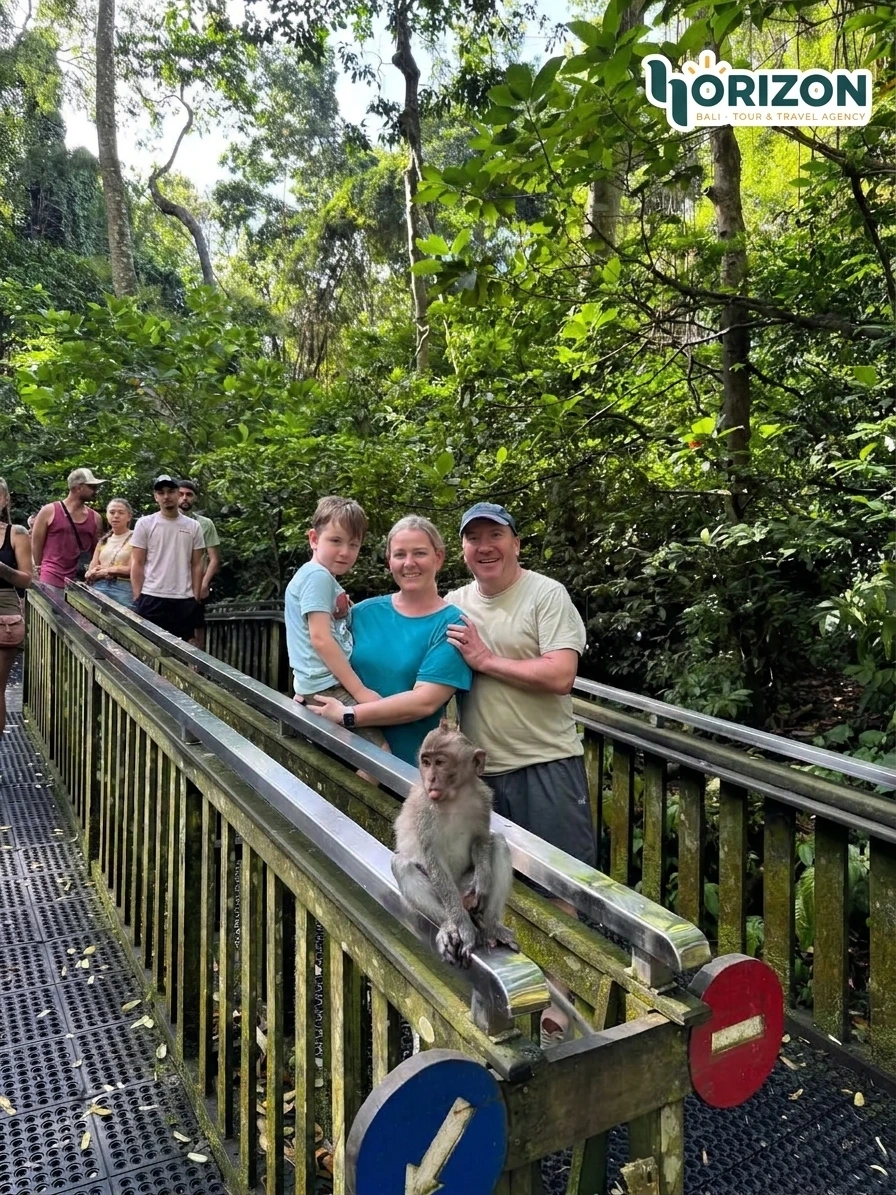
Visiting the Sacred Monkey Forest Sanctuary is one of the most memorable things to do in Ubud with kids. Located close to the town centre, this beautiful nature sanctuary combines tropical forest, ancient temple architecture, stone sculptures, and hundreds of long-tailed macaques living in a semi-wild environment. Children can observe monkeys climbing trees, interacting with one another, and moving through the forest while learning about wildlife and the importance of protecting natural habitats.
The sanctuary covers approximately 12.5 hectares and is home to around 1,030 monkeys and 186 tree species, according to its official visitor information. It provides a fascinating opportunity for children to experience Bali’s natural environment without travelling far from central Ubud. Families can follow the walking paths, explore the green surroundings, and discover the traditional temples within the sanctuary.
Safety is particularly important when visiting with children. Monkeys are wild animals, not pets, so children should never attempt to touch, feed, chase, or approach them. Keep food and loose belongings securely stored, supervise younger children closely, and follow the sanctuary’s visitor guidelines.
The official website currently lists opening hours from 9:00 AM to 6:00 PM, with the last entrance at 5:00 PM. Published admission prices are IDR 130,000 for adults and IDR 100,000 for children. Check the official website before visiting because prices and operating arrangements can change.
2. Discover the Tegallalang Rice Terraces
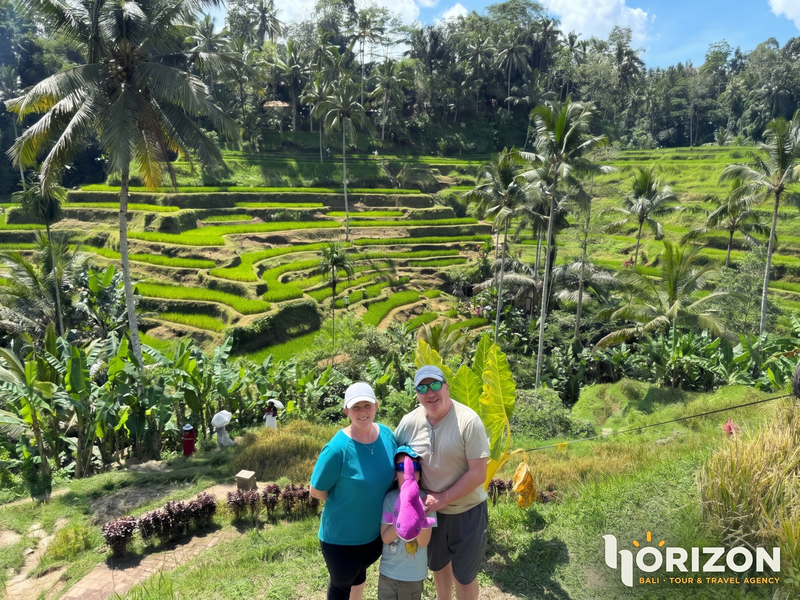
If your family wants to experience Bali’s beautiful countryside, the Tegallalang Rice Terraces should be on your list. These famous rice terraces are known for their impressive green landscapes, traditional irrigation systems, and layered rice fields stretching across the hillsides. For children, visiting Tegallalang can feel like exploring a giant natural garden where they can see how rice grows and learn about the agricultural traditions that remain important to Balinese communities.
Walking through the rice terraces is a wonderful way to introduce children to the natural environment. Depending on their age and physical ability, they can explore some of the pathways, observe local farmers, and enjoy the surrounding scenery. Parents can also explain how rice is grown and why water management is essential to traditional Balinese farming.
Several viewpoints, restaurants, and photo stops are available around the area. Some attractions also offer swings overlooking the rice fields, although families should check height, age, and safety requirements before allowing children to participate.
For younger children, it is better to choose a short walking route rather than attempting to explore every section. Some pathways include steep steps, uneven surfaces, and slippery sections, especially after rain. Visit in the morning when temperatures are more comfortable and the scenery is particularly beautiful.
Tegallalang is approximately 20 to 30 minutes from central Ubud, depending on traffic. It is an excellent addition to a family sightseeing trip because it combines nature, photography, and a little cultural education.
3. Visit Tegenungan Waterfall
A visit to Tegenungan Waterfall is another excellent option for families who enjoy outdoor adventures. Surrounded by lush tropical vegetation, this impressive waterfall creates a beautiful natural setting where children can experience one of Bali’s most recognisable landscapes. The sound of flowing water, green surroundings, and impressive waterfall views make it an exciting destination for families looking to spend time outdoors.
Children often enjoy watching the water flow down the rocks and exploring the viewpoints around the waterfall. Parents can take family photographs, enjoy the natural atmosphere, and introduce younger travellers to Bali’s tropical environment. Depending on water conditions and the rules in place during your visit, certain designated areas may allow swimming.
However, Tegenungan is not the easiest waterfall for every age group. Reaching the lower area involves a considerable number of stairs, and some sections can become slippery. Parents travelling with babies or toddlers should carefully consider whether the descent is appropriate. Carrying a toddler down uneven steps can be tiring, particularly during hot weather.
For a more comfortable experience, visit earlier in the morning, wear shoes with good grip, and bring drinking water and a change of clothes. Never allow children to approach strong currents or climb wet rocks without supervision.
If your family prefers a less physically demanding experience, you can simply enjoy the viewpoints rather than walking all the way down. A short visit can still provide beautiful memories without turning a relaxing family holiday into a challenging hike.
4. Enjoy a Family Day at Bali Zoo
For families travelling with children who love animals, Bali Zoo is one of the best attractions around Ubud. Located in the Singapadu area, the zoo offers opportunities to see a variety of animals in landscaped surroundings. Children can discover different species, observe animal behaviour, and learn about wildlife conservation through educational experiences.
A visit to Bali Zoo can be particularly enjoyable for younger children because it offers more than simply looking at animals from a distance. Depending on the available programmes and ticket packages, families may find animal encounters, educational presentations, and interactive experiences. These activities can make the visit more engaging and help children develop an appreciation for wildlife.
Parents should check which experiences are currently operating before purchasing tickets. Animal interactions, feeding sessions, and special encounters may have separate conditions, schedules, or age restrictions. It is also worth checking whether the activities follow appropriate animal-welfare practices.
Plan to spend several hours at the zoo rather than rushing through it between other attractions. Bring sunscreen, hats, comfortable walking shoes, and drinking water. Younger children may also appreciate taking breaks at shaded areas throughout the visit.
Bali Zoo is located south of central Ubud, making it relatively convenient to combine with other attractions in the Gianyar area. If your children enjoy animals, this is an activity worth considering for your family holiday.
5. Visit Bali Bird Park
Another wonderful wildlife attraction for families is Bali Bird Park. This destination offers a different experience from a traditional zoo because the main focus is on birds from Indonesia and other parts of the world. Children can discover colourful parrots, tropical birds, and fascinating species while learning about their habitats and behaviour.
The park features landscaped tropical gardens designed around different bird environments. Walking through these areas gives families the opportunity to observe birds in surroundings that are intended to reflect their natural habitats. Educational presentations and selected interactive experiences can also make the visit more interesting for younger travellers.
One of the best reasons to include Bali Bird Park in your family itinerary is that it combines entertainment with education. Children can learn why certain bird species are endangered, how different birds adapt to their environments, and why protecting biodiversity matters.
The attraction is particularly suitable for families who want a relatively relaxed outdoor activity without the physical demands of waterfall trekking or long countryside walks. However, parents should still prepare for the tropical weather by bringing hats, sunscreen, and water.
Bali Bird Park is located in Singapadu, not far from Bali Zoo. Families interested in wildlife can consider visiting both attractions during a dedicated day, although it is important to avoid overloading the itinerary if travelling with toddlers.
6. Experience a Balinese Cooking Class
Not every family activity needs to involve walking, wildlife, or outdoor adventures. Sometimes, the most memorable experiences happen when children get involved in something creative. A traditional Balinese cooking class is an excellent way to introduce the whole family to local food, ingredients, and culinary traditions.
Several cooking experiences are available around Ubud, including Paon Bali Cooking Class. These experiences typically introduce participants to traditional Indonesian ingredients, herbs, spices, and cooking techniques. Depending on the class format, families may have the opportunity to learn how local dishes are prepared and enjoy the food they make together.
Children can find the experience particularly interesting because they are encouraged to explore ingredients using their senses. They might discover the aroma of lemongrass, the flavour of coconut, or the different spices used in Balinese cooking. It can also be an enjoyable opportunity to introduce them to foods they might not normally try at home.
Before booking, ask the cooking school whether children are welcome and whether the programme can be adapted for their ages. Younger children may need additional supervision around knives, hot surfaces, and cooking equipment.
A family cooking class is especially suitable for school-age children and teenagers who enjoy hands-on activities. It is also a great alternative for a rainy afternoon when outdoor sightseeing becomes less appealing.
7. Take a Walk Along Campuhan Ridge
If you want a peaceful outdoor activity that does not require an expensive entrance ticket, consider visiting the Campuhan Ridge Walk. This popular walking trail offers beautiful views of green hills, tropical vegetation, and the surrounding countryside. It is a lovely place to enjoy a slower morning with your family while experiencing a different side of Ubud.
The trail is particularly attractive because it provides a break from the busy streets and traffic around the town centre. Children can enjoy the open landscape, observe plants and insects, and experience the fresh air while walking alongside their parents.
You do not need to complete the entire route to enjoy the experience. Families with younger children can walk a short section, take photographs, and return when everyone starts getting tired. This flexible approach makes the trail more manageable for different ages.
One important consideration is the weather. Some sections have limited shade, so walking during the middle of the day can become uncomfortable. Early morning or late afternoon is generally preferable. The trail can also become muddy or slippery after rainfall.
For families with toddlers, a baby carrier may be more practical than a stroller because the route is not consistently designed for easy stroller access. Bring water, wear comfortable footwear, and keep the walk relaxed rather than treating it as a fitness challenge.
8. Discover Balinese Culture at Ubud Palace
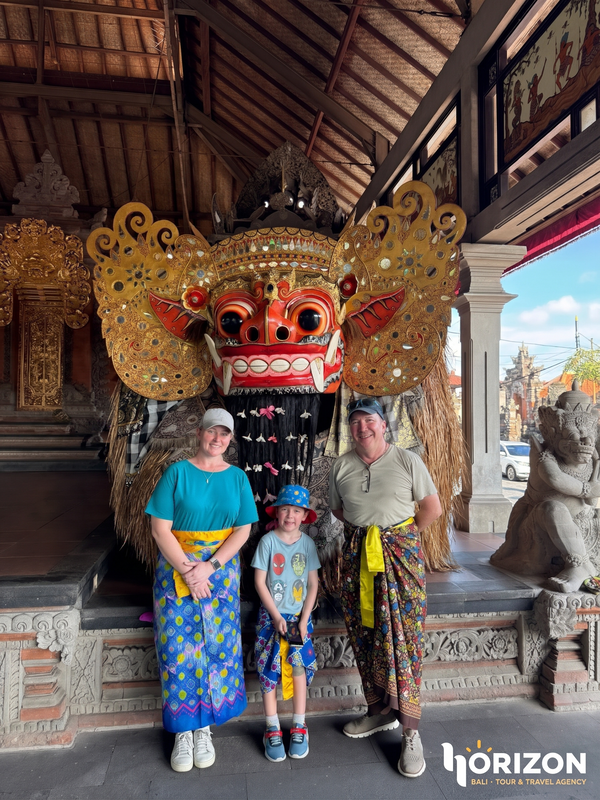
A family holiday in Bali is an excellent opportunity to introduce children to a different culture, and Ubud Palace is a convenient place to begin. Also known as Puri Saren Agung, this historic royal palace features traditional Balinese architecture, beautifully decorated gates, and intricate stone carvings.
Children can discover how traditional Balinese buildings are designed while learning a little about the island’s royal history. The palace is located in central Ubud, making it easy to combine with a visit to Ubud Art Market or a relaxed family lunch.
One of the most interesting cultural experiences around the palace is watching a traditional Balinese dance performance. Depending on the schedule, families may be able to enjoy performances featuring colourful costumes, expressive movements, traditional music, and stories inspired by Balinese culture.
For children, the visual elements of the performance can be particularly engaging. The music, costumes, and storytelling provide a different kind of entertainment from the attractions they may be familiar with at home.
However, traditional dance performances can last longer than younger children are comfortable sitting through. Consider your child’s attention span and choose an appropriate showtime. An earlier evening schedule may be preferable for school-age children, while families with toddlers may want to keep the visit shorter.
9. Explore Ubud Art Market
Located opposite Ubud Palace, Ubud Art Market is another interesting stop for families exploring the town centre. The market is known for its selection of handmade products, woven bags, textiles, traditional clothing, souvenirs, and decorative crafts.
Although shopping might not initially sound like an exciting activity for children, the market can be a fun opportunity to introduce them to local creativity and traditional handmade products. They can look at colourful decorations, see different materials, and discover how local artisans create items that reflect Balinese culture.
Parents can also use the opportunity to purchase small souvenirs for family members or choose traditional clothing for temple visits. It is a convenient stop because the market is within walking distance of several central Ubud attractions.
The market can become crowded, especially during busy tourist periods. Keep children close, agree on a meeting point, and avoid spending too long browsing if younger family members become tired.
For a more enjoyable experience, visit earlier in the day when temperatures are generally more comfortable. Combine the market with a short visit to Ubud Palace and a family-friendly lunch nearby. This creates an easy half-day cultural outing without requiring extensive travel.
10. Enjoy a Traditional Balinese Village Experience
One of the most meaningful family-friendly things to do in Ubud is exploring a traditional Balinese village. Beyond the well-known tourist attractions, the villages surrounding Ubud offer opportunities to discover local lifestyles, traditional houses, community temples, rice fields, and everyday activities.
For children, a village visit can be a valuable learning experience. They can see how traditional Balinese family compounds are arranged, discover the importance of community life, and observe how local people maintain cultural traditions. Parents can explain the significance of daily offerings, traditional ceremonies, and the relationship between Balinese communities and their natural environment.
Villages around Ubud, including Pengosekan, Mas, and nearby countryside communities, offer different opportunities to experience local culture. Some areas are also known for traditional arts and crafts, particularly wood carving and painting.
A guided village experience can make the visit more engaging because a knowledgeable local guide can explain cultural practices in a way children can understand. You may also be able to combine the experience with a rice-field walk or a visit to a local craft workshop.
Remember that traditional villages are living communities rather than theme parks. Encourage children to be respectful, ask permission before photographing residents, and avoid entering private properties or religious areas without permission.
11. Try a Family-Friendly Swing Experience
If your children enjoy exciting outdoor activities, a Bali swing experience can add something special to your family holiday. Several swing attractions operate around Ubud, particularly in the Tegallalang area, where visitors can enjoy panoramic views of tropical forests and rice fields.
One option is Aloha Ubud Swing, which offers scenic swing experiences and photo opportunities. The surrounding landscape creates an impressive setting for family photographs, especially when the weather is clear.
However, it is important to understand that not every swing is suitable for every child. Some attractions have minimum age, height, weight, or safety requirements. Parents should confirm these conditions before purchasing a package. Never assume that a child can participate simply because an adult can use the equipment.
For younger children, the best experience may simply be enjoying the viewpoints and taking photographs rather than trying the larger swings. Some attractions offer different swing options, so ask staff about the safest choices available.
If your family decides to include a swing attraction, combine it with a visit to Tegallalang Rice Terraces. Both experiences are in the same general area, allowing you to enjoy two activities without travelling across Ubud unnecessarily.
12. Enjoy Swimming and Relaxation at Your Hotel
Sometimes, the best activity for children is having enough time to enjoy the swimming pool. Ubud has many hotels, resorts, and private villas surrounded by tropical gardens, rice fields, and jungle landscapes. Choosing accommodation with a family-friendly swimming pool can make a significant difference to your holiday.
Children often enjoy swimming more than visiting another sightseeing attraction, especially after spending several hours in a car or walking around temples and rice terraces. A hotel swimming pool provides an opportunity to play, cool down, and relax without needing another organised excursion.
For families travelling with toddlers, look for accommodation with a shallow children’s pool, suitable safety barriers, and convenient access to family facilities. Parents should always supervise children around water, even when a pool has a designated shallow section.
You can also make pool time part of your daily itinerary. For example, explore one attraction in the morning, have lunch, and return to your accommodation for a relaxing afternoon. This approach works particularly well when travelling with children who need regular naps or quiet time.
Choosing a suitable hotel is just as important as selecting attractions. A comfortable place to stay can help transform Ubud from a sightseeing destination into a genuinely enjoyable family holiday.
13. Experience a Water Activity or River Adventure
For families with older children, water activities around Ubud can provide an exciting alternative to traditional sightseeing. The Ayung River area is particularly popular for rafting, with tropical forest scenery, river valleys, and impressive natural surroundings.
A guided rafting experience can be a memorable adventure for children who enjoy outdoor activities and water-based experiences. Along the journey, families may see jungle vegetation, natural rock formations, and beautiful river landscapes that are difficult to experience from the main roads.
However, rafting is not appropriate for every age group. Minimum ages, weight requirements, water conditions, and safety rules vary between operators. Parents should check the specific requirements before booking and select an operator with appropriate safety equipment and trained guides.
For younger children who are not old enough for rafting, some operators offer alternative activities such as tubing or gentler water experiences. Availability and age restrictions should always be confirmed directly.
If you are travelling with toddlers, it is better to skip adventurous river activities and choose a swimming pool or a more relaxed nature experience instead.
The most important thing is to select an activity that matches your children’s confidence and abilities. An enjoyable family adventure should create excitement without putting unnecessary pressure on younger travellers.
14. Visit a Family-Friendly Playground
Not every day in Ubud needs to be spent visiting famous attractions. Sometimes, children simply want a place where they can run, climb, play, and meet other children. Fortunately, the Ubud area has several family-oriented play spaces that can provide a welcome break from sightseeing.
One option to explore is Bali Family Hangout. This family-focused venue combines play areas and dining facilities, offering a convenient environment where parents can relax while children enjoy themselves.
Depending on the facilities and programmes available, children may have opportunities to use playground equipment, enjoy water-based play, or participate in organised activities. It is particularly worth considering for families travelling with toddlers and primary-school-aged children.
Another option is PLAYFORT Ubud, an indoor play space that can be useful when the weather is too hot or rainy for outdoor activities.
Before visiting, check current opening hours, admission conditions, age suitability, and available facilities. Some venues may require advance reservations for certain activities.
A playground visit is an excellent way to balance your family itinerary. After exploring temples or rice terraces, children can enjoy some unstructured playtime while parents take a break.
15. Enjoy a Creative Arts and Crafts Workshop
Ubud has long been associated with traditional arts and craftsmanship, making it an excellent destination for families who want to introduce children to creative activities. Rather than simply purchasing souvenirs, you can give children an opportunity to learn how local handmade products are created.
There are several creative experiences around Ubud, including painting, batik, wood carving demonstrations, and silver jewellery-making classes. The most suitable option depends on the child’s age, interests, and ability to follow instructions.
Painting workshops are often a good starting point for younger children because they allow them to experiment with colours and shapes. Older children and teenagers may enjoy more detailed activities such as batik design or jewellery making.
Some workshops are specifically designed for beginners, while others focus on more advanced techniques. Ask whether the instructor can adapt the activity for children and whether the materials are safe and appropriate for their age.
A creative workshop can also provide a meaningful souvenir. Instead of buying another mass-produced item, children can take home something they made themselves and remember the experience long after the holiday ends.
This is one of the most enjoyable Ubud activities for kids when you want to combine entertainment, creativity, and cultural learning in a relaxed environment.
Best Things to Do in Ubud with Toddlers
Travelling to Ubud with toddlers requires a slightly different approach compared with travelling with older children. Toddlers generally have shorter attention spans, need regular rest periods, and may not enjoy long walks or complicated sightseeing schedules. The key is choosing activities that are simple, comfortable, and flexible.
Fortunately, there are plenty of ways to enjoy Ubud with younger children without making the holiday too demanding. Instead of visiting several attractions in one day, choose places where toddlers can explore safely while parents enjoy the surroundings.
Here are some particularly suitable options:
- Swimming at your hotel: A shallow pool with suitable supervision can provide hours of entertainment.
- Short walks through rice-field surroundings: Choose accessible paths and avoid steep or slippery sections.
- Family-friendly playgrounds: Indoor and outdoor play spaces provide opportunities to burn energy.
- Bali Zoo: Animal viewing can be engaging for young children, provided you choose appropriate activities.
- Bali Bird Park: Colourful birds and landscaped gardens offer an interesting experience.
- Creative workshops: Simple painting activities can be enjoyable for toddlers when the programme allows younger participants.
The Sacred Monkey Forest can also be considered, but parents should be especially careful. Toddlers may not understand the importance of keeping a safe distance from wild monkeys. If you visit, carry younger children and keep them close rather than allowing them to approach the animals independently.
Another important consideration is transportation. A baby car seat is not automatically available in every Bali vehicle, so arrange one in advance if needed. A lightweight stroller can be useful in some locations, but a baby carrier is often more practical for uneven paths and temple steps.
The best strategy is to plan one main activity in the morning, enjoy lunch, and return to the hotel for an afternoon nap or swimming session.
Suggested Ubud Family Itinerary
If you are visiting Ubud for the first time, organising your activities by location can help reduce unnecessary driving and make the holiday more comfortable for children. Rather than trying to visit every attraction in one day, consider spreading your activities across two or three days.
Here is a suggested Ubud family itinerary that combines nature, culture, wildlife, and relaxation.
Day 1: Ubud Culture and Nature
Time | Activity |
08:30 AM | Breakfast at your hotel |
09:30 AM | Explore Sacred Monkey Forest Sanctuary |
11:00 AM | Visit Ubud Palace |
12:00 PM | Explore Ubud Art Market |
01:00 PM | Family lunch in central Ubud |
02:30 PM | Return to hotel and relax |
04:30 PM | Short Campuhan Ridge Walk, if suitable |
06:00 PM | Dinner with the family |
The first day focuses on attractions close to central Ubud. This makes the schedule relatively easy for families, particularly those travelling with younger children. You can adjust the walking activities depending on your children’s energy levels.
Day 2: Rice Terraces and Waterfall Adventure
Time | Activity |
08:00 AM | Breakfast and hotel pickup |
09:00 AM | Explore Tegallalang Rice Terraces |
10:30 AM | Optional family-friendly swing experience |
12:00 PM | Lunch overlooking the rice fields |
01:30 PM | Visit Tegenungan Waterfall |
03:30 PM | Return to accommodation |
04:30 PM | Swimming and relaxation |
This itinerary is ideal for families who want to experience Bali’s countryside. However, if you are travelling with toddlers, consider skipping the waterfall stairs or replacing the visit with a more relaxing activity.
Day 3: Wildlife and Family Activities
Time | Activity |
08:30 AM | Breakfast |
09:30 AM | Visit Bali Zoo |
12:00 PM | Lunch |
01:30 PM | Visit Bali Bird Park or return to the hotel |
03:30 PM | Optional creative workshop |
05:00 PM | Relax at your accommodation |
You do not necessarily need to visit both Bali Zoo and Bali Bird Park on the same day. Choose one if your children become tired easily. Alternatively, spend more time at one attraction and enjoy a relaxed afternoon at your hotel.
Planning tip: If you only have one day in Ubud, prioritise the Sacred Monkey Forest, Tegallalang Rice Terraces, and one additional attraction based on your children’s interests. Trying to complete the entire itinerary in a single day can make the experience unnecessarily tiring.
Practical Tips for Visiting Ubud with Children
A successful family holiday is not only about choosing the best attractions. Transportation, weather, accommodation, meal times, and daily schedules can all influence how enjoyable your ubud trip becomes.
Here are some practical considerations to help you plan your visit.
- Start sightseeing early in the morning.
Bali can become hot and humid during the day, particularly when walking through open areas such as rice terraces and countryside trails. Starting your activities around 8:00 or 9:00 AM allows your family to explore while temperatures are generally more comfortable. You can then enjoy lunch and return to your hotel before the afternoon heat becomes uncomfortable.
- Choose accommodation carefully.
Consider staying in an area that offers convenient access to restaurants, family facilities, and the attractions you want to visit. Central Ubud is practical for exploring the town, while areas such as Sayan, Penestanan, and Tegallalang can provide a quieter atmosphere. Look for hotels or villas with swimming pools, family rooms, and suitable facilities for younger children.
- Arrange comfortable transportation.
Attractions around Ubud are spread across different villages and districts. Having a private bali tour with a driver can make family sightseeing considerably easier, particularly when travelling with children who need regular breaks. You can keep your belongings in the vehicle, adjust departure times, and avoid having to arrange separate transportation between attractions.
- Bring essential items for children.
Pack sunscreen, hats, reusable water bottles, insect repellent suitable for children, comfortable shoes, and extra clothes. If you are travelling with toddlers, bring nappies, snacks, wet wipes, and a lightweight baby carrier. Having these essentials available can make unexpected situations much easier to manage.
- Check age restrictions before booking activities.
Not every adventure activity is suitable for younger children. Rafting, swings, ATV rides, and certain animal encounters may have minimum age or height requirements. Confirm the conditions directly with the operator before paying for tickets or packages.
- Respect local customs and traditions.
Ubud is an important cultural destination, and families should encourage children to respect local traditions. When visiting temples, wear appropriate clothing, follow posted rules, and avoid disturbing religious ceremonies. Explain to children why certain areas are sacred and why respectful behaviour matters.
- Keep your schedule flexible.
Children do not always follow travel schedules perfectly. They may become tired, hungry, or simply want to spend more time swimming at the hotel. Leave enough space between activities and do not feel pressured to visit every attraction. A flexible itinerary usually creates a more enjoyable holiday for everyone.
Conclusion
Ubud is an excellent destination for families who want to experience more than Bali’s beaches. With beautiful rice terraces, tropical forests, wildlife attractions, traditional villages, cultural activities, and family-friendly play spaces, there are plenty of things to do in Ubud with kids across different ages and interests.
Families can explore the Sacred Monkey Forest Sanctuary, enjoy the scenery at Tegallalang Rice Terraces, discover Tegenungan Waterfall, visit Bali Zoo, or participate in a traditional Balinese cooking class. Younger children can enjoy swimming pools and playgrounds, while older children may prefer outdoor adventures, creative workshops, and cultural experiences.
The most important thing is to choose activities that match your children’s ages and energy levels. Avoid overcrowding your daily schedule, arrange comfortable transportation, and allow enough time for rest.
Whether you are visiting for a weekend or staying several days, Ubud offers a wonderful opportunity to introduce your children to Bali’s natural beauty and cultural heritage while creating unforgettable family memories.
Frequently Asked Questions
1. Is Ubud good for kids?
Yes. Ubud is an excellent destination for families because it offers a combination of nature, wildlife, cultural attractions, outdoor adventures, and family-friendly accommodation. Children can enjoy activities such as visiting the Monkey Forest, exploring rice terraces, watching animals at Bali Zoo, and participating in creative workshops. However, some attractions involve steep stairs or challenging walking paths, so choose activities according to your children’s ages.
2. What are the best things to do in Ubud with toddlers?
The best activities for toddlers include swimming at family-friendly hotels, visiting Bali Zoo, exploring suitable areas of Bali Bird Park, enjoying playgrounds, and taking short walks through the countryside. Creative activities such as painting workshops can also be enjoyable. Avoid activities involving steep terrain, strong river currents, or adventurous rides unless the operator confirms they are suitable.
3. How many days should families spend in Ubud?
Two to three days is a good starting point for families visiting Ubud. Two days allow you to explore the main attractions, including the Monkey Forest, Tegallalang Rice Terraces, and nearby waterfalls. Three days provide additional time for wildlife attractions, cultural experiences, and relaxation. Families with toddlers may prefer a longer stay with fewer activities each day.
4. What is the best way to explore Ubud with children?
Hiring a private car with a driver is one of the most convenient ways to explore Ubud with children. Attractions are spread across different areas, and travelling between them can be more comfortable with a private vehicle. Families can also customise their schedules, make additional stops, and return to their accommodation whenever children need a break. Remember to arrange suitable child seats in advance.
5. What is the best time to visit Ubud with kids?
The dry season, generally from April to October, is often a convenient period for outdoor family activities. However, Ubud can be visited throughout the year. During the rainy season, from approximately November to March, some outdoor activities may be affected by rainfall and slippery conditions. Regardless of the season, morning sightseeing is generally preferable because temperatures are more comfortable.