

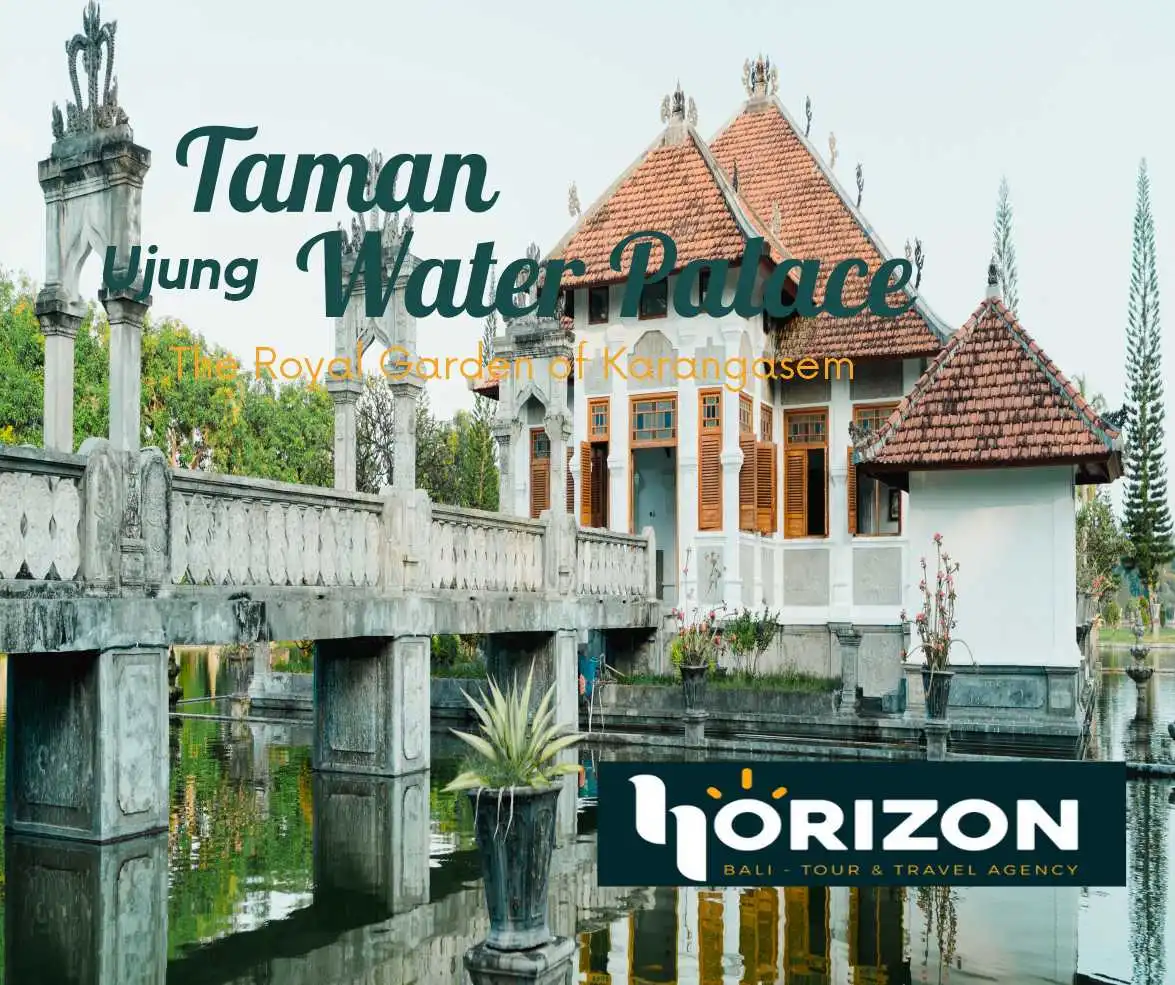

Taman Ujung Water Palace, also known as Taman Soekasada Ujung, is one of the most remarkable historical landmarks in East Bali. Located in Tumbu Village, Karangasem Regency, this former royal garden combines expansive water pools, elegant bridges, tropical gardens, mountain scenery, and a distinctive blend of Balinese, Chinese, and European architecture.
Unlike many Bali attractions that focus on temples or beaches, Taman Ujung Water Palace Bali offers a glimpse into the lifestyle, architectural ambitions, and cultural heritage of the former Karangasem royal family. The complex was developed as a royal retreat and a place to receive important guests, making it both a historical site and one of the most scenic East Bali tourist attractions.
If you are planning to explore places to visit in Karangasem, Taman Ujung deserves a place on your itinerary, especially if you are already visiting Tirta Gangga, Lempuyang Temple, Amed, Candidasa, or other East Bali attractions.

Bali Lempuyang Tour (Customizable Trip)
Lempuyang Temple Tour Bali | Full Day Private Gateway to Heaven
What Is Taman Ujung Water Palace?
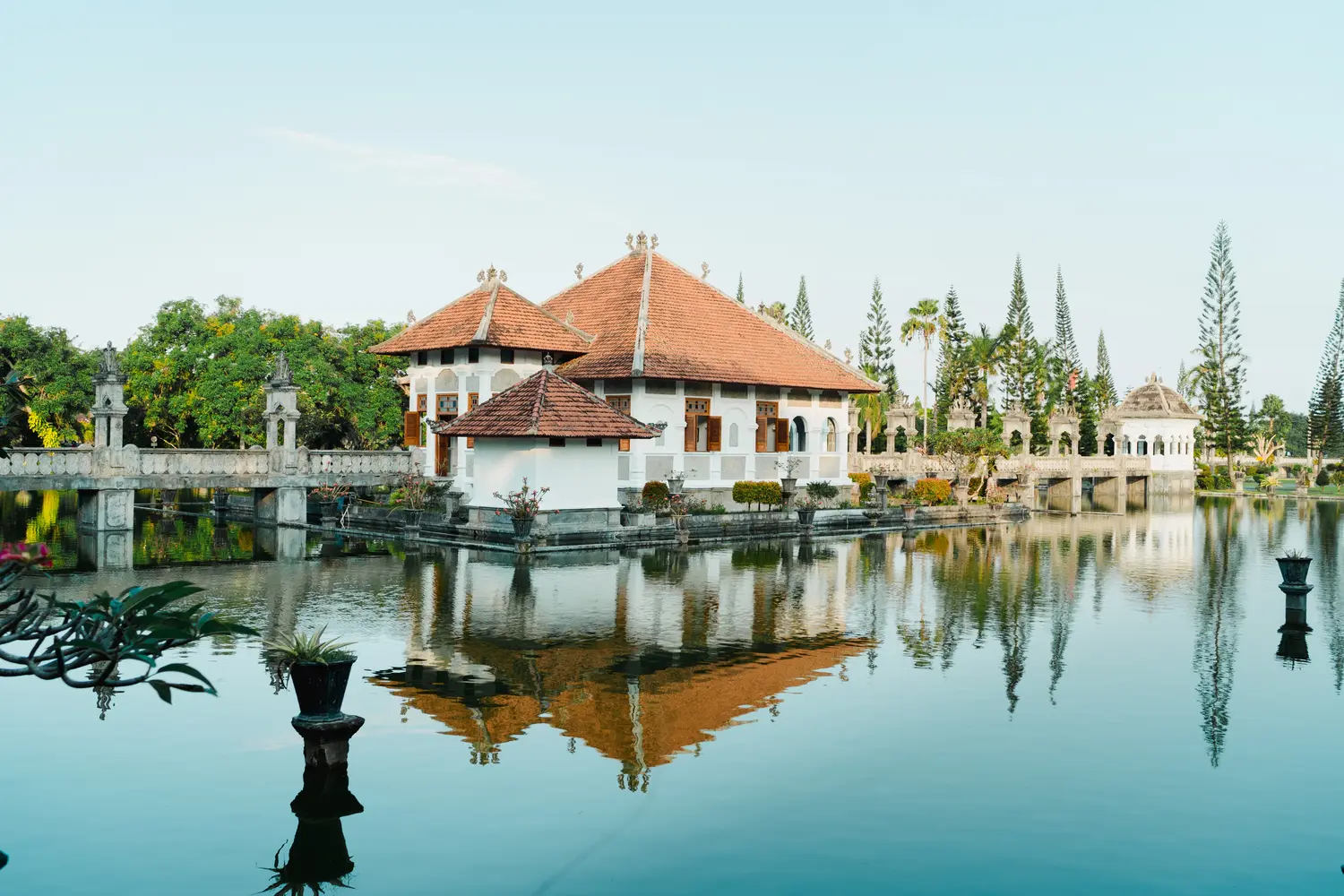
Taman Ujung is a former royal garden and water palace belonging to the Karangasem Kingdom. Its official name is Taman Soekasada Ujung, although travelers commonly refer to it as Taman Ujung Water Palace or simply Taman Ujung.
The complex is characterized by large pools, landscaped gardens, stone pathways, bridges, stairways, and historic palace buildings. The setting is particularly impressive because the garden sits close to the eastern coast of Bali, providing views toward the sea and surrounding hills from elevated sections of the complex.
The Karangasem tourism authority describes Taman Soekasada Ujung as a former royal resting place featuring water gardens, historic buildings, and a combination of European and Balinese architectural influences. It is located approximately 5 km southeast of Amlapura.
Today, Taman Ujung is one of the best-known Karangasem Bali attractions and an important example of Bali’s royal architectural heritage.
Where Is Taman Ujung Water Palace?
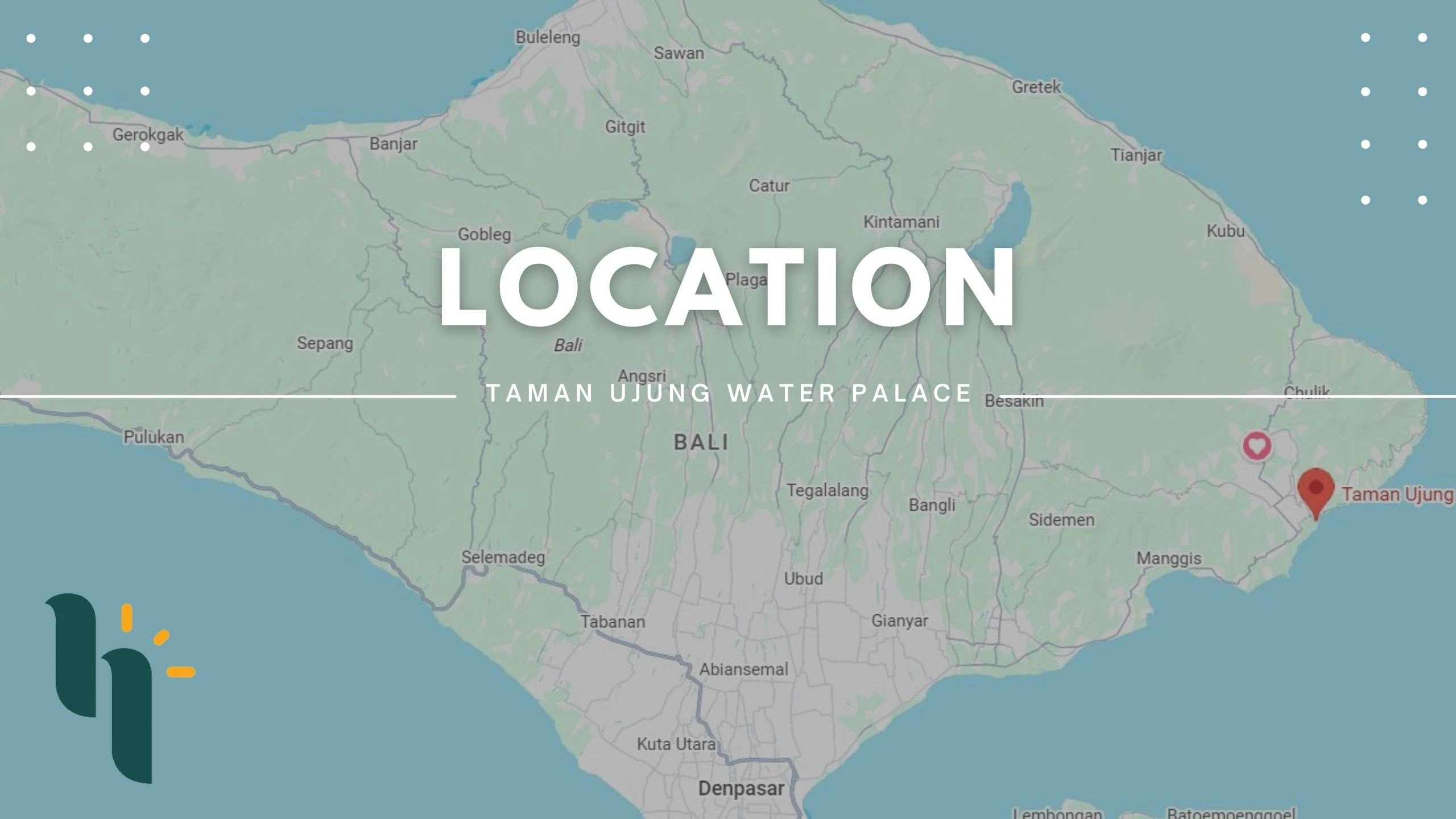
Taman Ujung Water Palace Karangasem is located in:
Tumbu Village, Karangasem Regency, Bali, Indonesia.
The attraction is in the southeastern part of Bali, near Ujung Beach and approximately 5 km from Amlapura, the capital of Karangasem Regency.
Its location makes it particularly convenient to combine with other Bali East Coast attractions. Travelers planning to explore the eastern part of the island can also use a Karangasem travel guide to discover nearby temples, beaches, traditional villages, and other cultural attractions.
Popular destinations that can be combined with Taman Ujung include:
- Tirta Gangga Water Palace
- Lempuyang Temple
- Amed
- Candidasa
- Virgin Beach
- Tenganan Village
- Lahangan Sweet
- Padang Bai
- Besakih Temple
For travelers interested in history, photography, architecture, and quieter destinations, Taman Ujung in Karangasem is one of the most worthwhile places to visit in East Bali.
Taman Ujung Water Palace History
Understanding the Taman Ujung Water Palace history makes the visit much more meaningful because the complex was not originally designed simply as a tourist attraction.
The story of Taman Ujung goes back to the beginning of the 20th century during the period of the Karangasem Kingdom.
Who Built Taman Ujung?
One of the most frequently asked questions is: Who built Taman Ujung?
Taman Ujung was developed under the Karangasem royal family, particularly during the reign of I Gusti Bagus Jelantik, also known as Anak Agung Anglurah Ketut Karangasem.
Historical sources from the Karangasem tourism authority state that the earliest development began in 1901, when an area known as Kolam Dirah was established. The development was subsequently expanded from 1909 as a royal retreat under the Karangasem king.
Academic research also identifies Anak Agung Anglurah Ketut Karangasem as the king associated with the development of Taman Soekasada Ujung and notes that historical, cultural, political, and religious considerations influenced its development.
Therefore, if someone asks who built Taman Ujung, the most accurate answer is that it was developed under the Karangasem royal family, with major construction and expansion taking place during the reign of I Gusti Bagus Jelantik.
When Was Taman Ujung Built?
There is an important distinction between the earliest construction and the development of the palace complex that visitors recognize today.
The earliest site dates to 1901, when Kolam Dirah was established. Major development of the royal garden began in 1909, and the complex was progressively expanded during the following years. Sources indicate that the royal water palace was officially opened in 1921.
This means the answer to when was Taman Ujung built depends on which stage of its history is being discussed:
- 1901: Early development associated with Kolam Dirah
- 1909 onward: Major development into a royal retreat
- 1921: The completed water palace was officially opened
Why Was Taman Ujung Built?
The primary purpose of Taman Ujung was to serve as a royal retreat and reception area for important guests.
It was used by the Karangasem royal family as a place to relax, spend time with family, and receive distinguished visitors. Historical accounts describe it as an official royal residence and a location for receiving important guests, including foreign rulers and government officials.
This is why describing Taman Ujung simply as a “water palace” does not fully explain its historical significance.
It was simultaneously:
- A royal retreat
- A reception area for important guests
- A landscaped royal garden
- An architectural showcase
- A place connected with royal ceremonies and cultural traditions
- A symbol of the Karangasem Kingdom’s cultural and architectural sophistication
Taman Ujung Royal Palace History and the Karangasem Kingdom
To understand the Taman Ujung royal palace history, it helps to look at the broader history of the Karangasem Kingdom.
Karangasem was one of Bali’s historical kingdoms, and its royal family developed several important architectural complexes. Taman Ujung and Tirta Gangga are among the best-known surviving examples.
The development of Taman Ujung reflected the royal family’s interaction with different cultural influences during the late 19th and early 20th centuries.
The architecture incorporated Balinese traditions while also adopting Chinese and European elements. This combination was not accidental. Research from the Indonesian cultural heritage authority describes Taman Soekasada Ujung as an example of Balinese, Chinese, and European architectural integration.
The site therefore provides an interesting window into the cultural history of the Karangasem royal family and the wider Karangasem Kingdom history.
Taman Ujung Water Palace Architecture
One of the biggest reasons travelers visit Taman Ujung is its unusual architecture.
The Taman Ujung Water Palace architecture is not purely traditional Balinese. Instead, it combines elements of Balinese and European architecture, with Chinese influence visible in some decorative and structural details.
The project involved a Dutch architect, van Den Hentz, a Chinese architect named Loto Ang, and local Balinese undagi, or traditional architects and craftsmen.
This collaboration produced an architectural style that is difficult to categorize as belonging to only one tradition.
Balinese Architecture
Traditional Balinese elements can be seen in:
- Ornamental details
- Stone carving
- Spatial organization
- Garden structures
- Decorative motifs
- Relationship between buildings and landscape
The complex reflects concepts associated with Balinese spatial planning, including the traditional Tri Mandala concept identified in academic research.
European Architecture in Bali
European influence is especially noticeable in some palace buildings, columns, windows, bridges, and the use of masonry and concrete.
The main pavilion, often identified as Gili Bale, has a distinctive European character, while other structures demonstrate how Western architectural ideas were adapted to a Balinese royal setting.
Chinese Influence
Chinese influence can also be found in parts of the complex. The involvement of Loto Ang contributed to the multicultural architectural character of the site.
This makes Taman Ujung an excellent example of Balinese and European architecture existing alongside Chinese architectural influence.
For anyone interested in European architecture in Bali, Dutch architecture in Bali, or Balinese royal architecture, Taman Ujung provides a particularly interesting case study.
How Many Pools Are There at Taman Ujung?
The answer depends on how the pools are counted.
Some modern descriptions refer to three large main pools, while historical and architectural studies identify four pools when additional water areas, including Kolam Dirah and later sections, are included.
This explains why visitors may encounter different numbers when researching the site.
The most useful way to understand the complex is that Taman Ujung contains several interconnected water areas rather than simply a single palace pool.
The water gardens form the visual foundation of the complex. Buildings, bridges, gardens, and pathways were arranged around these pools, creating the distinctive landscape that visitors see today.
Taman Ujung Palace Buildings
Several historic buildings contribute to the character of the complex.
Gili Bale
Gili Bale is one of the most recognizable structures at Taman Ujung. Located within the water garden, it is connected to the surrounding area by bridges.
Historically, the building was associated with royal relaxation and receiving guests.
Bale Kambang
Bale Kambang is another important building surrounded by water. Cultural heritage documentation identifies it as one of the historic buildings in the complex and records architectural details that combine local decorative traditions with influences from outside Bali.
Bale Kapal
Bale Kapal is one of the most visually distinctive structures in the complex. Its elevated position allows visitors to look across the gardens and toward the surrounding landscape.
The structure demonstrates the combination of Balinese, Chinese, and European influences that characterizes Taman Ujung.
Bale Warak
Bale Warak is another historic structure associated with the site’s later development. It is known for its distinctive decorative elements and historical connection with royal ceremonies.
Together, these Taman Ujung historical buildings make the complex more than a garden. It is a cultural landscape where architecture, water, history, and nature are integrated.
Things to Do at Taman Ujung
There is more to do here than simply walk around the gardens.
1. Explore the Water Gardens
Walking around the pools is one of the simplest ways to experience Taman Ujung.
The combination of water, lawns, trees, bridges, and historic buildings creates a peaceful environment that feels very different from the busier tourist areas of southern Bali.
2. Visit the Historic Palace Buildings
Take time to examine the different structures rather than treating them only as photography backgrounds.
Look closely at:
- Columns
- Windows
- Stone carvings
- Bridges
- Decorative motifs
- Building layouts
- Architectural details
These details help explain why Taman Ujung is considered an important part of Bali’s cultural heritage.
3. Climb to the Higher Viewpoints
One of the best experiences at Taman Ujung is walking toward the elevated section of the complex.
From higher ground, visitors can see the gardens below and, depending on weather conditions, views toward the coastline and surrounding hills.
This is one of the best areas for Taman Ujung scenic views and landscape photography.
4. Take Photos
Taman Ujung is one of the most photogenic Instagrammable places in Karangasem.
Some of the best Taman Ujung photo spots include:
- The bridges over the pools
- Gili Bale
- Bale Kapal
- The main stairway
- The elevated viewpoint
- Reflections in the water
- Palace buildings surrounded by gardens
Early morning and late afternoon generally provide softer natural light, which is particularly useful for Taman Ujung landscape photography.
5. Enjoy the Gardens
The gardens are an important part of the attraction.
Rather than rushing directly between the buildings, allow time to walk through the landscaped areas and observe how the palace structures interact with the surrounding vegetation and water.
This is one of the reasons Taman Ujung remains attractive to travelers looking for scenic places in East Bali.
Best Photo Spots
If photography is one of your priorities, consider these Taman Ujung photography spots:
The central bridges
The bridges create strong leading lines toward the palace buildings.
Gili Bale
The pavilion surrounded by water is one of the most recognizable views of the complex.
The main stairway
The long staircase leading toward the elevated section creates a dramatic perspective.
Bale Kapal
Its elevated position provides a broader view across the palace grounds.
The upper viewpoint
This is particularly good for panoramic views of the gardens and surrounding landscape.
Water reflections
On calm days, the pools can create attractive reflections of the palace buildings and surrounding greenery.
For visitors searching for Taman Ujung Instagram locations or Taman Ujung Instagrammable places, these areas provide some of the most visually distinctive compositions.
Entrance Fee
The current price can vary depending on the source and may change over time. Online listings updated in 2026 report prices ranging from approximately IDR 50,000 to IDR 100,000 per adult, while one July 2026 Bali entrance-fee listing reports IDR 75,000 per person for Taman Ujung.
Because there is no consistently published current official tariff readily available online, travelers should confirm the price at the ticket counter before entering.
Opening Hours
Opening hours can also vary slightly between online listings.
Recent travel listings generally indicate that Taman Ujung opens in the morning and closes in the late afternoon or early evening. One current listing gives approximately 8:00 AM to 6:00 PM, while another 2026 source lists a wider operating period.
For the most comfortable experience, arriving in the morning is recommended because the weather is generally cooler and the light is softer for photography.
Before traveling, check the latest local information if your itinerary depends on a specific opening or closing time.
Best Time to Visit
The best time to visit Taman Ujung Water Palace depends on what you want to experience.
Morning
Morning is ideal for:
- Cooler temperatures
- Softer light
- Photography
- Fewer visitors
- Walking around the gardens
Late Afternoon
Late afternoon can be excellent for:
- Warm architectural photography
- Softer landscape light
- Cooler temperatures
- Views toward the coast
Although Taman Ujung sunset can be attractive, the best sunset conditions depend heavily on weather and the exact position of the sun.
If photography is your priority, avoid arriving in the middle of the day when sunlight can be harsh and temperatures are higher.
How to Get to Taman Ujung Water Palace
Taman Ujung is easiest to reach by private car, private driver, or scooter.
Because public transportation options in this part of Karangasem are limited compared with southern Bali, travelers usually find private transportation more convenient.
From Denpasar
The journey from Denpasar can take roughly two hours or more depending on traffic and the chosen route. The Karangasem tourism authority has previously described the site as approximately 64 km from central Denpasar.
From Ubud
Traveling from Ubud requires crossing toward eastern Bali and can take several hours depending on traffic.
Because of the distance, it makes sense to combine Taman Ujung with other Karangasem destinations rather than traveling there for the attraction alone.
From Canggu and Kuta
From Canggu or Kuta, the journey is considerably longer. A private car with an experienced local driver is generally more comfortable for a full East Bali itinerary.
From Amed
Amed is considerably closer to Taman Ujung than southern Bali destinations, making the two attractions easy to combine in an East Bali itinerary.
Attractions Near Taman Ujung
Taman Ujung is particularly valuable as part of a wider East Bali itinerary because several major destinations are located within the broader Karangasem region.
Tirta Gangga Water Palace
One of the most popular companions to Taman Ujung, Tirta Gangga is another royal water garden with a very different landscape design.
Lempuyang Temple
Known internationally for its famous Gates of Heaven, Lempuyang is one of the most visited cultural attractions in East Bali.
Amed
Amed is known for its coastal scenery, diving, snorkeling, fishing villages, and relaxed atmosphere.
Candidasa
Candidasa is a coastal destination with beaches, restaurants, resorts, and access to several eastern Bali attractions.
Tenganan Village
Tenganan provides an opportunity to learn about one of Bali’s traditional villages and its distinctive cultural traditions.
Virgin Beach
Virgin Beach is one of the more scenic beaches in the Karangasem area and can work well as a relaxing addition to an East Bali route.
Taman Ujung Heritage and Cultural Importance
Taman Ujung should not be viewed only as a beautiful photography location.
It is also an important example of Taman Ujung cultural heritage.
The complex represents a period when Balinese royal architecture was evolving through interaction with external cultures while maintaining local traditions.
Research from ISI Bali describes the architecture of Taman Ujung as a hybrid design reflecting Balinese identity, European influence, and cultural diplomacy during the colonial period.
The site therefore provides insight into:
- The history of the Karangasem Kingdom
- Balinese royal culture
- Traditional Balinese architecture
- European influence in Bali
- Chinese architectural influence
- Royal diplomacy
- Heritage conservation
The complex was severely damaged by the eruption of Mount Agung in 1963 and later earthquakes. Reconstruction and revitalization efforts eventually restored much of what visitors see today.
This history adds another layer of meaning to the gardens and palace buildings.
Is Taman Ujung Worth Visiting?
Yes, especially if you are interested in historical places, architecture, photography, and less conventional Bali attractions.
Taman Ujung is particularly worthwhile for travelers who want to experience a different side of Bali beyond beaches and temples.
It offers a combination that is difficult to find elsewhere on the island:
Royal history + water gardens + architecture + mountain and coastal scenery.
For travelers exploring best attractions in East Bali, Taman Ujung is one of the strongest choices.
It is also particularly suitable for photographers because the combination of water, bridges, historic buildings, greenery, and elevated viewpoints creates many different compositions within a relatively compact area.
Final Thoughts
Taman Ujung Water Palace Bali is more than an attractive garden. It is a surviving piece of Karangasem’s royal history and one of the most distinctive examples of architectural hybridity in Bali.
From its early development in 1901 to its expansion as a royal retreat, the complex reflects the changing cultural landscape of Bali during the early 20th century. Its water gardens, bridges, palace buildings, and elevated viewpoints make it one of the most beautiful places to visit in Karangasem.
For travelers planning an East Bali journey, combining Taman Ujung and Tirta Gangga is an excellent way to explore the legacy of the Karangasem royal family. Add Lempuyang Temple, Amed, Candidasa, or other East Bali tourist attractions, and Taman Ujung becomes part of a much richer cultural and scenic journey through the eastern side of Bali.
If you are looking for a destination that combines history, royal architecture, cultural heritage, gardens, water features, and scenic views, Taman Ujung deserves a place near the top of your list of East Bali attractions.
0 Comment