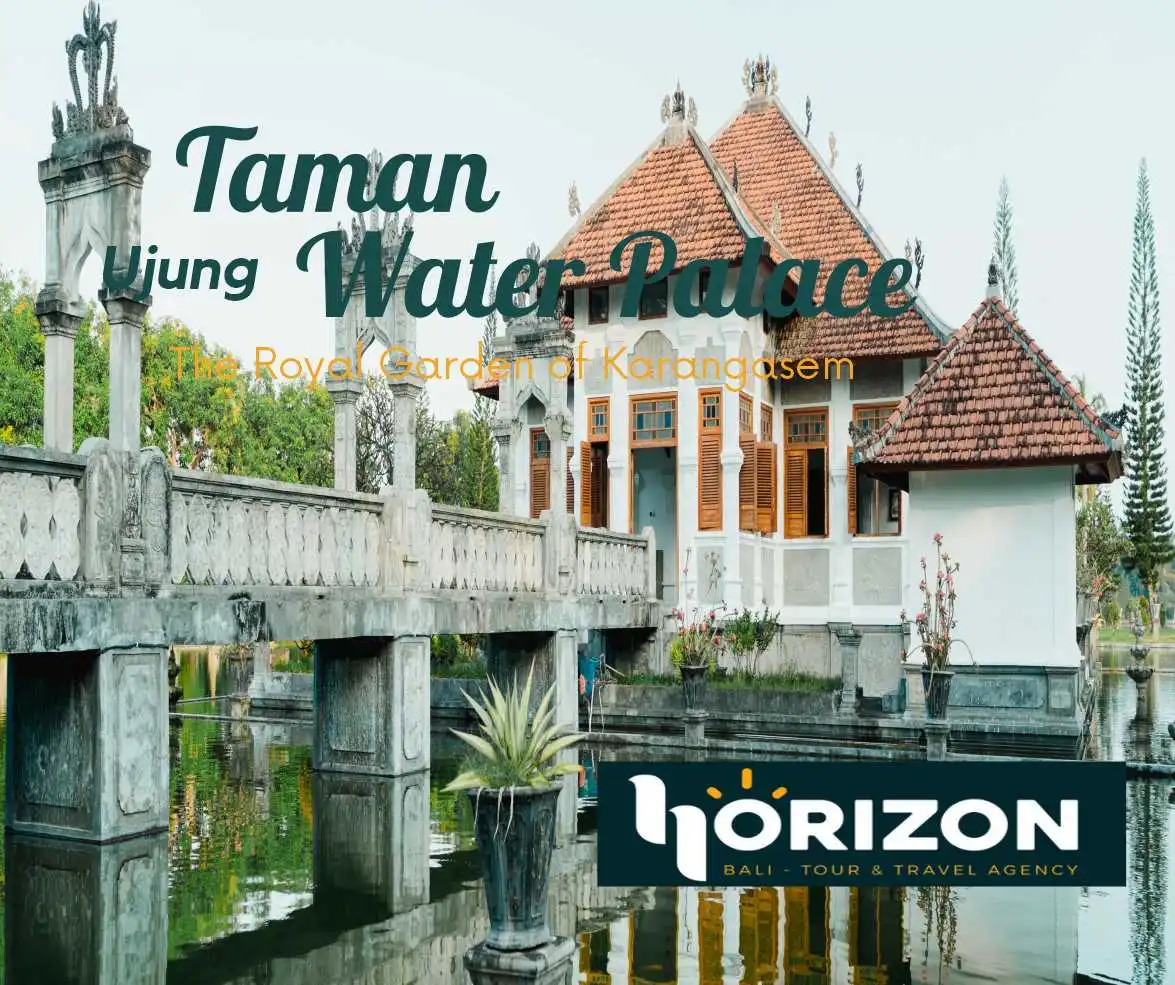

Taman Ujung Water Palace is one of the most beautiful historical attractions in East Bali, offering a fascinating combination of royal heritage, traditional Balinese architecture, European influences, and peaceful tropical gardens. Located in Tumbu Village, Karangasem Regency, this magnificent historical complex is surrounded by large ornamental pools, elegant bridges, stone pathways, and beautifully maintained gardens. Unlike Bali’s famous temples, which are primarily visited for religious and spiritual experiences, Taman Ujung provides an opportunity to discover another side of the island’s cultural history through its former royal residence.
Officially known as Taman Soekasada Ujung, the attraction is commonly called Taman Ujung Water Palace because water plays an essential role in its landscape and architectural design. The complex was developed under the royal family of Karangasem during the early 20th century as a place for relaxation, royal entertainment, and welcoming important guests. Its unusual architectural combination makes it particularly interesting for travelers who enjoy history, photography, and cultural sightseeing.
Today, Taman Ujung Water Palace Bali is a popular destination for international visitors, Indonesian travelers, photographers, and couples looking for beautiful pre-wedding photography locations. Its spacious gardens and historic buildings create a peaceful atmosphere that feels quite different from the busier tourist areas of southern Bali.
If you are planning an East Bali holiday, this guide covers everything you need to know, including the history of Taman Soekasada Ujung, entrance fees, opening hours, transportation options, photography locations, and nearby attractions. You will also discover how to combine your visit with other popular destinations through an Bali tour package.
Where Is Taman Ujung Water Palace?
Taman Ujung Water Palace is located in Tumbu Village, Karangasem District, Karangasem Regency, on the eastern coast of Bali, Indonesia. The attraction sits approximately five kilometers southeast of Amlapura, the administrative center of Karangasem, making it relatively easy to reach from the surrounding villages and coastal destinations.
Its location gives visitors a different perspective of Bali compared with the island’s more developed southern tourist areas. Instead of beach clubs, shopping streets, and busy nightlife, the surrounding region features traditional villages, agricultural landscapes, coastal scenery, and historical landmarks.
The palace complex occupies a beautiful setting between green hills and the Indian Ocean. When walking through the gardens, you can enjoy views of the surrounding landscape, including the nearby coastline and the hills of Karangasem. This natural setting is one reason why the attraction remains popular among travelers interested in combining cultural sightseeing with beautiful scenery.
Location in Tumbu, Karangasem, East Bali
The official name Taman Soekasada Ujung refers to the historical garden complex in Tumbu Village. However, many visitors simply search for Taman Ujung Bali or Ujung Water Palace when planning their journey.
The attraction is approximately five kilometers from central Amlapura. It is also accessible from Candidasa, Amed, and other popular destinations in East Bali.
Because the palace is situated outside Bali’s main tourist centers, transportation planning is important. Visitors staying in Ubud, Seminyak, Canggu, Kuta, or Nusa Dua generally need to allow several hours for the journey, depending on traffic conditions.
The surrounding area is also worth exploring. Karangasem is known for its historical royal landmarks, traditional villages, coastal scenery, and spectacular mountain landscapes. Visiting Taman Ujung therefore offers more than simply exploring a single historical attraction.
Taman Ujung Water Palace Map and Nearby Destinations
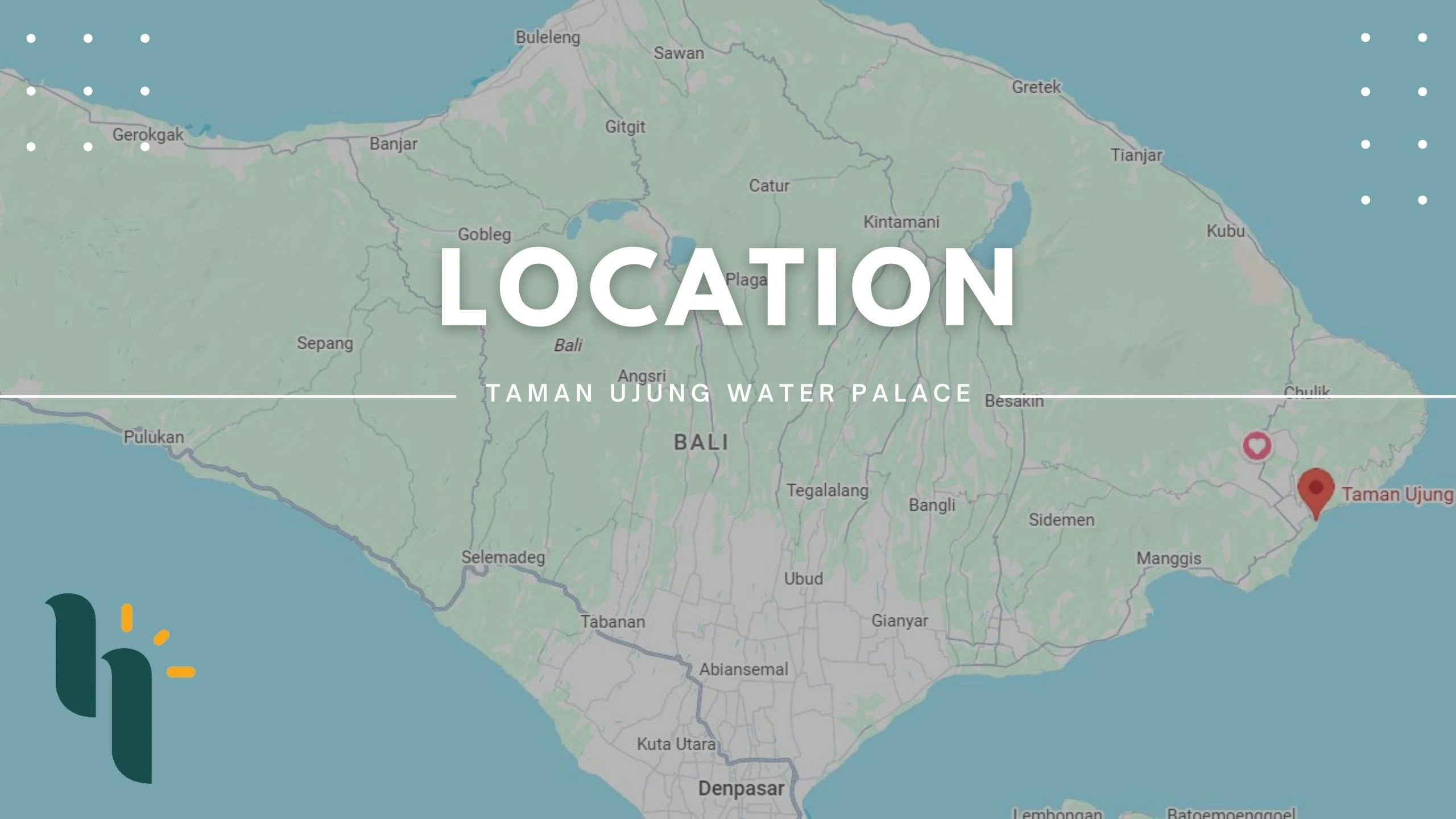
Using Google Maps or another navigation application is the easiest way to find the attraction. Search for Taman Soekasada Ujung Water Palace, and the navigation system will direct you toward the entrance in Tumbu Village.
The destination is particularly convenient to combine with several other attractions in Karangasem. Tirta Gangga Water Palace, for example, is another famous royal water garden and is approximately 10 kilometers away by road. Visitors can also explore Lempuyang Temple, Tenganan Traditional Village, Virgin Beach, and Amed depending on their available time.
These attractions offer different experiences, making it possible to create a varied East Bali sightseeing itinerary.
The History of Taman Soekasada Ujung
Understanding the history of Taman Ujung makes a visit considerably more interesting. What appears today as a beautiful garden with impressive buildings and ornamental pools was originally developed as part of the royal landscape of the Karangasem Kingdom.
The complex reflects the ambitions and architectural interests of the Karangasem royal family during a period when Bali experienced increasing cultural contact with the outside world. Its buildings combine traditional Balinese craftsmanship with European architectural elements, creating an unusual historical landscape.
The development of the palace began with an earlier water feature before expanding into the magnificent garden complex that visitors see today.
The Royal Heritage of Karangasem
The history of Taman Soekasada Ujung is closely connected to the last ruling period of the Karangasem Kingdom. The development was associated with I Gusti Bagus Jelantik, who was also known by his royal title, Anak Agung Anglurah Ketut Karangasem.
The earliest development dates back to 1901, when a pool known as Kolam Dirah was established. The name Dirah is associated with historical traditions concerning spiritual practices and purification.
In 1909, the royal garden underwent further development into a larger recreational and ceremonial complex. It eventually became a place where the royal family could relax and receive distinguished guests.
The garden was not simply designed as an ornamental attraction. Its landscape, buildings, and water features reflected the royal family’s appreciation of architecture, nature, and cultural exchange.
Taman Ujung also demonstrates how Karangasem developed its own architectural identity. Rather than following only traditional Balinese designs, the royal complex incorporated ideas from different architectural traditions while maintaining local artistic elements.
Today, the palace remains an important part of Karangasem’s cultural heritage and offers visitors a glimpse into Bali’s royal history.
Architecture and Restoration of the Water Palace
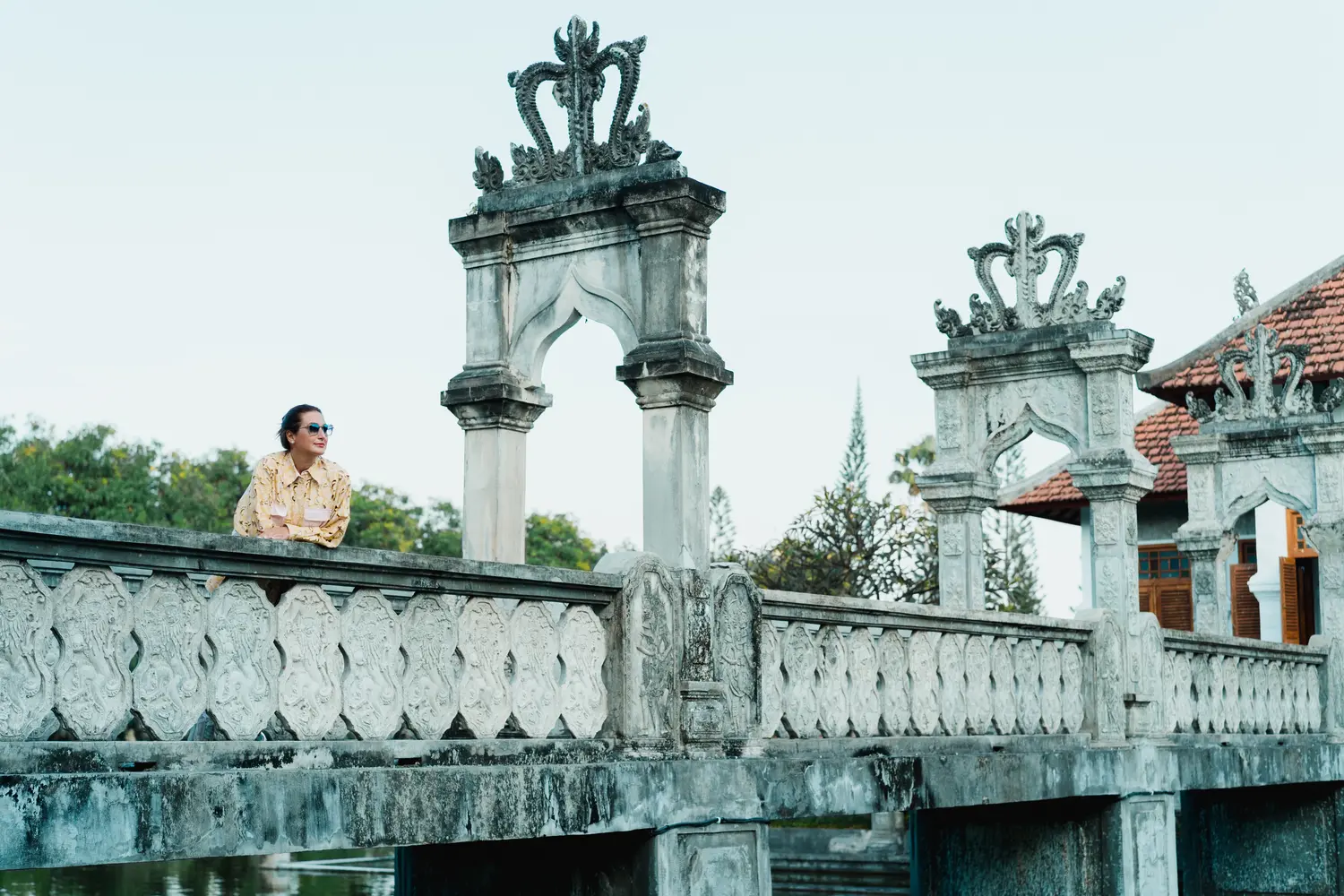
One of the most fascinating aspects of Taman Ujung is its architectural design. The complex combines Balinese, European, and Chinese influences, creating a distinctive appearance that is different from most traditional buildings on the island.
Balinese architectural elements can be seen in the decorative details, stonework, and traditional craftsmanship. European influences appear in the building proportions, arches, columns, and symmetrical arrangements. Chinese design influences also contribute to the character of certain architectural details.
The combination of these influences reflects the international outlook of the Karangasem royal family during the early 20th century.
However, the palace experienced considerable damage during the 1963 eruption of Mount Agung. The natural disaster affected many parts of East Bali, and Taman Ujung suffered additional deterioration over the following years.
Restoration work was eventually undertaken between 1998 and 2001, helping revive the complex and preserve its historical appearance.
Today, visitors can once again appreciate its bridges, pools, pavilions, gardens, and architectural details. Although the complex has undergone restoration, it remains an important reminder of Karangasem’s royal past.
What Makes Taman Ujung Water Palace Special?
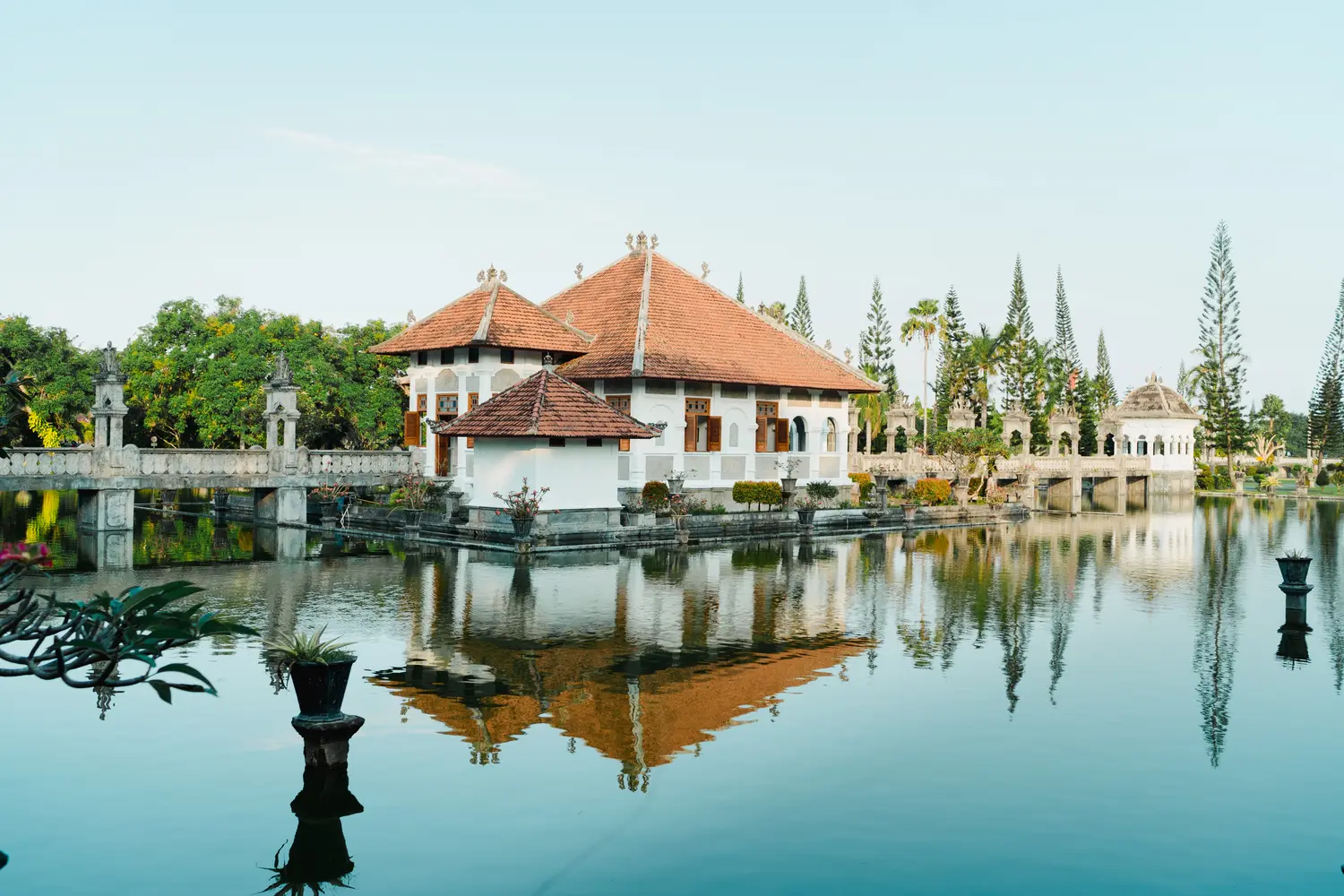
Taman Ujung Water Palace is special because it combines historical architecture, landscaped gardens, and natural scenery in one location. Rather than being a conventional palace with a single main building, the complex consists of several pavilions, bridges, pools, and open spaces arranged across an extensive garden.
The layout encourages visitors to explore at a relaxed pace. You can walk across bridges, admire the reflections of historic buildings in the water, discover decorative stone structures, and climb to elevated viewpoints overlooking the surrounding landscape.
For photographers, the attraction offers plenty of opportunities to capture Bali’s architectural beauty. For history enthusiasts, it provides an interesting look at the cultural influences that shaped the royal heritage of Karangasem.
The Three Royal Pools and Floating Pavilion
The three large pools are among the most recognizable features of Taman Ujung Bali. They form the central element of the landscape and create a beautiful setting for the surrounding pavilions and bridges.
The pools are connected through carefully arranged walkways, allowing visitors to explore different sections of the complex. Their reflective surfaces create attractive views, particularly when the weather is clear and the surrounding buildings are reflected in the water.
One of the most impressive structures is Bale Gili, a pavilion situated on an island within the main pool. The building appears to float above the water when viewed from certain angles, which explains why visitors often associate the attraction with the name Floating Palace.
The pavilion is connected to the surrounding garden through bridges, making it one of the most photographed locations in the complex.
Take some time to appreciate the architectural details rather than simply walking past the building. The combination of traditional decorative elements, European-style structures, and water reflections makes this area particularly attractive.
The pools also help create a peaceful atmosphere throughout the garden. Even when other visitors are exploring the complex, the open landscape and surrounding water features make the environment feel spacious.
Bridges, Gardens, Flowers, and Scenic Viewpoints
The bridges at Taman Ujung are among the most distinctive elements of its design. They connect different parts of the palace and provide visitors with beautiful perspectives of the pools and surrounding architecture.
Walking across these bridges allows you to appreciate how the original designers integrated buildings and water features into a single landscape. The bridges also provide excellent photography locations, especially when the historic pavilion appears in the background.
Another attractive feature is the garden itself. The landscaped grounds contain tropical plants, ornamental trees, flowering plants, and green lawns that complement the historical buildings.
Taman Ujung Water Palace flowers are particularly appealing to visitors who enjoy garden photography. Depending on the season and maintenance conditions, you may see colorful flowers decorating different areas of the complex. Their colors provide a natural contrast against the stone structures, green lawns, and blue water.
The gardens are not designed around flowers alone. Trees and other tropical vegetation contribute to the atmosphere, providing natural framing for photographs and creating a more relaxed environment.
If you enjoy photography, explore the different walking paths rather than staying near the main pool. Some of the most attractive compositions can be found from less obvious angles, where the bridges, buildings, and surrounding greenery appear together.
The Bale Kapal and Panoramic Views
For one of the most rewarding experiences at Taman Soekasada Ujung, make your way toward the elevated section of the complex.
Bale Kapal is a historical structure located on higher ground and provides a different perspective of the palace gardens. From this area, visitors can admire the layout of the pools, surrounding greenery, and coastal landscape.
The viewpoint is especially attractive because it reveals how the entire garden was designed in relation to its natural surroundings. From above, the pools and buildings form an impressive architectural composition.
The surrounding landscape also provides views toward the sea and the green hills of Karangasem. On a clear day, the scenery creates an excellent backdrop for photographs.
Reaching the elevated area involves walking up steps, so comfortable footwear is recommended. The effort is worthwhile because the panoramic perspective is different from what you experience at ground level.
Spend a few minutes enjoying the scenery before continuing your walk through the gardens. This elevated section helps complete the experience of exploring Taman Ujung.
Taman Soekasada Ujung Water Palace Entrance Fee
Before visiting, it is useful to understand the current entrance fee at Taman Ujung Water Palace. Ticket prices are different for Indonesian citizens and international visitors, and some visitor categories have separate rates.
For 2026, available information based on Karangasem Regency’s published tariff indicates the following entrance prices.
Taman Ujung Ticket Prices and Parking Information
INDICATIVE 2026 ENTRANCE FEES · INDONESIAN RUPIAH
Visitor category | Entrance fee |
International adult | IDR 100,000 |
International child | IDR 75,000 |
Indonesian adult | IDR 35,000 |
Indonesian child | IDR 25,000 |
Adult with Bali KTP | IDR 25,000 |
Children under 6 | Free |
These prices are based on the available 2026 tariff information. Confirm the applicable category and current rates directly at the ticket counter before entering.
Parking is available near the entrance. Older visitor information lists parking fees of approximately IDR 2,000 to IDR 5,000, although the amount may change depending on vehicle type and current regulations.
If you are traveling with an international tour group, remember to calculate the entrance fees separately from transportation and driver expenses.
There may also be additional charges for professional photography, commercial filming, or pre-wedding sessions. These activities can require separate permission, so contact the attraction management before arranging a professional shoot.
One practical recommendation is to bring some cash, particularly for parking and small purchases around the entrance. Do not assume that every payment facility will accept international bank cards.
Taman Ujung Bali Opening Hours and Best Time to Visit
Taman Ujung Water Palace generally opens daily from 7:00 AM to 7:00 PM Central Indonesia Time (WITA), although operating arrangements can change during special circumstances and religious holidays.
For the most comfortable experience, consider arriving early in the morning or later in the afternoon. Both periods offer more pleasant temperatures than the middle of the day.
Morning visits between 7:00 AM and 9:00 AM are particularly attractive for visitors who want to explore the gardens before the tropical heat becomes intense. The softer sunlight also creates beautiful reflections across the pools.
If you prefer warmer lighting for photography, late afternoon is another excellent option. The sunlight becomes softer, and the surrounding landscape can appear particularly beautiful.
The dry season, generally from April to October, is often convenient for outdoor sightseeing because visitors have a better chance of enjoying clear weather. However, Bali’s tropical climate means that rain can occur throughout the year.
Try to avoid planning your entire visit around a single photograph. The palace is a large historical garden, and exploring its different sections is part of the experience.
Most visitors should allow approximately one to one and a half hours to explore the main attractions. If you want to take photographs, climb to the viewpoints, and enjoy a slower walk, allow closer to two hours.
How to Get to Taman Ujung Water Palace
Getting to Taman Ujung is relatively straightforward if you have access to private transportation. The attraction is located in East Bali, away from the main tourist centers, so most international visitors choose to rent a car, hire a private driver, or join an organized sightseeing tour.
From southern Bali, the journey generally follows the eastern coastal route through Gianyar and Klungkung before continuing toward Karangasem. The journey offers opportunities to see traditional villages, rice fields, and coastal landscapes along the way.
Visitors traveling independently can use Google Maps for navigation. However, remember that journey times depend on traffic, road conditions, and your starting location.
A private vehicle is particularly convenient if you plan to visit several attractions on the same day. Instead of arranging separate transportation for every destination, you can follow a flexible itinerary and spend more time at places that interest you.
Taman Ujung Distance from Ubud and Candidasa
The travel distance to Taman Ujung depends on where you stay in Bali. Below are approximate road distances and journey times to help you plan your trip.
Starting location | Approximate distance | Estimated travel time |
Amlapura | 5 km | 10–15 minutes |
Candidasa | 15–20 km | 20–30 minutes |
Ubud | 65–75 km | 1 hour 45 minutes–2 hours 15 minutes |
Sanur | 65–75 km | 1 hour 30 minutes–2 hours |
Kuta | 75–90 km | 2–2.5 hours |
Seminyak | 80–95 km | 2–2.5 hours |
Canggu | 85–100 km | 2–2.5 hours |
Nusa Dua | 85–100 km | 2–2.5 hours |
Distances and journey times are planning estimates, not guaranteed travel times.
From Ubud: The journey generally takes around two hours, depending on traffic. Ubud is a convenient starting point for travelers planning to explore multiple attractions in East Bali, including Tirta Gangga and Lempuyang Temple.
From Candidasa: This is one of the more convenient starting points. The journey usually takes approximately 20 to 30 minutes, making Taman Ujung an easy half-day sightseeing destination for visitors staying along the eastern coastline.
From Seminyak and Canggu: Travelers from these areas should allow approximately two to two and a half hours. Starting early is recommended, especially if you plan to visit additional destinations.
From Kuta and Nusa Dua: The journey typically takes around two hours or longer, depending on traffic. Combining the attraction with other East Bali destinations can make the longer journey more worthwhile.
Things to Do at Taman Ujung Water Palace
There is more to experience at Taman Ujung than simply looking at its historical buildings. The attraction offers several activities that allow visitors to appreciate its architecture, gardens, and natural surroundings.
One of the best things to do is walk around the three pools and explore the bridges connecting different sections of the palace. The reflections of the buildings across the water create beautiful scenery, especially during the morning and late afternoon.
Photography is another popular activity. The historic pavilions, stone columns, landscaped gardens, and elevated viewpoints provide many opportunities for memorable photographs. Couples often choose the location for pre-wedding photography because its architecture offers an elegant backdrop.
Visitors interested in history can spend time examining the architectural details and learning about the Karangasem royal family. Understanding the palace’s origins makes the experience more meaningful than simply visiting it as a photography location.
You can also enjoy a peaceful walk through the landscaped gardens. The open lawns and tropical vegetation create a relaxing environment where you can take a break from Bali’s busier tourist destinations.
If you enjoy scenic viewpoints, make sure you visit the elevated area near Bale Kapal. From there, you can appreciate the wider landscape and understand how the royal garden was positioned between the hills and coastline.
The best approach is to explore without rushing. Allow yourself enough time to enjoy the different sections of the complex rather than treating Taman Ujung as a quick photo stop.
Travel Tips and Visitor Information
A little preparation can make your visit to Taman Ujung much more comfortable. Although the attraction is relatively easy to explore, its open landscape and outdoor walking areas mean that visitors should prepare for Bali’s tropical weather.
First, bring drinking water and sunscreen. Many sections of the garden receive direct sunlight, and there are areas with limited natural shade. A hat or sunglasses can also make walking more comfortable, particularly around midday.
Wear comfortable walking shoes or sandals with good grip. The complex contains stone pathways, bridges, and steps leading toward elevated viewpoints. Appropriate footwear will make exploring these areas easier.
For clothing, lightweight and breathable outfits are suitable for walking around the gardens. Taman Ujung is primarily a historical garden rather than an active temple, so the usual temple dress requirements do not generally apply throughout the complex. However, visitors should dress respectfully if they enter a religious shrine or temple area within or near the attraction.
Families traveling with young children should pay attention around the pools and bridges. These are open water features, not swimming areas, and children should remain under adult supervision.
Photography enthusiasts should consider bringing a camera or smartphone with sufficient battery power. The combination of historic architecture, water reflections, flowers, and surrounding hills provides plenty of opportunities for photographs.
Finally, check entrance fees and opening arrangements before your visit. Published information can change, so confirming the details locally is always a sensible travel decision.
Best Places to Visit Near Taman Ujung
One advantage of visiting Taman Ujung is its location near several other interesting attractions in Karangasem. If you have a full day available, you can combine the palace with historical landmarks, traditional villages, temples, and beautiful natural landscapes.
Here are some destinations worth considering.
1. Tirta Gangga Water Palace
Tirta Gangga Water Palace is another famous royal water garden in East Bali. It is known for its ornamental ponds, stepping stones, fountains, stone sculptures, and colorful koi fish.
The attraction was developed under the Karangasem royal family and offers a different atmosphere from Taman Ujung. While Taman Ujung is characterized by large pools, bridges, and European-influenced architecture, Tirta Gangga is particularly famous for its decorative water features and traditional Balinese garden design.
The two attractions are approximately 10 kilometers apart by road, making them convenient to visit on the same day.
2. Lempuyang Temple
Lempuyang Temple is one of Bali’s most recognizable Hindu temple complexes. Its famous split gateway, often called the Gates of Heaven, provides a spectacular view toward Mount Agung when weather conditions are favorable.
The temple is located in the eastern part of Karangasem and attracts visitors interested in Balinese culture, religious heritage, and photography.
Combining Lempuyang Temple with Taman Ujung offers a good balance between cultural sightseeing and historical architecture.
3. Tenganan Traditional Village
Tenganan Pegringsingan Village is one of Bali’s traditional Bali Aga villages, known for preserving distinctive cultural customs and traditional craftsmanship.
Visitors can explore traditional village architecture, learn about local customs, and discover the famous double ikat weaving known as Geringsing.
It is an interesting destination for travelers who want to understand more about Bali’s cultural heritage beyond its popular temples and beaches.
4. Virgin Beach
Virgin Beach is a beautiful coastal destination known for its light-colored sand, clear water, and relaxed atmosphere.
It offers a different experience from the historical attractions of Karangasem. After exploring the palace and nearby temples, visitors can enjoy the coastline, relax by the beach, or have lunch at a local beachside restaurant.
5. Amed Beach
Amed Beach is another popular destination in East Bali, particularly among visitors interested in snorkeling, diving, and coastal scenery.
The area is famous for its traditional fishing boats, black volcanic sand, and underwater attractions. It is also an excellent location for travelers planning to stay overnight in East Bali.
These destinations can be included in a longer Karangasem sightseeing itinerary, depending on your travel schedule.
Exploring Taman Ujung with an East Bali Tour Package
If you are staying in Ubud, Seminyak, Canggu, or other tourist areas, organizing transportation to multiple destinations in Karangasem can require some planning. The attractions are spread across a relatively large area, and public transportation options are limited.
An East Bali tour package can make the experience more convenient, especially if you want to explore several destinations without worrying about driving, navigation, or arranging separate transportation.
A private sightseeing experience allows you to travel with your own vehicle and driver, giving you more flexibility throughout the day.
Taman Ujung and Tirta Gangga Tour
This is one of the most convenient combinations for visitors interested in Karangasem’s royal heritage.
You can begin the journey with a visit to Taman Ujung, where you can explore the historical pavilions, pools, bridges, and landscaped gardens. Afterward, continue to Tirta Gangga to discover another beautiful water garden associated with the Karangasem royal family.
The two attractions offer different architectural experiences, making them an excellent combination for photography and cultural sightseeing.
Taman Ujung and Lempuyang Temple Tour
Travelers interested in Balinese culture and historical landmarks may prefer combining Taman Ujung with Lempuyang Temple.
This itinerary introduces two different aspects of Karangasem’s heritage. Lempuyang provides a spiritual and religious experience, while Taman Ujung offers insight into the architectural and recreational traditions of the former kingdom.
Depending on your starting point and preferred visiting hours, the itinerary can be arranged to visit Lempuyang first and Taman Ujung afterward.
Private Tour to Taman Ujung
A private tour to Taman Ujung is another option for visitors who prefer a more flexible travel experience.
With a private air-conditioned vehicle and local driver, you can arrange hotel pickup from destinations such as Ubud, Canggu, Seminyak, Sanur, Kuta, and Nusa Dua, depending on the tour arrangement.
Unlike fixed group itineraries, a private tour allows you to spend more time at attractions that interest you. You can also discuss additional stops with your driver when planning the journey.
For couples, families, and small groups, this option provides a comfortable way to explore East Bali without managing the transportation yourself.
Conclusion
Taman Ujung Water Palace is one of the most fascinating historical attractions in East Bali. Its combination of royal architecture, beautiful gardens, ornamental pools, and scenic coastal surroundings makes it a worthwhile destination for travelers interested in discovering Bali beyond its famous beaches and temples.
Known officially as Taman Soekasada Ujung, the palace represents an important part of Karangasem’s royal heritage. Its unique blend of Balinese, European, and Chinese architectural influences provides a glimpse into the cultural history of the island during the early 20th century.
Whether you enjoy historical attractions, landscape photography, or peaceful garden walks, Taman Ujung offers an enjoyable sightseeing experience. You can also combine your visit with Tirta Gangga, Lempuyang Temple, Tenganan Village, and other destinations to make the most of your East Bali holiday.
If you are planning to explore Karangasem, consider including Taman Ujung in your East Bali itinerary. It is a destination where history, architecture, and natural beauty come together in one memorable experience.
Frequently Asked Questions About Taman Ujung Water Palace
1. Where is Taman Ujung Water Palace located?
Taman Ujung Water Palace is located in Tumbu Village, Karangasem District, Karangasem Regency, East Bali, Indonesia. It is approximately five kilometers southeast of Amlapura and is accessible by private car, motorbike, or organized tour.
2. How much is the entrance fee to Taman Ujung Water Palace?
Available 2026 tariff information lists the entrance fee at IDR 100,000 for international adults, IDR 75,000 for international children, IDR 35,000 for Indonesian adults, and IDR 25,000 for Indonesian children. Adults with a Bali KTP have a separate listed rate of IDR 25,000. Confirm the latest rates at the entrance before visiting.
3. What are the opening hours of Taman Ujung Bali?
Taman Ujung generally opens daily from 7:00 AM to 7:00 PM WITA. Arriving early in the morning or late in the afternoon is recommended because temperatures are generally more comfortable for walking around the gardens.
4. How far is Taman Ujung from Ubud?
Taman Ujung is approximately 65 to 75 kilometers from Ubud, depending on the starting point and route. The journey generally takes around 1 hour and 45 minutes to 2 hours and 15 minutes, depending on traffic.
5. Can I visit Taman Ujung and Tirta Gangga on the same day?
Yes. Taman Ujung and Tirta Gangga are approximately 10 kilometers apart by road, making them convenient to combine in one East Bali sightseeing trip. You can explore both royal water gardens and enjoy their different architectural styles and landscapes during the same day.